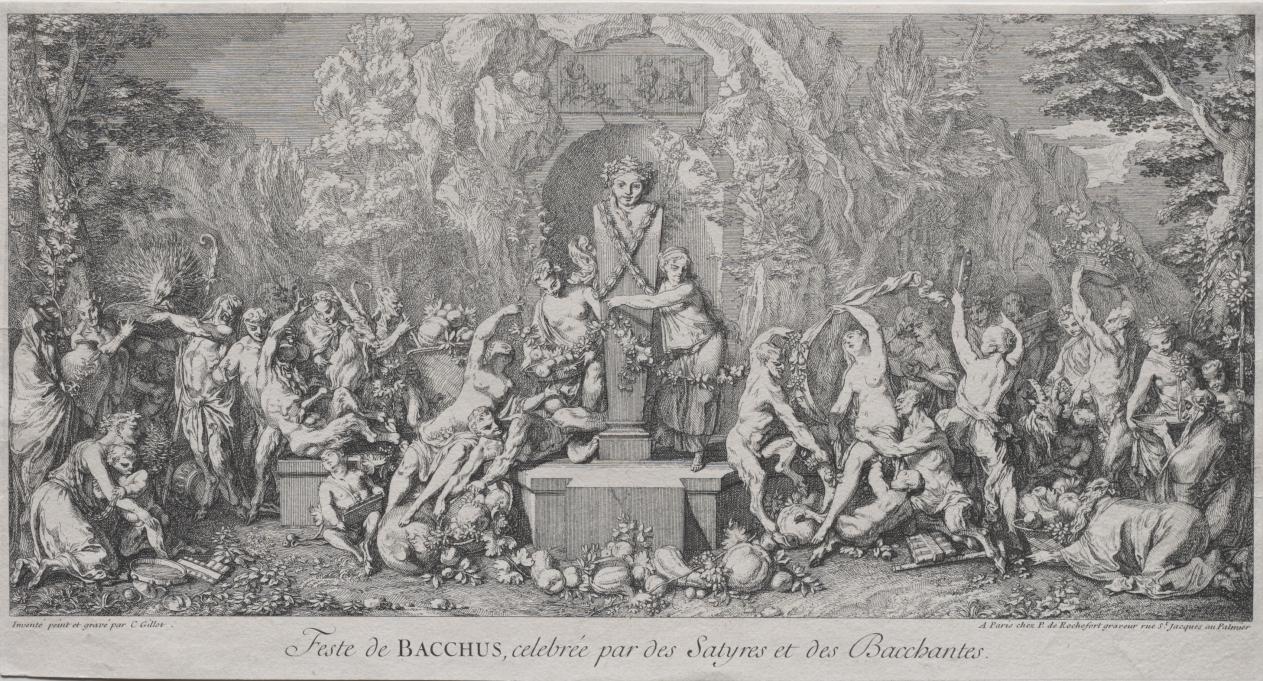
The Four Festivals: Festival of Bacchus
Claude Gillot
1693–1722
- Medium
- etching and engraving
- Dimensions
- Sheet: 19.6 x 36.5 cm (7 11/16 x 14 3/8 in.)
- Genre
- Museum
- Cleveland Museum of Art
Styles
Tags
France, 18th century
About
The principal source of inspiration for Claude Gillot, while working in Paris during the final years of the reign of Louis XIV (r. 1643–1715), was popular theater. His staged and precisely choreographed bacchanalia scene consists of music, dancing bacchants, drinking, and plentiful food, all symmetrically composed around a herm (a stone pillar topped by the head of Bacchus). According to written sources in Gillot’s time, a herm marked a site in ancient Greece where rites to Bacchus occurred. At the far right, a young satyr holds a thyrsus—a wand decorated with grape leaves and ivy—a bacchanalian symbol of fertility and hedonism.