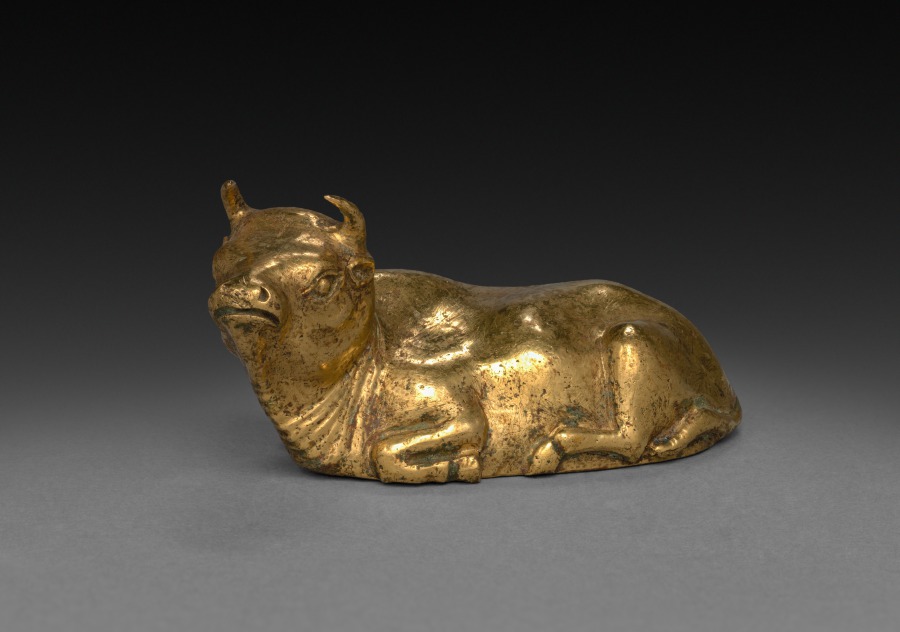
Recumbent Bull
700–799
- Medium
- gilt bronze
- Dimensions
- Overall: 3.5 x 7 cm (1 3/8 x 2 3/4 in.)
- Genre
- Sculpture
- Museum
- Cleveland Museum of Art
Styles
Tags
China, Tang dynasty (618-907)
About
In China, access to political power was granted to those who passed the civil service examinations, a system that offered official service only at a high level of education. Chinese literati-officials whose daily routine was administrative work in an office, enjoyed precious objects on their writing table that offered distraction and demonstrated good taste, as well as the pleasure of holding and handling them. By the Ming (1368–1644) and Qing (1644–1911) dynasties, these utensils of the literati studio also became collectibles and were treasured as artworks. Made of solid gilt-bronze, this paperweight in the form of a recumbent bull was meant to be placed on a scholar’s desk. Oxen were precious livestock as they could pull carts and plows. Often depicted in landscape paintings and in pictures of tilling the spring soil, the bull’s nature was traditionally likened to the willingness of a loyal civil servant who bears the burden of hard labor without complaint.