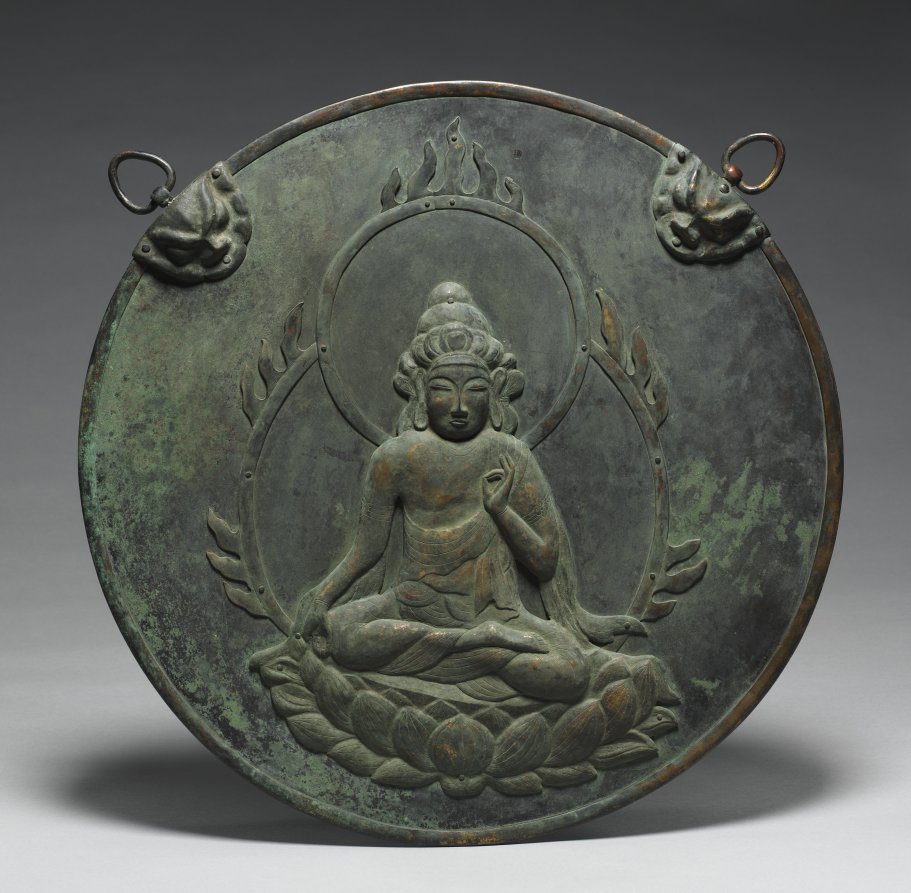
Votive Hanging with Image of Kannon (Kannon Kakebotoke)
1336–1392
- Medium
- Bronze with repoussé and etching
- Dimensions
- Diameter: 52.5 cm (20 11/16 in.)
- Genre
- Sculpture
- Museum
- Cleveland Museum of Art
Styles
Tags
Japan, Nanbokuchō period (1336–92)
About
Kakebotoke (literally “hanging Buddhist deities”) like this appeared from the latter part of the Heian period. They often hung on the doors of a Shinto shrine hall to indicate the Buddhist manifestation of the god, or kami, inside, or along the eaves of a Buddhist temple hall to indicate the Buddhist deity celebrated there.