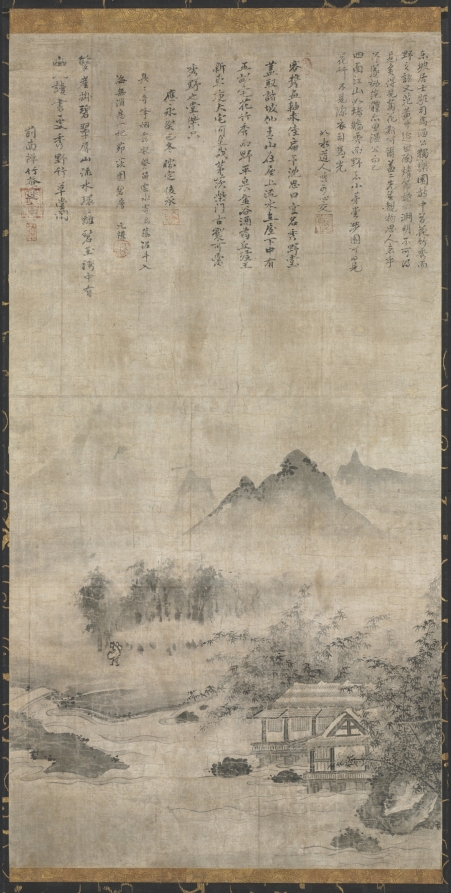
Landscape
1700–1799
- Medium
- hanging scroll; ink and color on silk
- Dimensions
- Painting only: 102.8 x 54 cm (40 1/2 x 21 1/4 in.); Including mounting: 182.9 x 60.7 cm (72 x 23 7/8 in.)
- Genre
- Paintings
- Museum
- Cleveland Museum of Art
Styles
Tags
Japan, Edo period (1615–1868)
About
This composition was fashioned after works created by Zen clerics of the Muromachi period (1392–1573), who often added their original Chinese-style poems above an ink painting to make a hanging scroll called a shigajiku. The poems here quote from essays on Sima Guang (1019–1086) by the Chinese Song dynasty literatus Su Shi (1037–1101). They interpret the studio surrounded with bamboo as a metaphor for the garden of Sima, the Song dynasty scholar-official who, in imitation of the Tang poet Bai Juyi, enjoyed the garden in isolation during his exile in Luoyang.