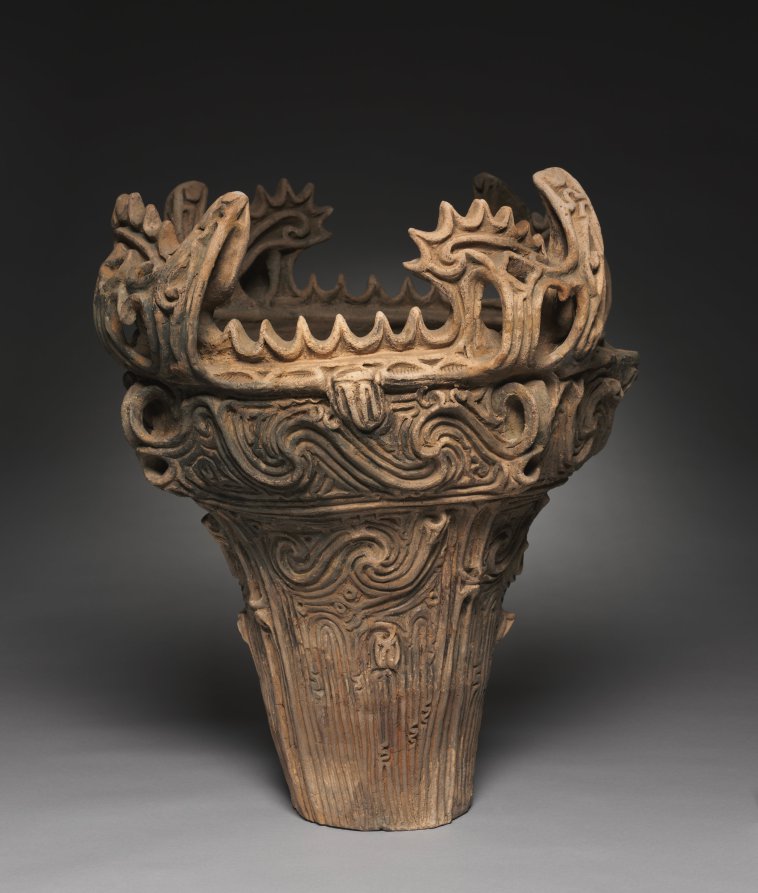
Fire-flame Cooking Vessel (Ka'en Doki)
-2750–-2250
- Medium
- Earthenware with carved and applied decoration
- Dimensions
- height: 61 cm (24 in.); Diameter: 55.8 cm (21 15/16 in.)
- Genre
- Ceramics
- Museum
- Cleveland Museum of Art
Styles
Tags
Japan, Jōmon period (c. 10,500–300 BCE)
About
Archaeologists call this kind of vessel “fire flame,” ka’en in Japanese, because its top resembles flames. No one knows why the design was made or what it actually represents. This example is remarkable for the amount that is original. It was recently determined that a bottom from a different vessel was used during its reconstruction in the 1900s, creating a false impression of its intended scale; it would have initially been about four inches shorter. Since their lower portions were set into holes in the ground during use, bases of pots like this one often deteriorate and may be missing when they are excavated.