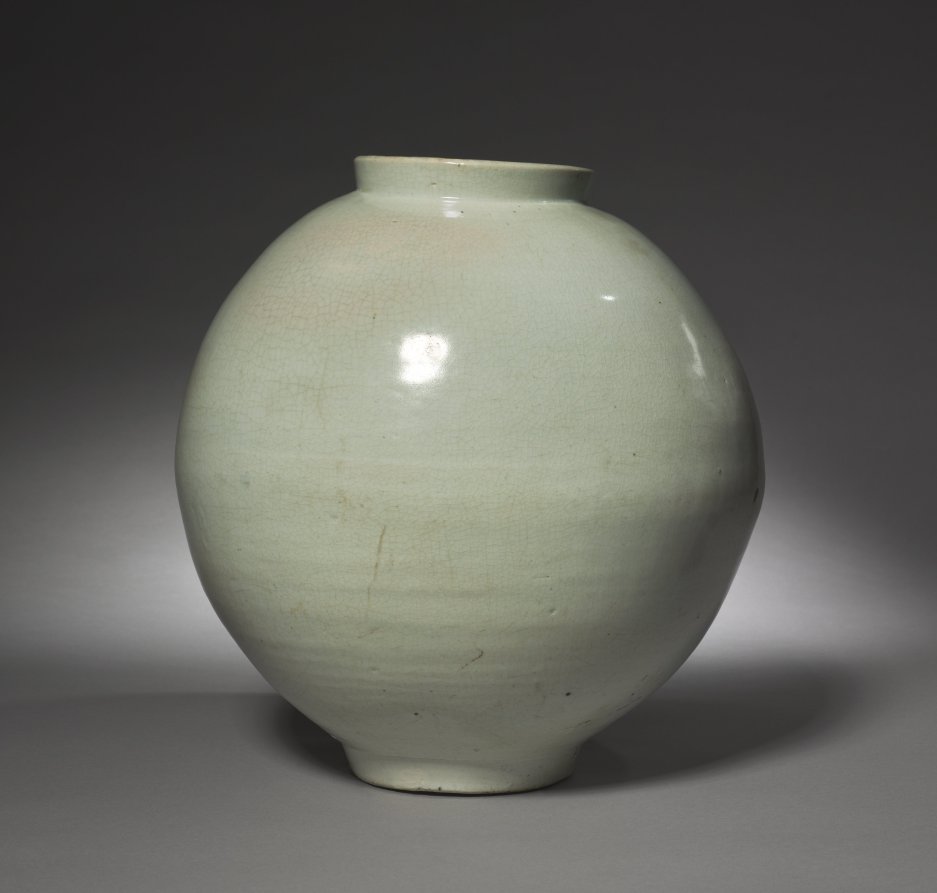
Jar
1700–1799
- Medium
- glazed porcelain
- Dimensions
- Overall: 34.3 cm (13 1/2 in.); Outer diameter: 31.6 cm (12 7/16 in.)
- Genre
- Ceramics
- Museum
- Cleveland Museum of Art
Styles
Tags
Korea, Joseon dynasty (1392–1910)
About
This white jar reflects values of frugality and pragmatism, political ideals encouraged by the ruling house’s government. The absence of underglaze cobalt blue decoration could be the artist’s response to the socioeconomic crisis caused by famines in the late 1600s. The Korean ruling house then enforced strict laws banning luxuries, including cobalt blue, to preserve state finances. Such challenges did not stop the artist from experimenting with a new aesthetics. The concept of minimalism, often phrased as “less is more,” is powerfully exercised in this jar.