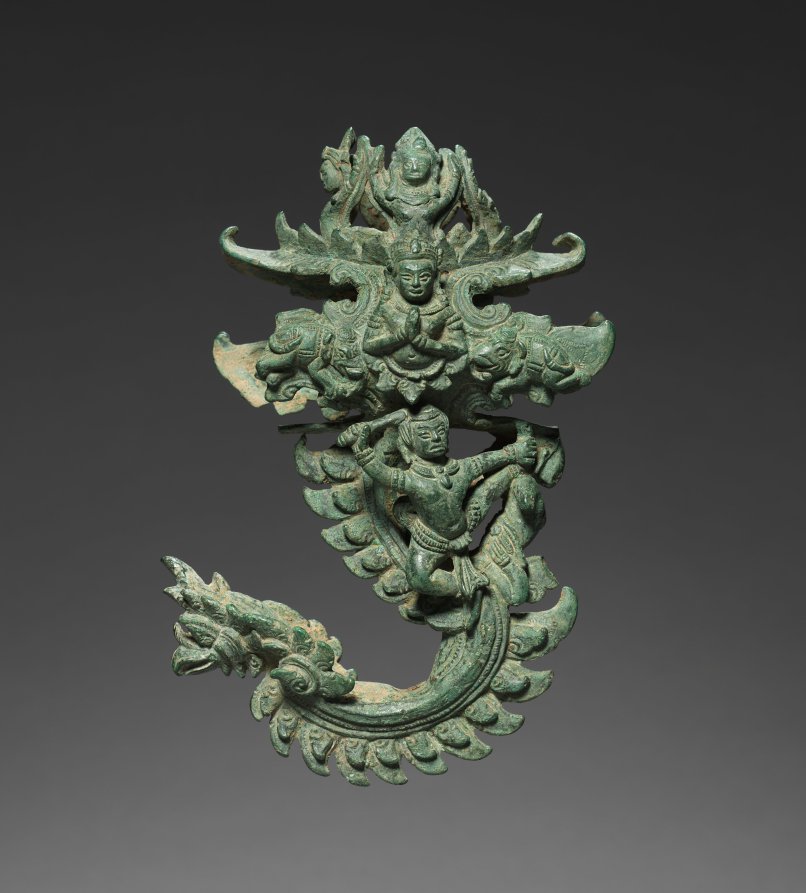
Palanquin Hook
1175–1230
- Medium
- bronze
- Dimensions
- Overall: 17.4 cm (6 7/8 in.)
- Genre
- Sculpture
- Museum
- Cleveland Museum of Art
Tags
Cambodia, probably Angkor
About
When members of the royal family or priesthood traveled in a public festival procession or to a temple to make offerings or participate in a ceremony, they would be carried in a palanquin, or a covered litter. Portable objects of veneration, such as bronze images or a sacred fire, were also carried on palanquins. The palanquins had wooden poles, hanging seats or raised platforms, and bronze fittings cast in intricate forms and gilt, lending the palanquins a sumptuous quality. This hook once supported a bronze ring from which hung a seat, like a hammock or swing. A wooden pole would have passed through the hollow socket at the top and was carried on the shoulders of bearers. The hook segment ends in the face of a garuda, a man-eagle with a prominent beak, stylized wings, and feathers. Figures indicative of devotion and success, including pairs of elephants, crown the fitting.