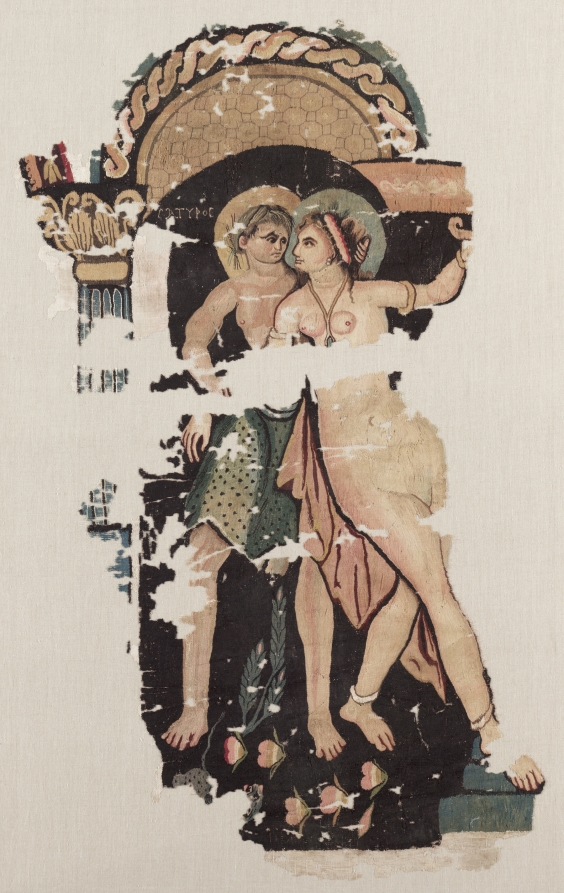
Fragment with Satyr and Maenad
300–399
- Medium
- Linen: undyed; wool: dyed; plain weave ground with tapestry weave
- Dimensions
- Overall: 139 x 86.4 cm (54 3/4 x 34 in.); Mounted: 153.6 x 100.4 x 3.9 cm (60 1/2 x 39 1/2 x 1 9/16 in.)
- Genre
- Textiles
- Museum
- Cleveland Museum of Art
Styles
Tags
Byzantine Empire (Egypt)
About
This textile fragment depicts followers of Dionysus, the ancient Greco-Roman god of wine and merriment. A maenad, or female follower, prances in front of columns and archways, nude except for her opulent gold jewelry and pink veil. She gazes at the man, who wears a hair wreath and spotted leopard skin. A Greek inscription beside his halo confirms his identity as a satyr (a male follower). The weaver skillfully blended colors and fibers to produce the illusion of shadows and movement in the two bodies. Though Christianity was the official religion, many pagan motifs endured as creative references.