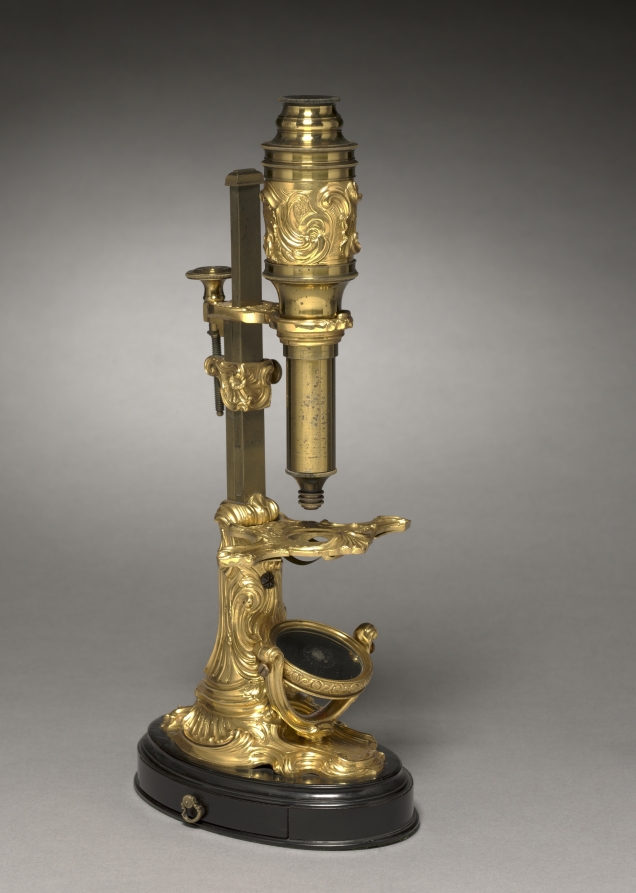
Microscope
1740–1770
- Medium
- gilt bronze mounts
- Dimensions
- Overall: 28.6 x 15.4 x 11.5 cm (11 1/4 x 6 1/16 x 4 1/2 in.)
- Genre
- Metalwork
- Museum
- Cleveland Museum of Art
Tags
France, mid-18th century
About
Composed of elaborate gold-plated parts, this microscope is not just a decorative work of art; it is also a functional tool for scientific inquiry. Its ornamentation reflects the intermingling of art and science during the European Enlightenment, an era when scholars emphasized the study of science and reason as a means of social and intellectual progress. The two lenses of a compound microscope allow for better focus and magnification, making it easier for scientists—amateur and professional alike—to look closer at a specimen to see more than can be seen by the naked eye. This microscope’s ornate decoration suggests it was probably owned by a wealthy person, possibly an amateur scientist. A version of an 18th-century English poem playfully describes what can be newly seen with a microscope: Great fleas have little fleas Upon their backs to bite ’em The little fleas have lesser fleas And so ad infinitum.