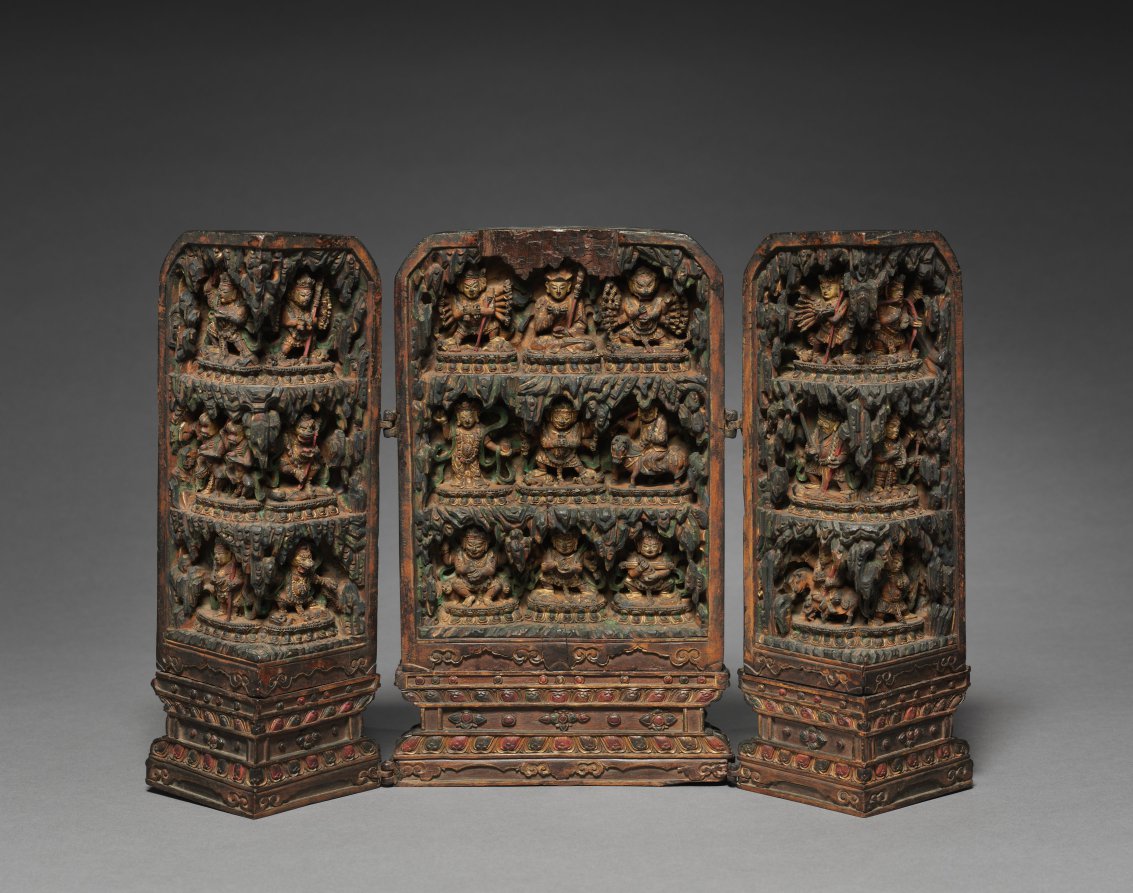
Portable Shrine
1495–1505
- Medium
- wood with mineral pigments and metal
- Dimensions
- Diameter: 16.2 cm (6 3/8 in.); Overall: 25.4 cm (10 in.)
- Genre
- Sculpture
- Museum
- Cleveland Museum of Art
Tags
Tibet
About
Carved from a solid section of a log, the shrine contains images of protectors of tantric Buddhism—a branch that developed in northern India and became prominent in the Himalayas by the 700s. The central figure in the top row is Padmasambhava (Indian, active in Tibet in the 740s), venerated as the founder of one of the four main Tibetan monastic orders. Incised on the exterior are images of protectors, mantras written in Tibetan script, and a sacred funerary monument called a stupa. Tantric practice emphasizes recitation of mantras that invoke the powers of compassion, wisdom, and protection.