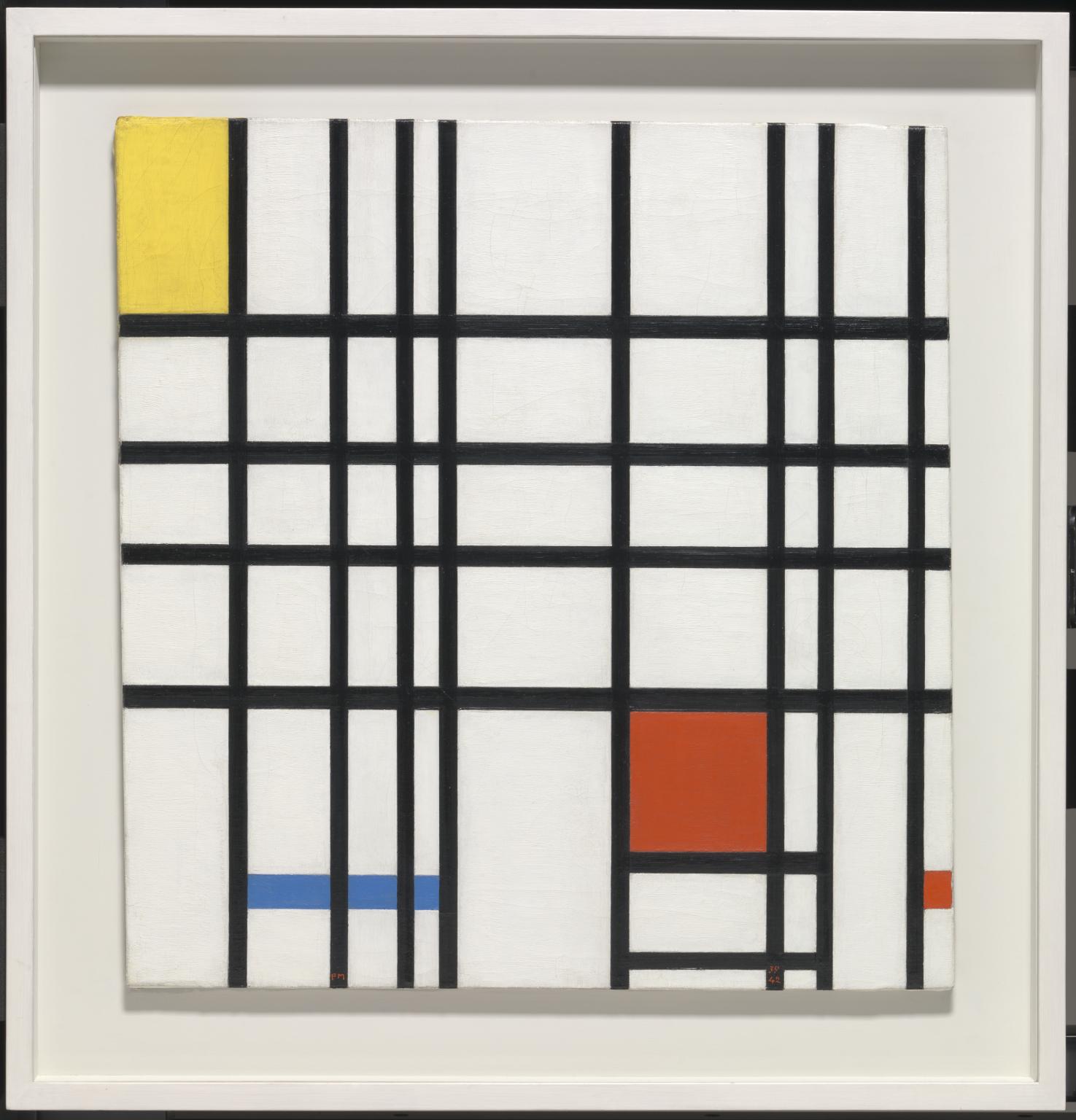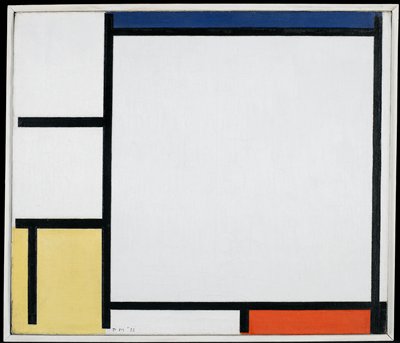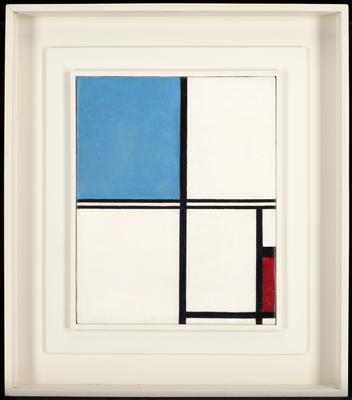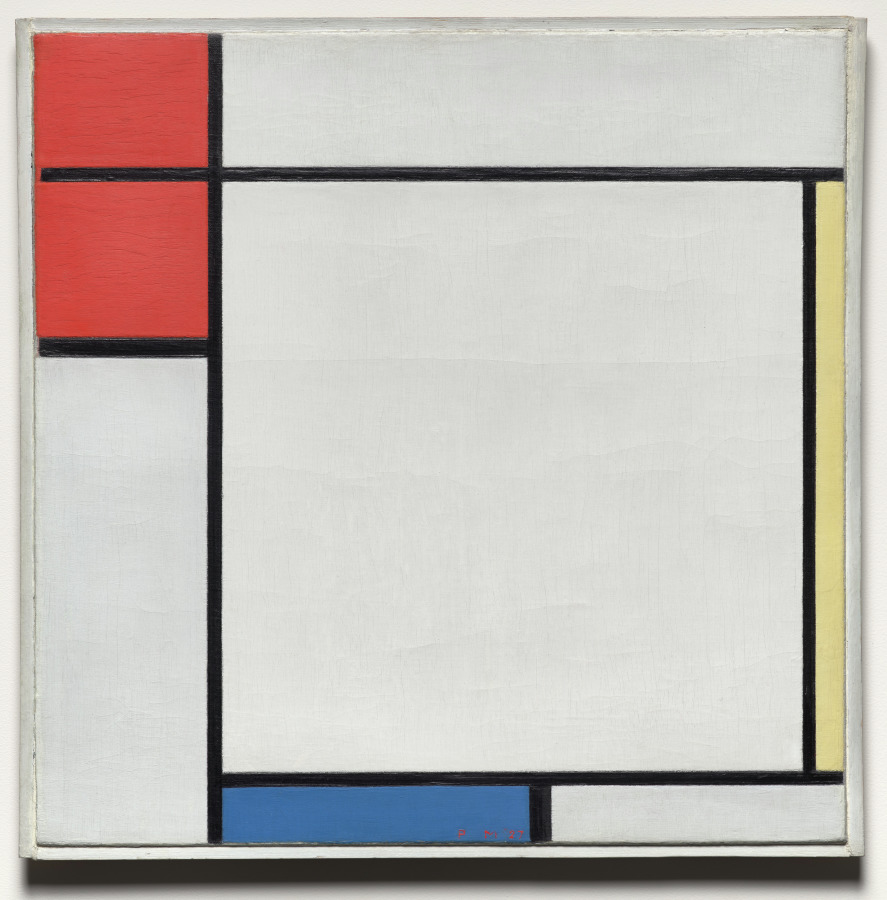
Composition with Red, Yellow, and Blue
Piet Mondrian
1927
- Medium
- oil on canvas
- Dimensions
- Framed: 62.2 x 62.6 x 10.8 cm (24 1/2 x 24 5/8 x 4 1/4 in.); Unframed: 49.5 x 49.5 cm (19 1/2 x 19 1/2 in.)
- Genre
- Paintings
- Museum
- Cleveland Museum of Art
Tags
netherlands
About
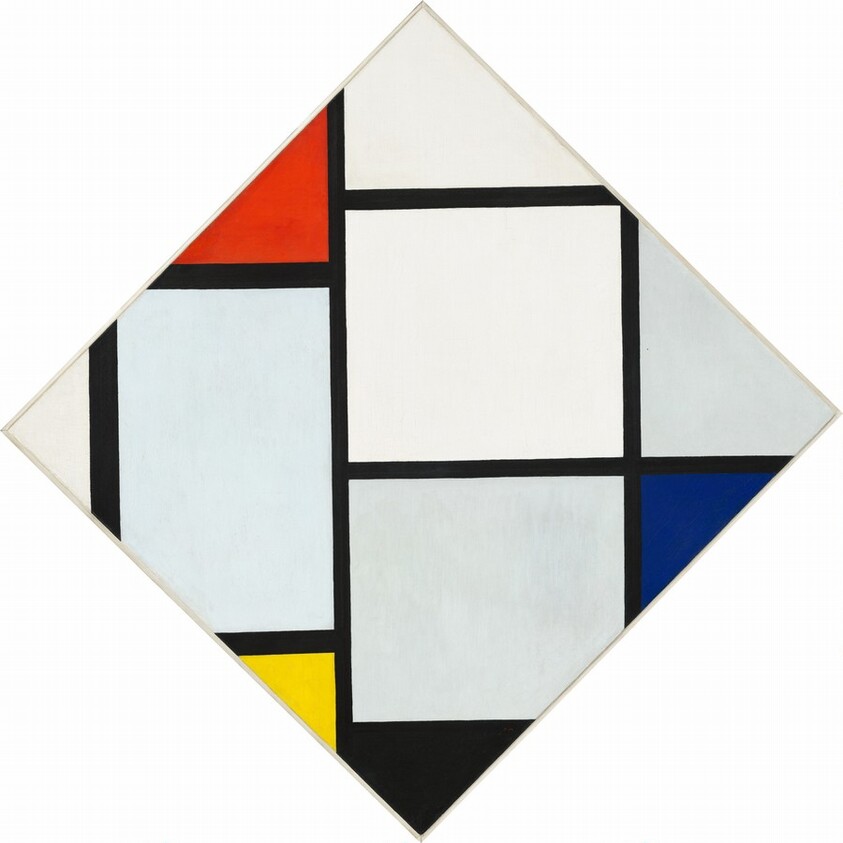
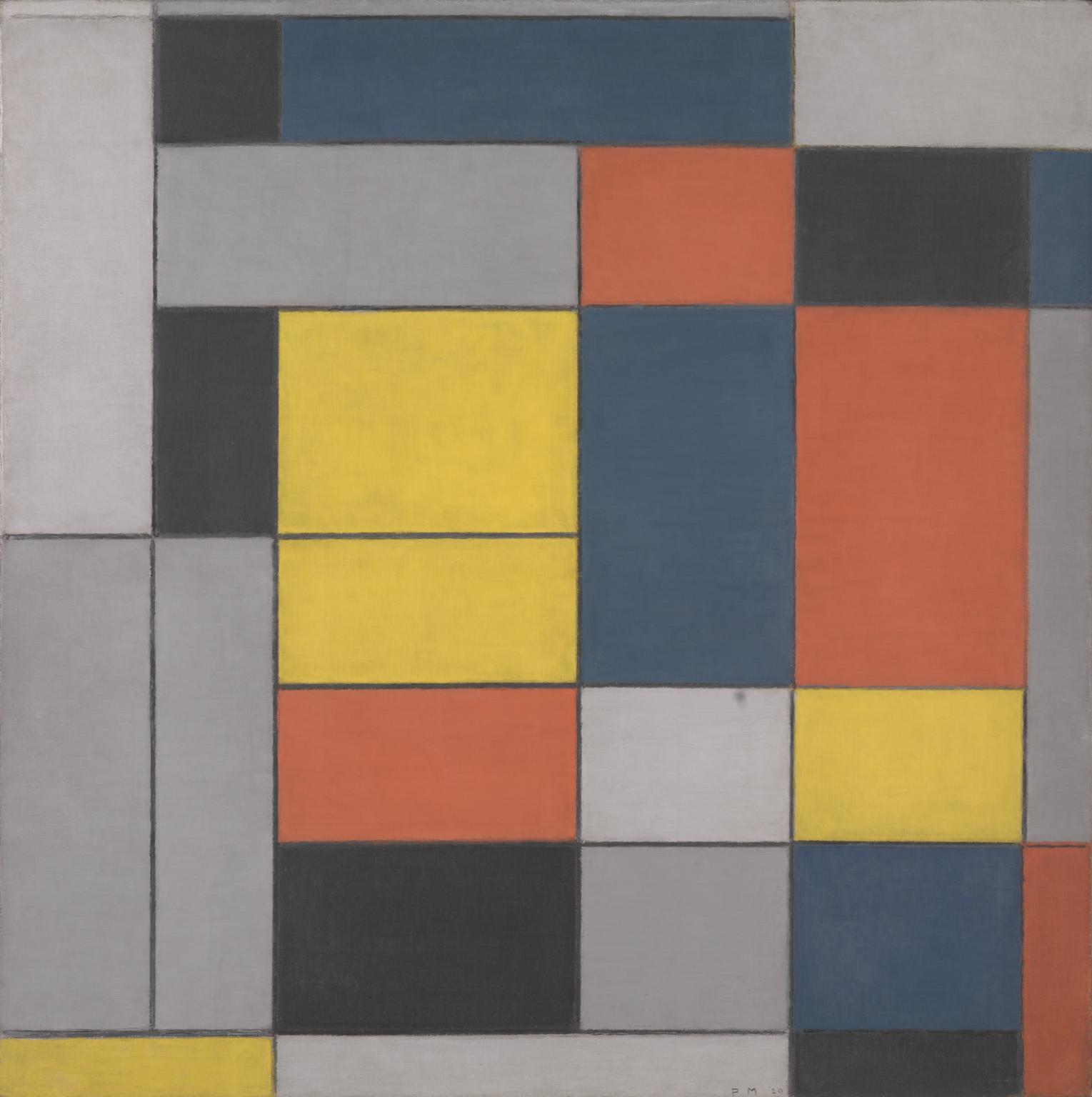
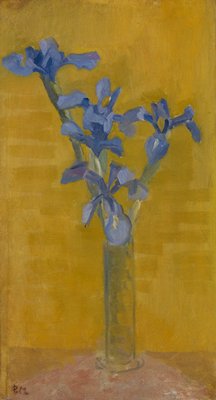
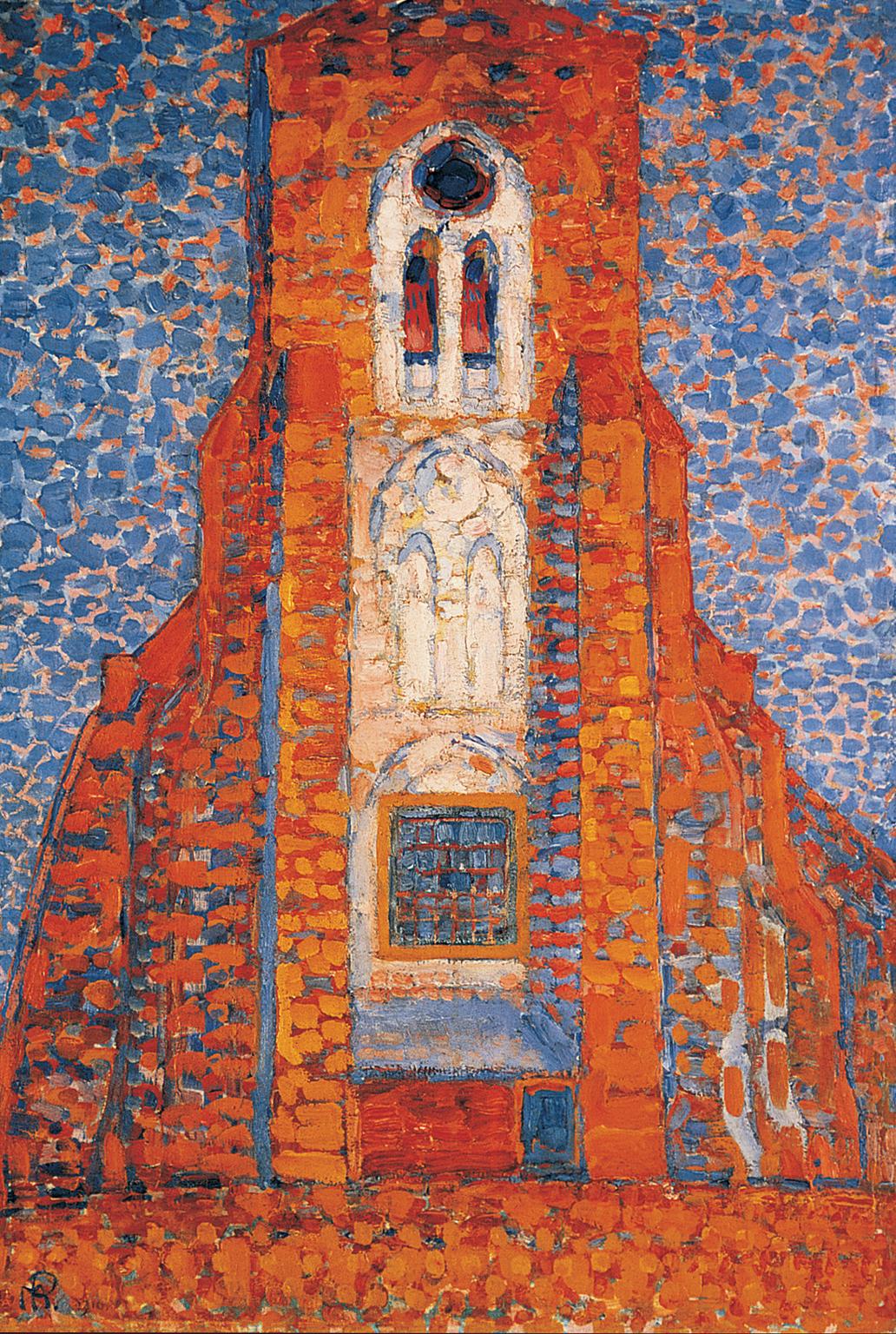
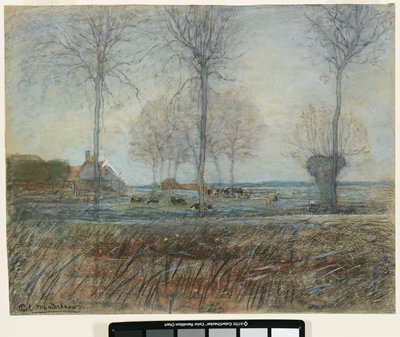
During the 1910s, Piet Mondrian’s art progressed from Cubism to an increasingly abstract style based on the form of a grid. He completely abandoned the representation of natural appearances, limiting himself to horizontal and vertical rectangles and three primary colors (red, yellow, and blue) along with black and white. Intensely intellectual and deeply philosophical, Mondrian believed that following the devastation of World War I, such abstract compositions could contribute to a more harmonious society by communicating in a universal, visual language.