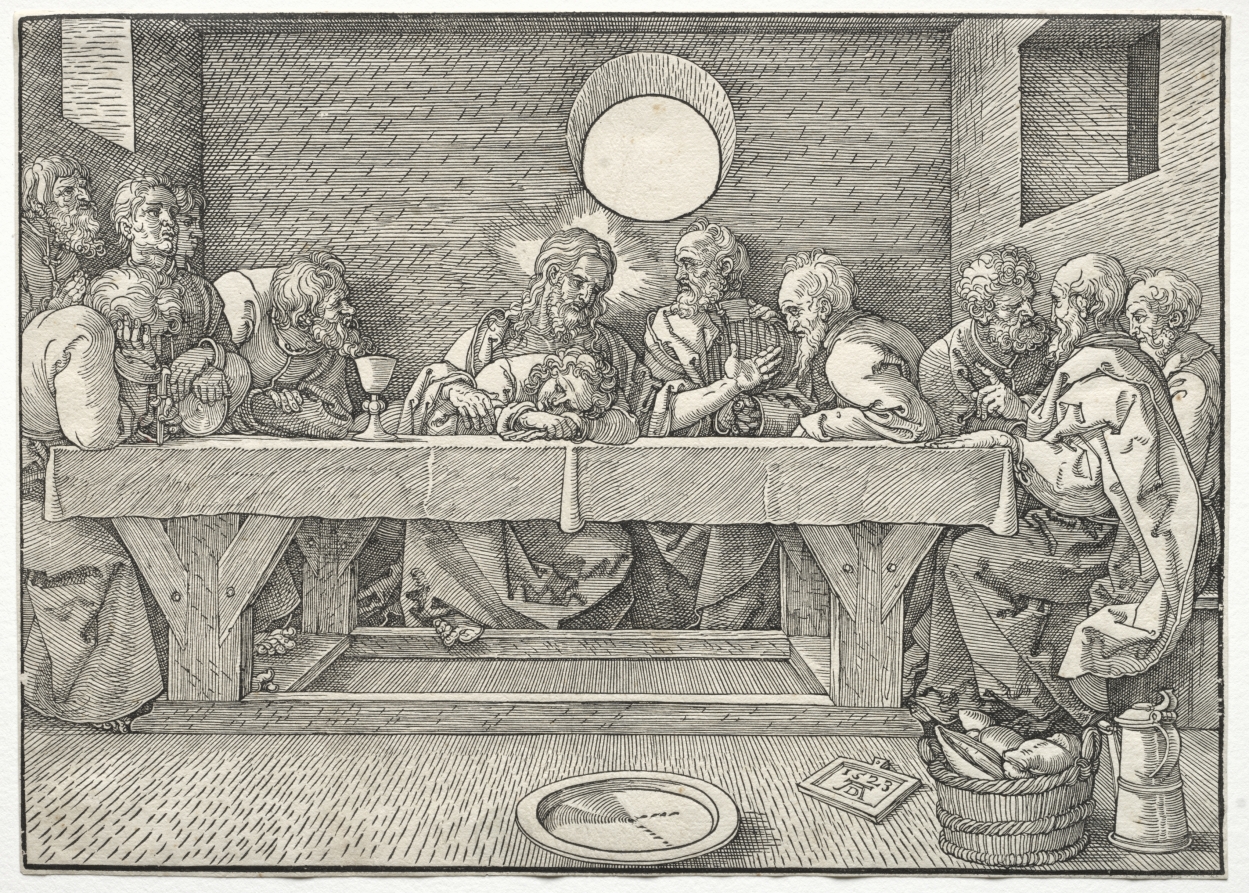
The Last Supper
Albrecht Dürer
1523
- Medium
- woodcut
- Dimensions
- Sheet: 21.6 x 30 cm (8 1/2 x 11 13/16 in.)
- Genre
- Museum
- Cleveland Museum of Art
Styles
Tags
Germany
About
Albrecht Dürer made this version of the Last Supper after returning from Venice. He adopted the typically Italian horizontal format, long table, and disciples seated on the far side. The table has been cleared, except for a single chalice, which, along with the empty platter, basket of bread, and wine decanter in the foreground, refers to the Christ’s body and blood in the sacrament of the Eucharist. Significantly, Judas—the disciple who would betray Christ—is not present. Some art historians interpret the scene as the moment Christ exhorts his disciples to love one another (John 13:34), a passage emphasized by the Protestant leader Martin Luther, whose Ninety-Five Theses was championed by those sympathetic to Catholic reform.