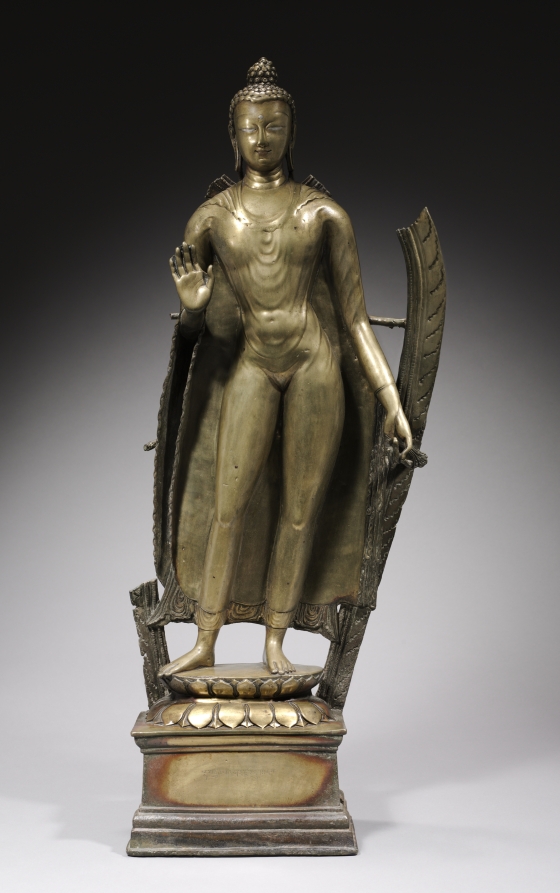
Standing Buddha
895–905
- Medium
- brass with silver and copper inlay
- Dimensions
- Overall: 98.1 cm (38 5/8 in.); Base: 28.2 cm (11 1/8 in.)
- Genre
- Sculpture
- Museum
- Cleveland Museum of Art
Tags
India, Kashmir
About
The slender athletic Buddha extends one foot slightly off the lotus pedestal, suggesting his humanity enters our world from his transcendent state. With his right hand he signals that we should have no fear. The smooth signs of wear on the sculpture indicate that it was worshiped in Kashmir, where water and other ablutions were poured over sacred images during rituals. The Tibetan inscription on the pedestal states that it belonged to a royal monk named Nagaraja (Tibetan, active about 998–1026). Sculptures like this contributed to the transmission of Buddhism from India to Tibet and served as artistic models.