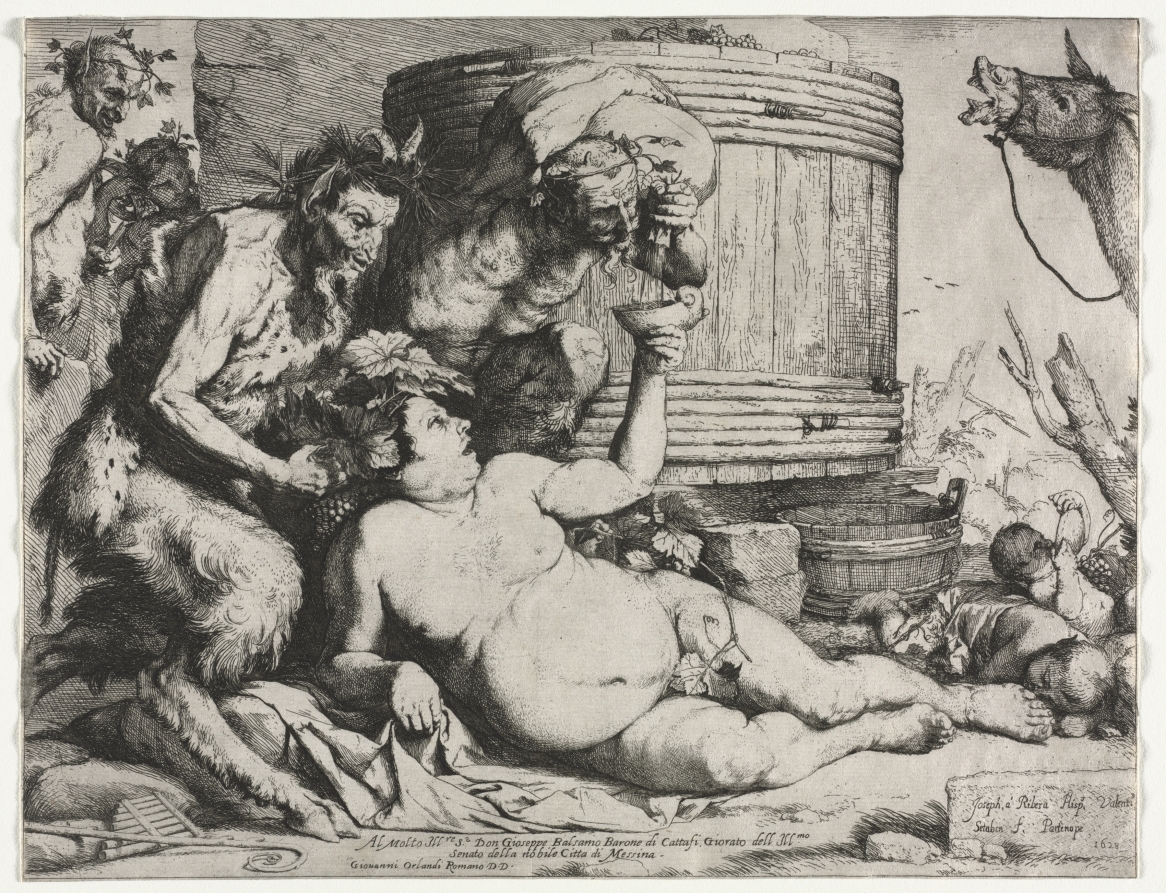
Silenus
Jusepe de Ribera
1628
- Medium
- etching
- Dimensions
- Sheet: 27 x 35 cm (10 5/8 x 13 3/4 in.)
- Genre
- Museum
- Cleveland Museum of Art
Styles
Tags
Spain
About
Before a large wine barrel, Silenus (Bacchus’s teacher) lies inebriated on the ground as he raises his cup to receive wine from a satyr in this print. Jusepe de Ribera included these and other details indicating that the scene was intended to be humorous. Two infants mimic Silenus, and a braying donkey adds to the chaotic setting. Pan, patron of shepherds, with his pipe and staff at his feet, crowns Silenus with grapevines. A satyr and a maenad, at upper left, contribute music as well as sexual innuendo (implied by the placement of the satyr’s flute). Ribera drew inspiration from Andrea Mantegna’s bacchanalia image but he introduced more texture and sensuality to the subject matter through his rich etching technique.