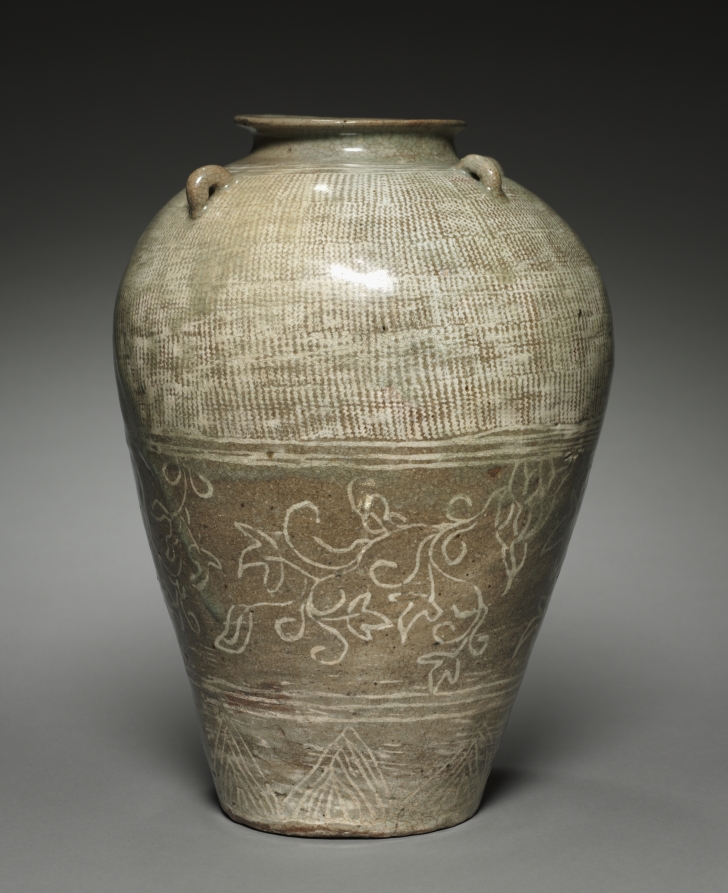
Jar with Scroll Design
1400–1499
- Medium
- Buncheong ware with incised, stamped, and slip-inlaid decoration
- Dimensions
- height: 37.6 cm (14 13/16 in.); Outer diameter: 27 cm (10 5/8 in.)
- Genre
- Ceramics
- Museum
- Cleveland Museum of Art
Styles
Tags
Korea, Joseon dynasty (1392–1910)
About
In premodern Korea, a newborn baby’s umbilical cord and placenta were believed to be a symbol of the life force of the fetus and thus kept in a specially arranged burial site. This jar was made exclusively for burying a placenta, a custom practiced by aristocratic families in Korea in the belief that it would bring happiness to the child.