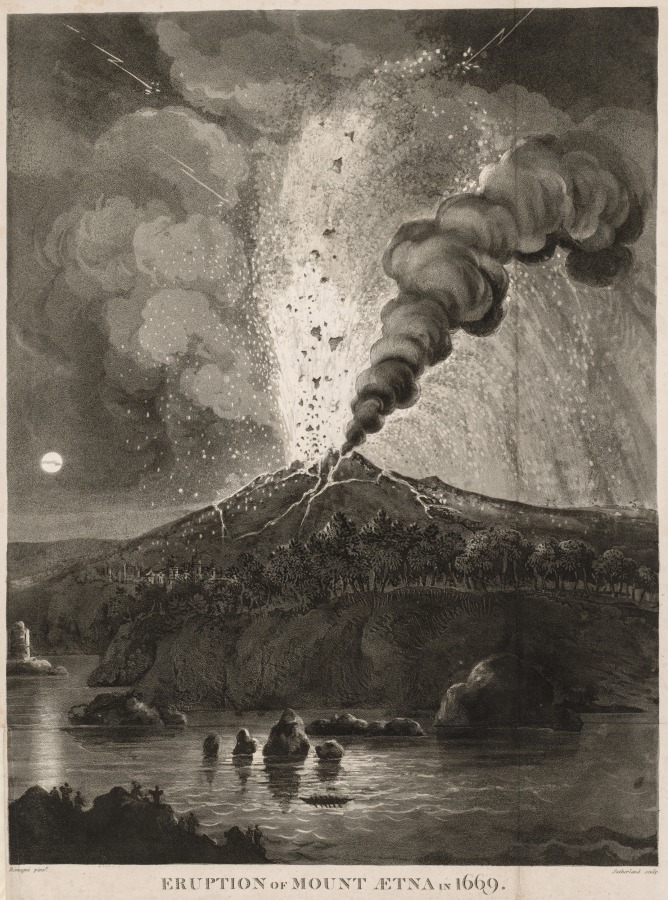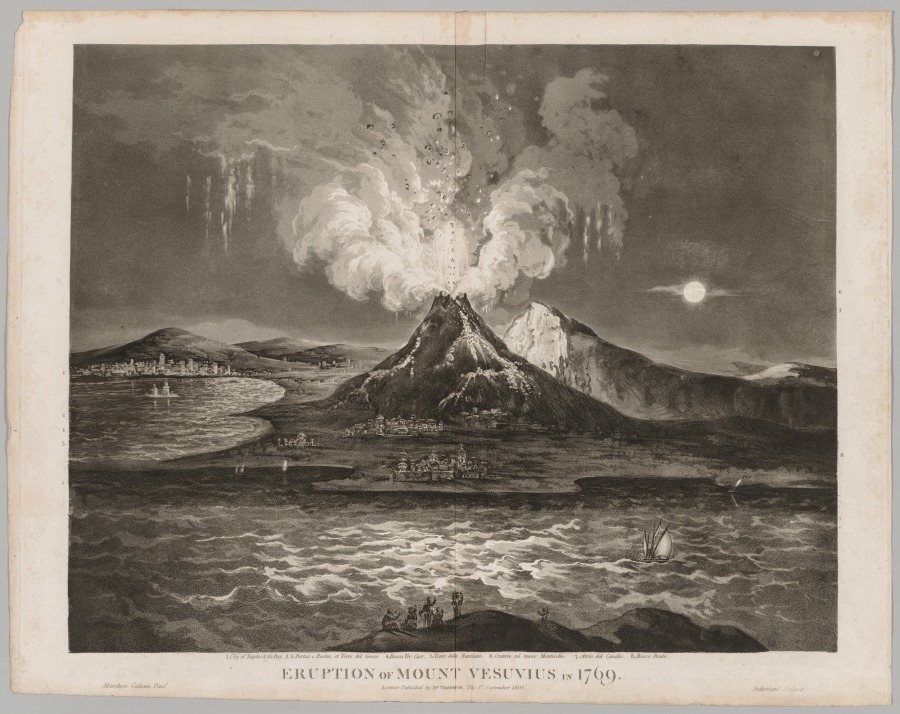
Eruption of Mount Vesuvius in 1769
Thomas Sutherland
1803–1813
- Medium
- aquatint with engraving
- Dimensions
- Image: 43.1 x 54.5 cm (16 15/16 x 21 7/16 in.); Sheet: 49 x 62.7 cm (19 5/16 x 24 11/16 in.)
- Genre
- Museum
- Cleveland Museum of Art
Styles
Tags
England, 18th century
About
With the eruptions of Mount Etna and Mount Vesuvius in the 1700s, volcanoes entered the scientific and popular imagination of Enlightenment Europe. Scientists and philosophers theorized the origins of these spectacular displays; curious tourists visiting Italy wrote home with accounts of burning rivers and destroyed towns. The rediscovery of the ancient sites of Herculaneum and Pompeii, buried by Mount Vesuvius’s eruption in 79 CE, added further fuel to the fire. Attempting to capture the drama of these cataclysmic events, artists innovatively used the tonal range of aquatint and the white of the paper to evoke the dramatic effects of spewing hot lava and burning clouds of volcanic ash.