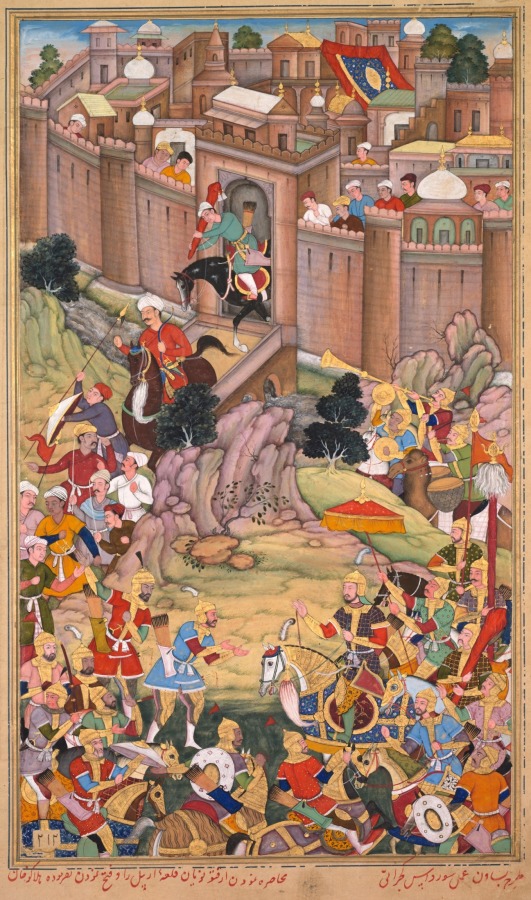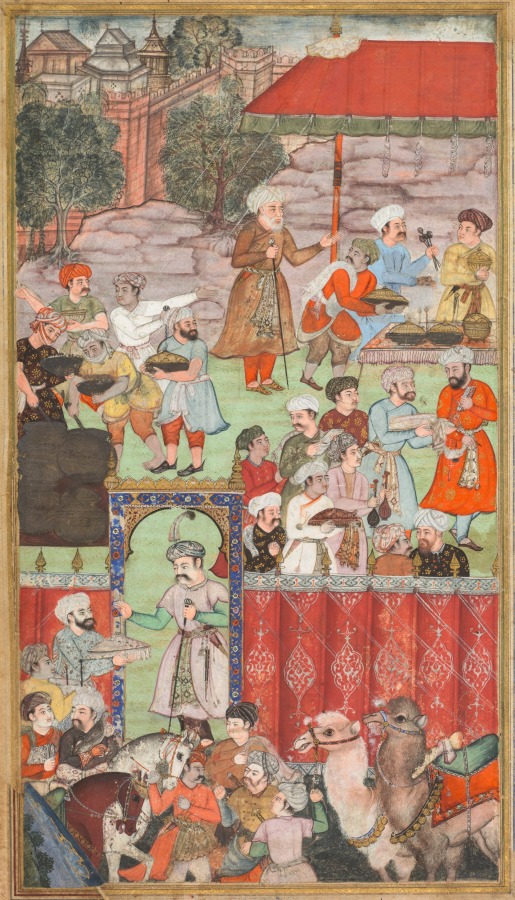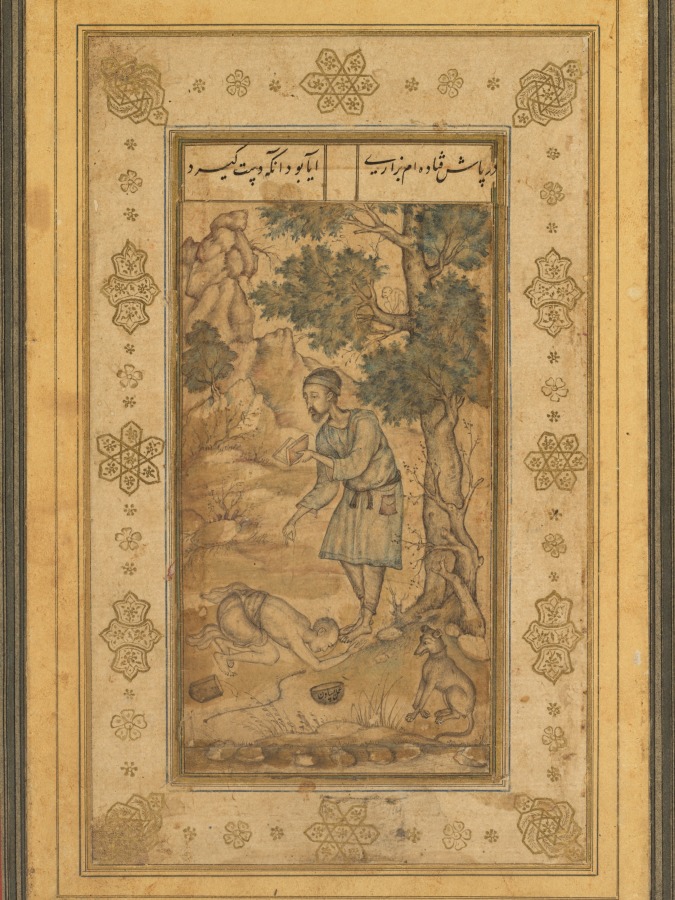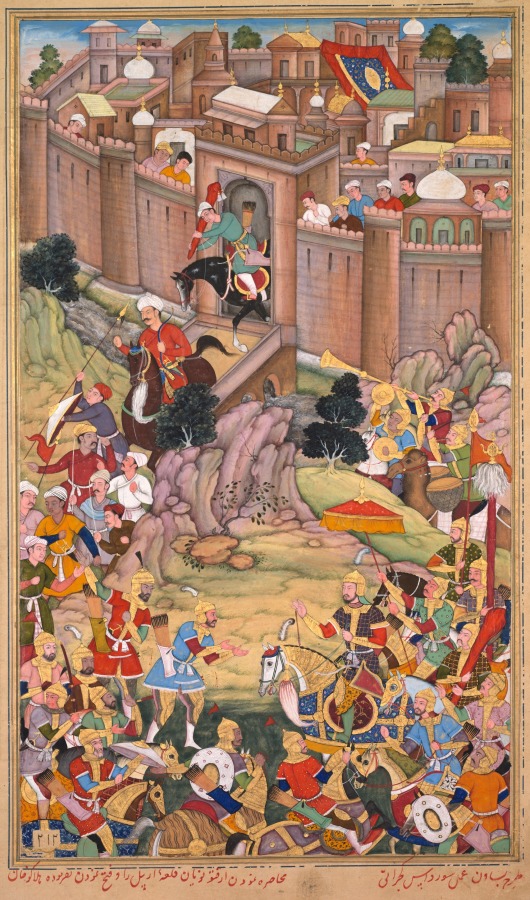
The siege of Arbela in the era of Hulagu Khan, page from a Chingiz-nama (Book of Chingiz Khan) of the Jami al-tavarikh (Compendium of Chronicles) of Rashid al-Din (Persian,1247–1318)
Basavana
1591–1601
- Medium
- Gum tempera and gold on paper
- Dimensions
- Image: 34 x 20 cm (13 3/8 x 7 7/8 in.); Overall: 38.5 x 25 cm (15 3/16 x 9 13/16 in.); with mat: 49 x 36.3 cm (19 5/16 x 14 5/16 in.)
- Genre
- Paintings
- Museum
- Cleveland Museum of Art
Tags
Mughal India, court of Akbar (reigned 1556–1605)
About
A Mongol conqueror riding a white horse gazes stonily at his defeated West Asian opponent in a scene that took place more than 300 years before this painting was made. By the end of the 1500s there was a new emphasis on creating paintings to accompany historical texts. Visually, the diagonal composition with cityscape at the top of the page—also found among the earliest Mughal paintings—was expanded to include throngs of participants and a startling new naturalism. Painting from the Akbar period reached its maturity by the 1590s in works such as this: dynamic in composition and gestures but contained within organized spaces and emphasized three-dimensionality.