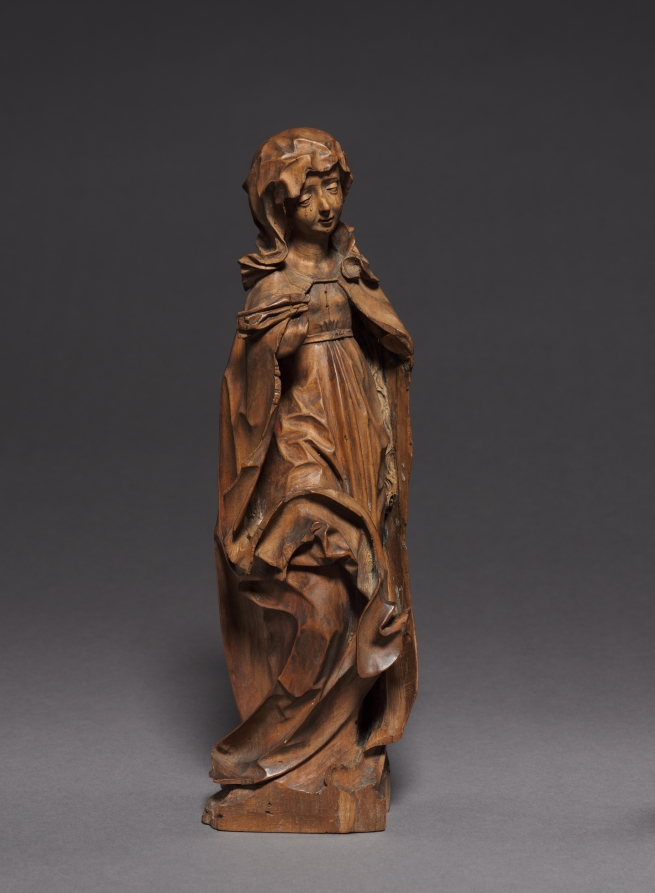
Mourning Virgin from a Crucifixion Group
1620–1640
- Medium
- pearwood
- Dimensions
- Overall: 31 x 9.8 x 8.7 cm (12 3/16 x 3 7/8 x 3 7/16 in.)
- Genre
- Sculpture
- Museum
- Cleveland Museum of Art
About
This statuette once formed part of a Crucifixion group intended for a domestic shrine or chapel. Such ensembles were not only used for private devotion and meditation, but were also collected as works of art. This work was long attributed to the Nuremberg artist Veit Stoss. In fact, the carver imitated forms from his repertoire. However, the concave folds do not occur before 1600. The sculpture was created at a time when the appreciation for Albrecht Dürer, the most famous German painter of his time, was also experiencing a renaissance.