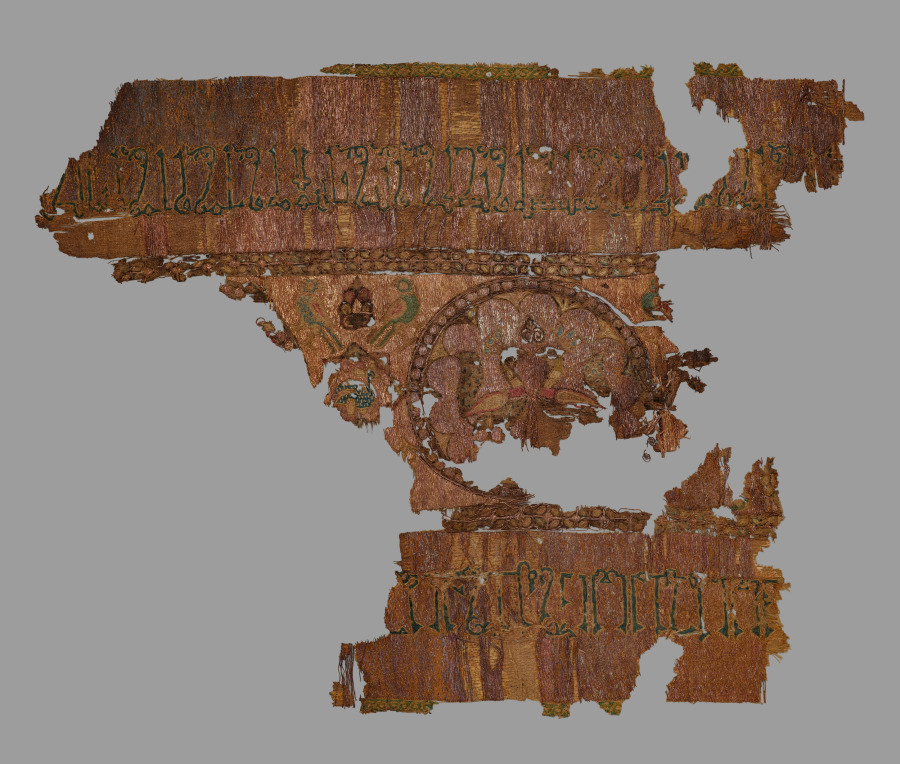
Fragment with peacocks and inscription
1000–1199
- Medium
- Silk warp and cotton weft (mulham): plain weave; silk, gilt, and silver thread: embroidery, couched and split stitches
- Dimensions
- Overall: 31.5 x 40.5 cm (12 3/8 x 15 15/16 in.)
- Genre
- Embroidery
- Museum
- Cleveland Museum of Art
Styles
About
One of the stories in "The Thousand and One Nights" is of a slave girl named Zumurud who lived in Khurasan and embroidered curtains with designs of animals and birds in colored silk and gold threads. Sumptuous embroideries were not only commissioned by rulers, caliphs, and court officials but also widely exported. Today, less than a dozen fragments of these rich embroideries survive. All are worked on "mulham," a fabric having silk warps and cotton wefts that was a specialty of Iran and Iraq. With the exception of the Cleveland Museum of Art's fragment CMA 1952.257 [http://www.clevelandart.org/art/1952.257], which was found in Baghdad, all of the known examples were preserved until the 1900s in Egyptian graves and refuse heaps.