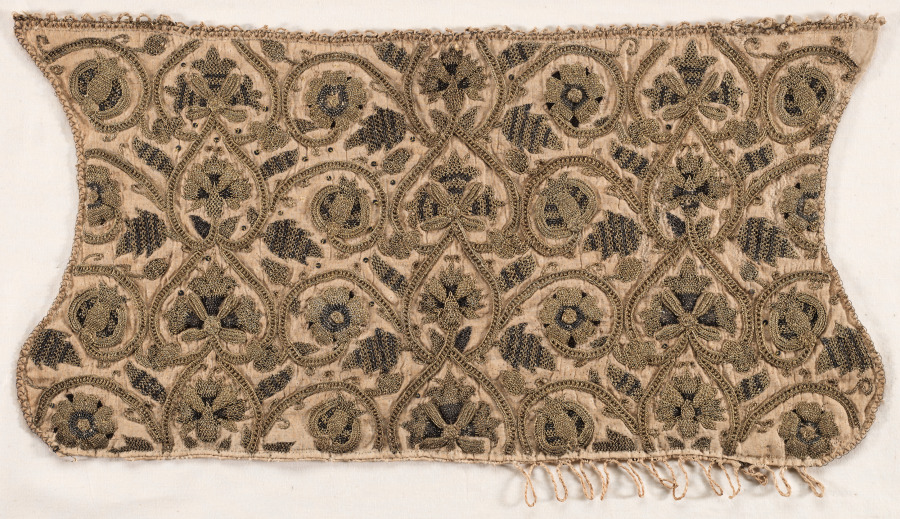
Coif
1580–1599
- Medium
- Silk, gold and silver thread, sequins, padding, linen; embroidery
- Dimensions
- Overall: 21 x 42.2 cm (8 1/4 x 16 5/8 in.)
- Genre
- Embroidery
- Museum
- Cleveland Museum of Art
Styles
Tags
England, Elizabethan Period, late 16th century
About
According to Elizabethan embroidery scholar Jacqui Carey, construction of this woman’s coif is typical of the period, as is its design. The coif is a single piece of embroidered plain weave linen, cut in the usual way. The embroidery features pomegranate, honeysuckle, rose, carnation and acorn motifs set within stylized undulating stems and foliage. Most of the embroidery is worked with two distinct types of metal thread (thin metal strips wrapped around a silk core)—gilt thread and silver thread which has tarnished to black. Black silk thread also is used for the embroidery. Nine different stitches are used on the coif, including Elizabethan blanket stitch (variation three), Elizabethan ladder with filling, chain stitch, Elizabethan double Vandyke/twisted chain, Elizabethan plaited braid stitch (standard version), Elizabethan Ceylon stitch, Elizabethan trellis stitch, corded double detached buttonhole, and Elizabethan spider’s web. Many of the motifs are padded underneath the embroidery, likely with wool.