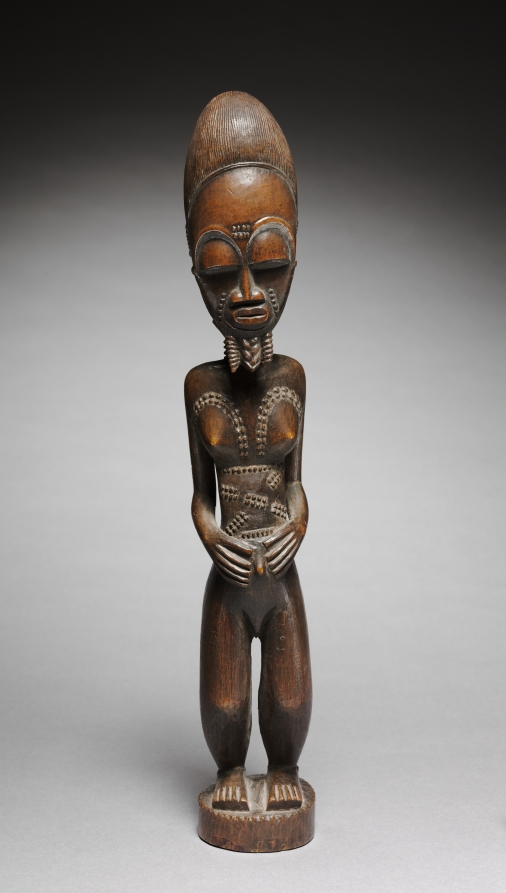
Male Figure
Totokro Master
1900–1931
- Medium
- wood
- Dimensions
- Overall: 44.8 x 9.3 x 7.7 cm (17 5/8 x 3 11/16 x 3 1/16 in.)
- Genre
- Sculpture
- Museum
- Cleveland Museum of Art
Styles
About
Purported to be the earliest surviving work by a Baule carver who art historians have dubbed the "Totokro Master," this Male Figure typically comes as a pair of male and female sculptures, and serves as a bridge between the spirit (asye usu) and human worlds in the hand of Baule diviners. Representing idealized humans in their prime, the diviners consider them suitable forms used to cast out disruptive spirits. It is featured here without the female example. The African Art Sponsors—a group of donors associated with Cleveland’s Karamu House, the oldest African American theater group in the country—purchased this Baule male figure in 1929 and donated it to the museum in 1931.