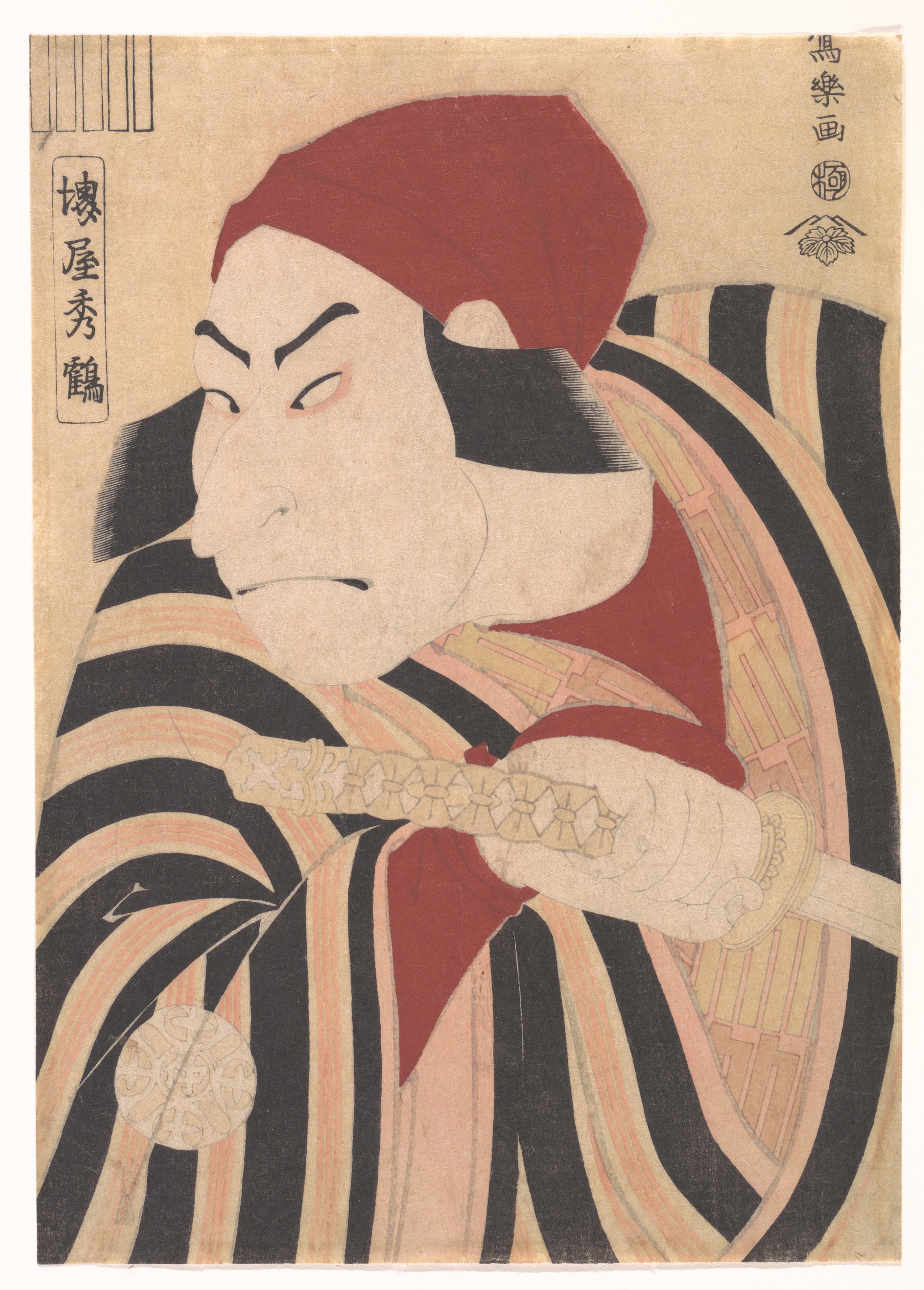
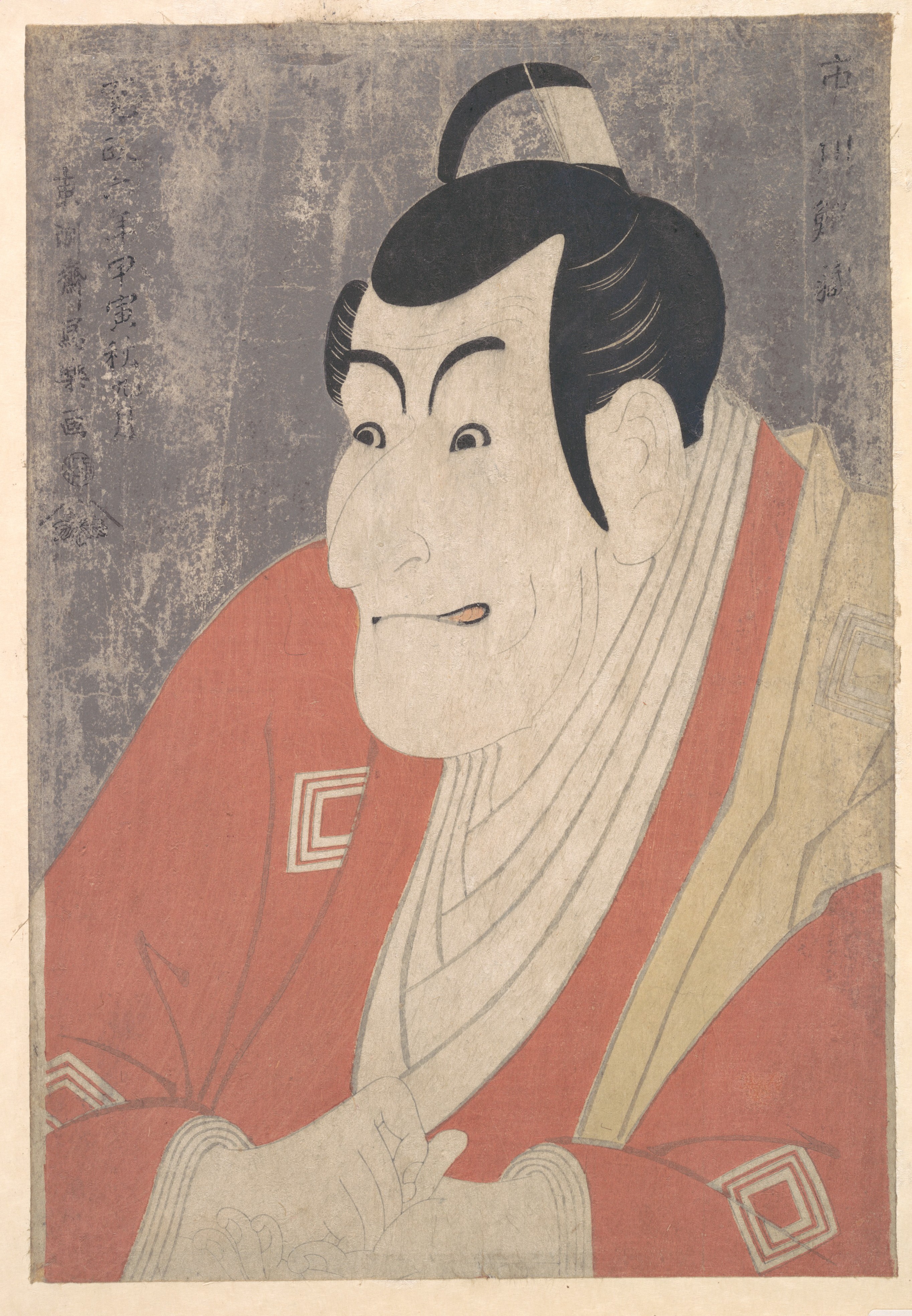
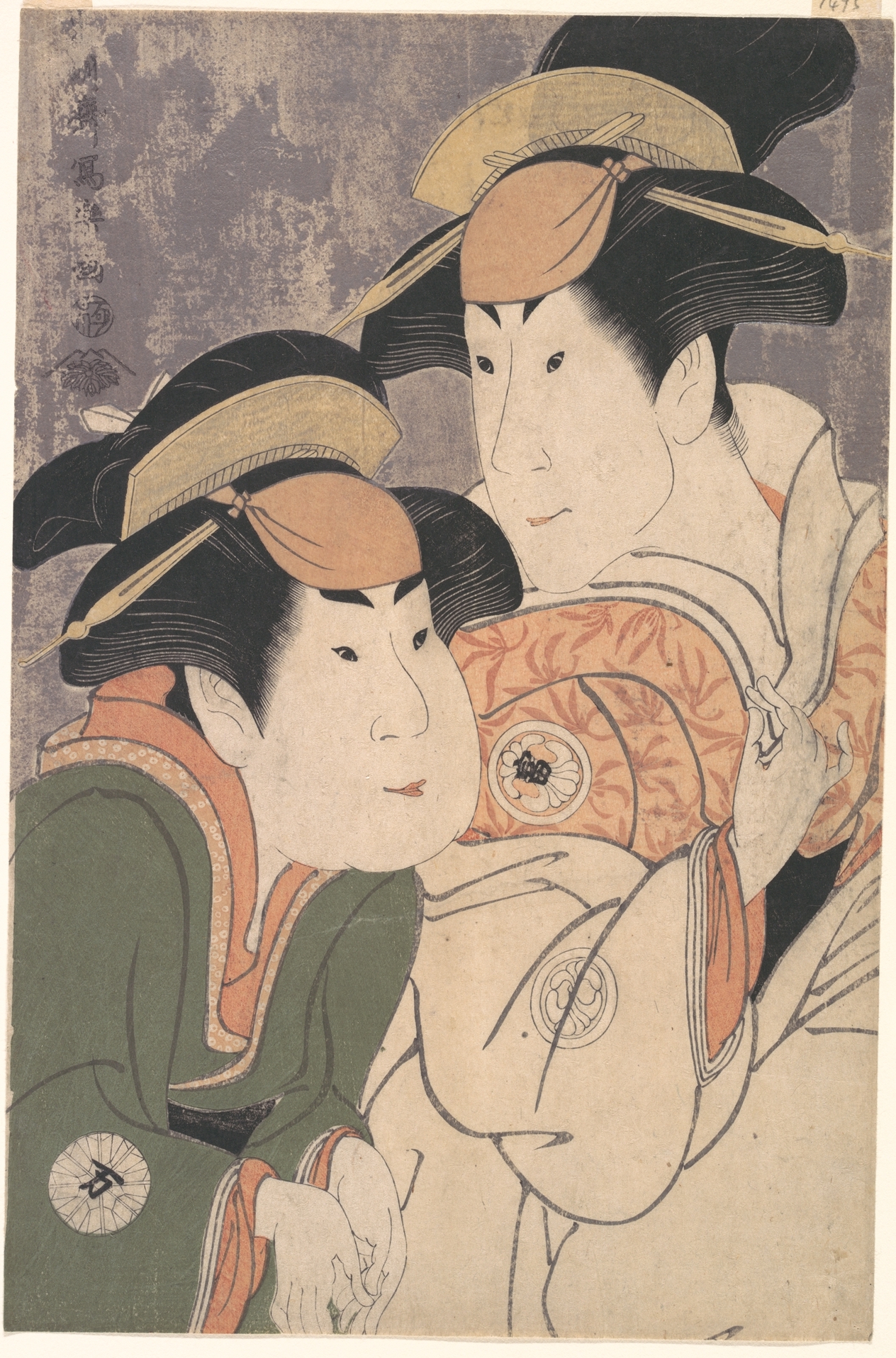
Otani Tokuji I as the Retainer Sodesuke in "Flowering Irises: A Soga Vendetta of the Bunroku Era"
Tōshūsai Sharaku
1794
- Medium
- color woodblock print
- Dimensions
- 36.2 x 25.2 cm (14 1/4 x 9 15/16 in.)
- Genre
- Museum
- Cleveland Museum of Art
Styles
Tags
Japan, Edo period (1615–1868)
About
Ōtani Tokuji I (1756–1808) portrays a servant in a play that follows two brothers as they pursue a villain who murdered their father and older brother and who stole their family’s secret scroll. This design belongs to a category of Japanese prints called “actor images” (yakusha-e or 役者絵). They were collected by fans of popular Kabuki actors. Kabuki is a kind of entertainment that got its start in the early Edo period, evolving from dance performances with simple storylines to long plays with complex plots, elaborate sets, and full musical accompaniments. Performers wear showy costumes and heavy makeup and strike poses called mie at critical moments in the narrative. Dialogue is spoken in a stylized way that resembles singing.