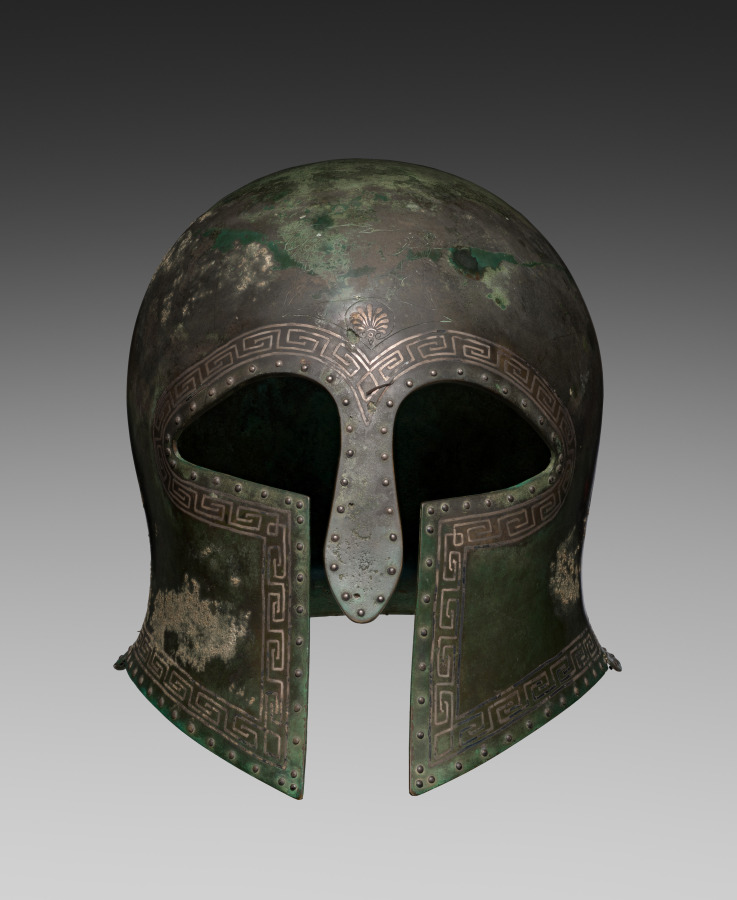
Corinthian Helmet
-500–-475
- Medium
- bronze with silver inlay
- Dimensions
- Overall: 21.5 cm (8 7/16 in.)
- Genre
- Arms and armor
- Museum
- Cleveland Museum of Art
Tags
Greece
About
Probably cast and then hammered into shape, this bronze helmet belongs to a type known as Corinthian, with almond-shaped eye holes, large cheekpieces, and a wide nose guard. Its significant weight raised early suspicions about authenticity, and although a 1928 technical examination found no conclusive evidence of forgery, scholars have continued to doubt its antiquity. Unusual details include the intact rivets, or metal fasteners, meant to secure liners; usually only their holes survive. The dueling warriors and inlaid palmette above the brow also find few parallels, and the silver meander pattern is unique. Most recently, a 2024 analysis found that both the copper and silver alloys of the helmet differ significantly from those expected in an ancient Greek helmet.