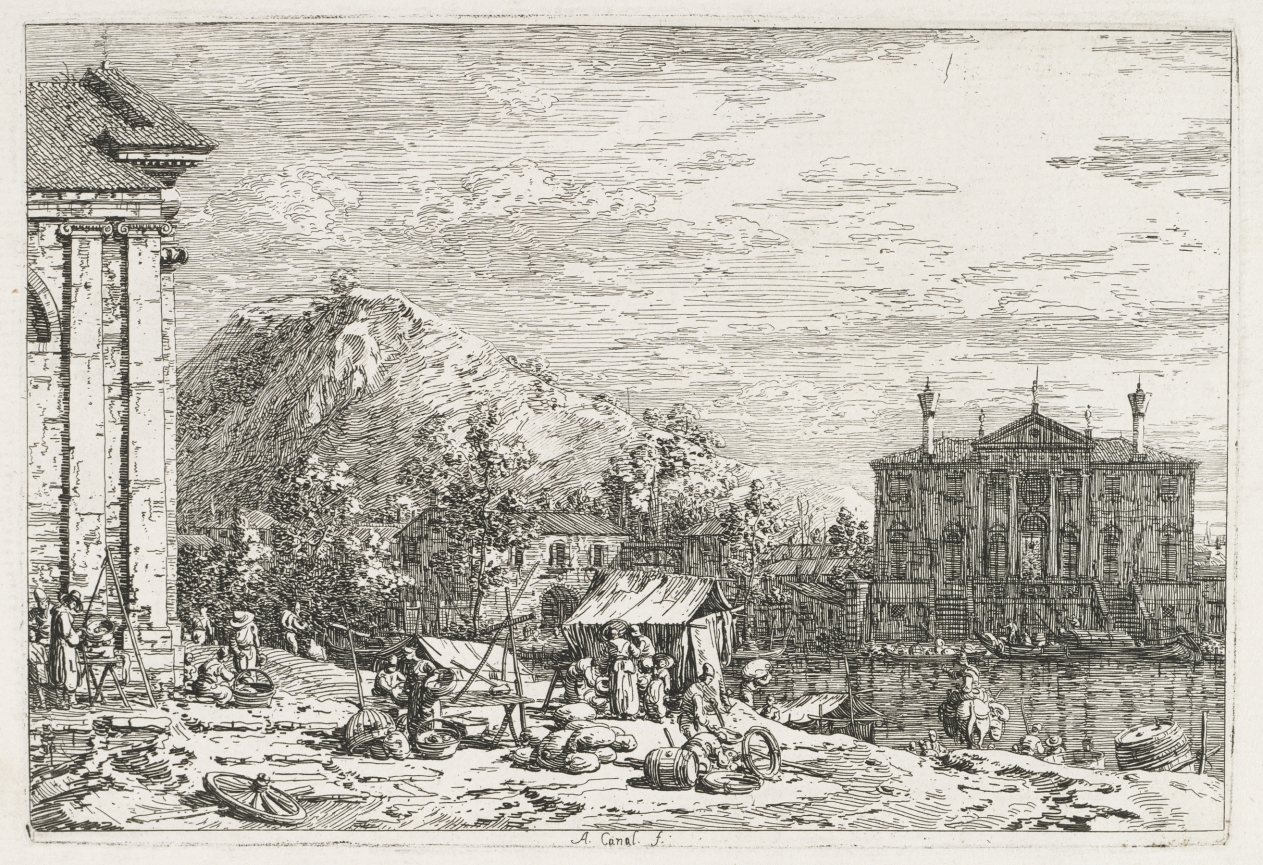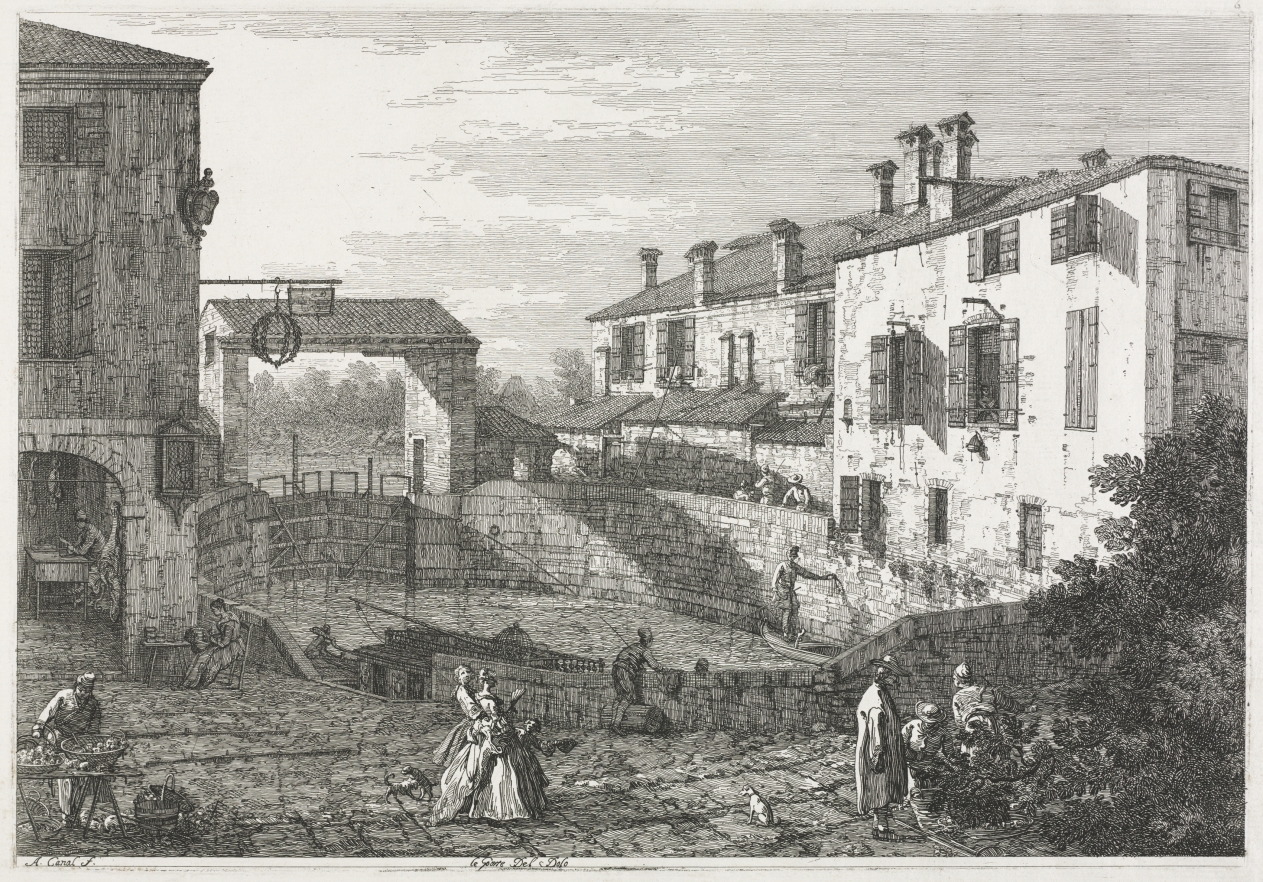
Views: The Canal Lock at Dolo
Antonio Canaletto
1735–1746
- Medium
- etching
- Genre
- Museum
- Cleveland Museum of Art
Styles
Tags
Italy, Venice
About
Antonio Canaletto took up etching as an extension of his painting practice, which consisted of representing topographical views of Venice for wealthy patrons. This print belongs to a series he made of rural scenery outside the city—here, the village of Dolo and its canal. Etching provided the artist with a means of formal experimentation, and he became a master of describing Venice’s distinctive buildings and the reflections and shadows from its many canals. Prints also provided the artist with a steady income; this series was likely marketed to affluent British tourists as a souvenir.