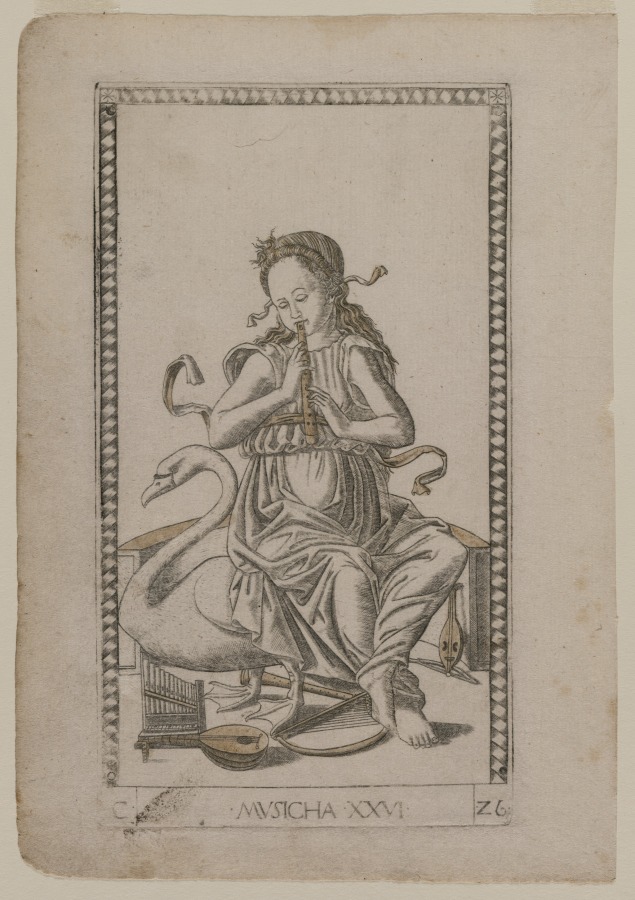
Music (from the Tarocchi, series C: Liberal Arts, #26)
Master of the E Series Tarocchi
1457–1467
- Medium
- engraving
- Genre
- Museum
- Cleveland Museum of Art
Styles
Tags
Italy, Ferrara, 15th century
About
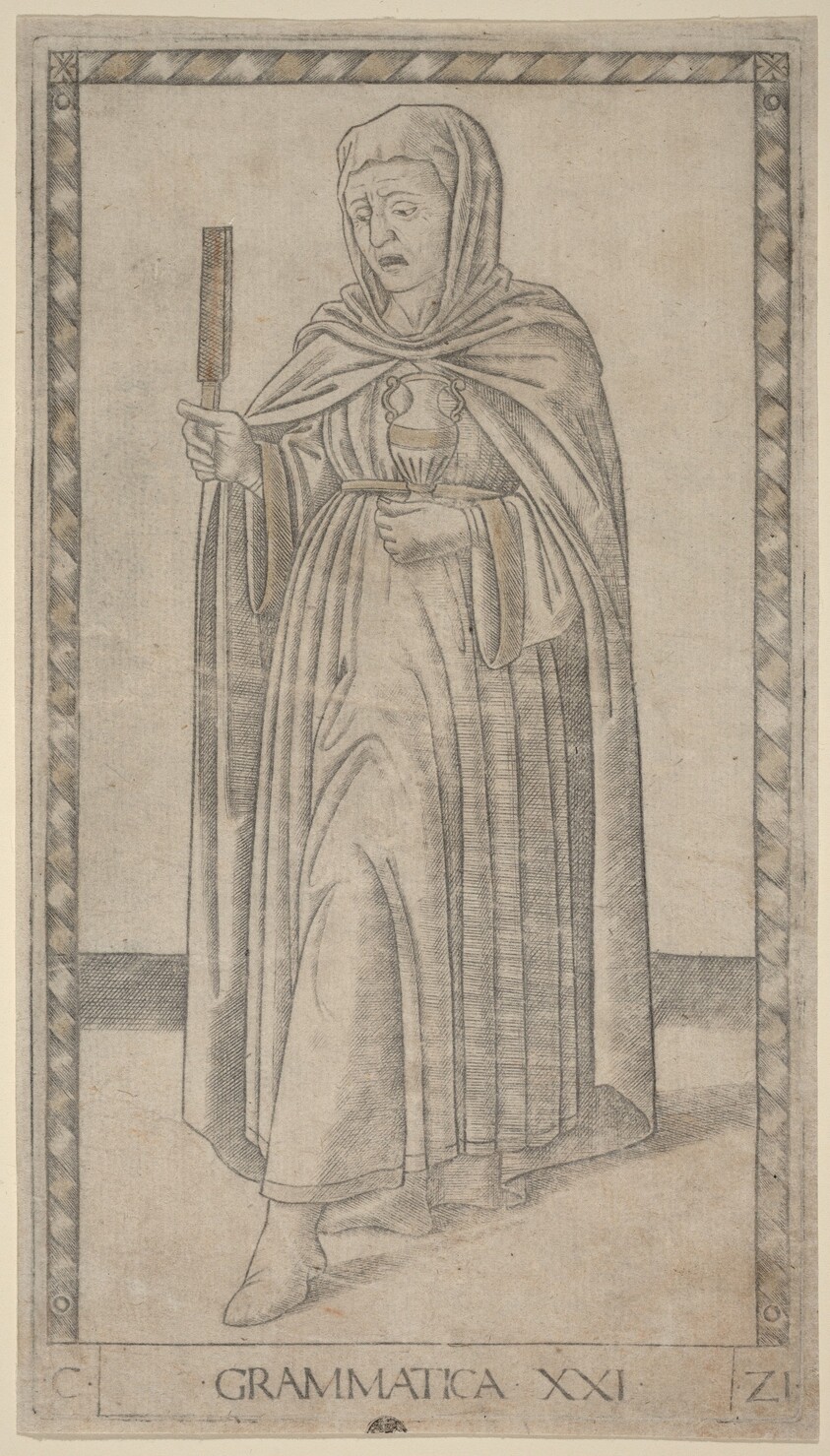
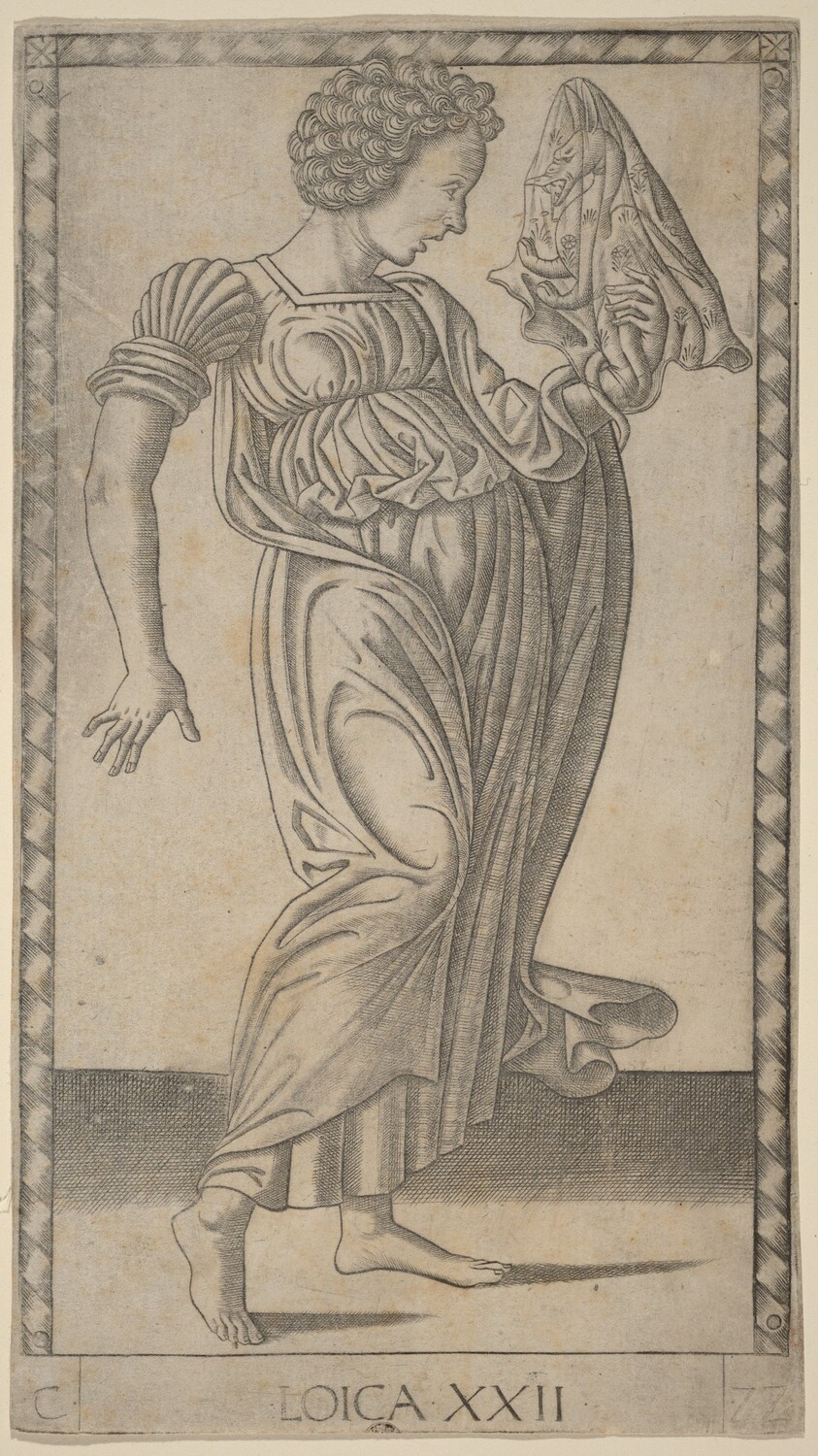
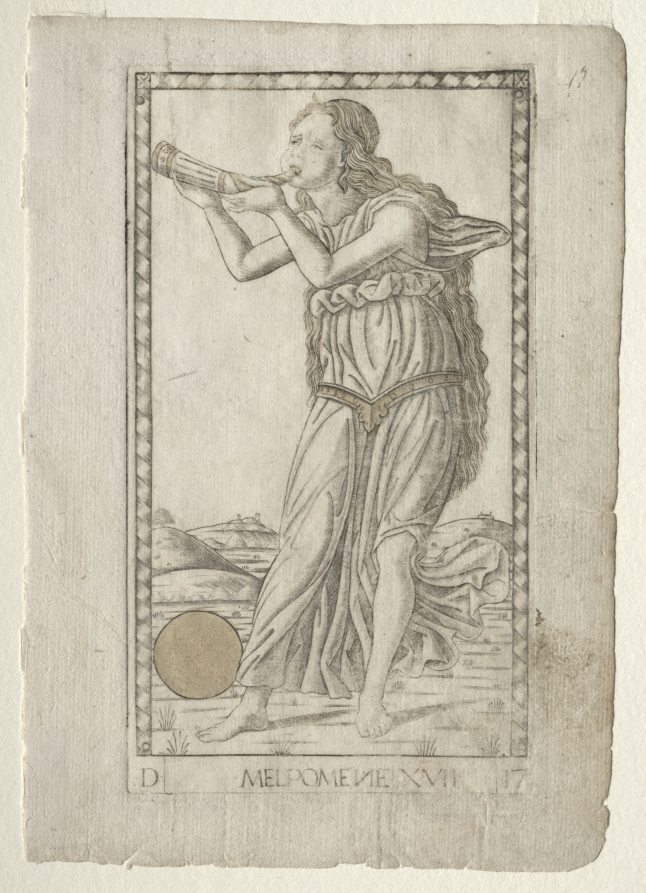
This engraving is part of the group “C” named Liberal Arts. Conceptually, the liberal arts descended from classical antiquity, and were divided into the Trivium (Grammar, Rhetoric, and Dialectic or Logic) and the Quadrivium (Music, Geometry, Arithmetic, and Astronomy). In the Tarocchi set the total number was risen to ten, with the addition of the three disciplines (Poetry, Philosophy, and Theology). The liberal arts denoted knowledge or skills considered necessary to participate in a free society. By the late Middle Ages, they began to be represented in the visual arts as womanlike allegories. Here, Musicha (Music) is personified as a young female figure seated upon a swan and playing a recorder, known simply as a flute in the 15th century. At her feet are numerous musical instruments including a portative organ, lute, shawm, harp, and rebec. The swan can be interpreted as a symbol of song, based upon the ancient belief that this bird, which is mute all its life, sings in exquisite tones shortly before it dies.