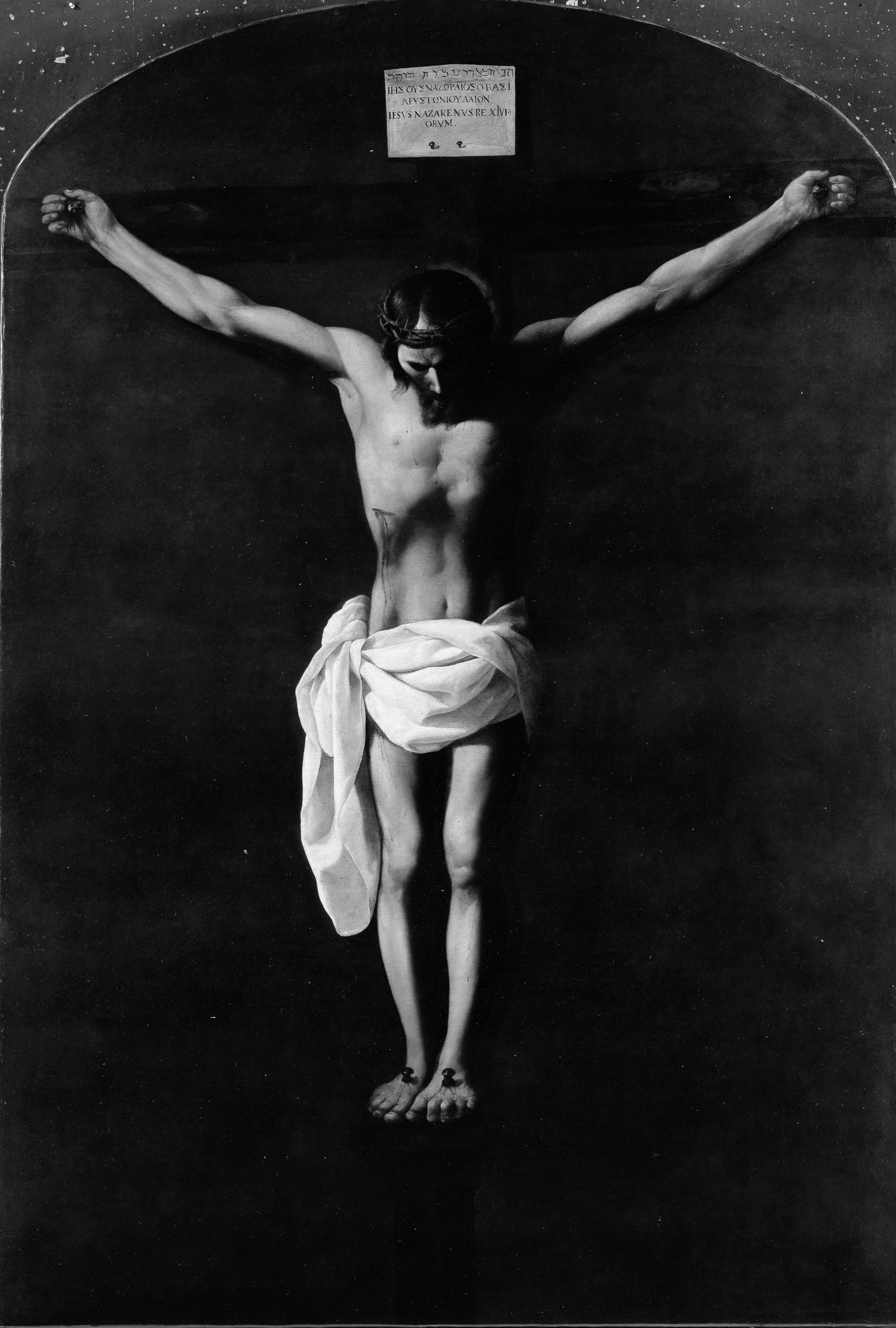
The Crucifixion
- Medium
- Oil on canvas
- Dimensions
- 290.3 × 165.5 cm (114 5/16 × 65 3/16 in.); Framed: 339.1 × 212.1 × 14 cm (133 3/8 × 83 1/2 × 5 1/2 in.)
- Genre
- Oil on canvas
- Museum
- Art Institute of Chicago
Styles
Tags
religionoil paintings (visual works)paintingpaintcanvasJesusoil on canvasoil paint (paint)painting (image making)crucifixions17th Centurypainting techniquescrossesRenaissanceChristian subjectsmanreligiousbiblicaloil paintingeuropean paintingChristianityspanish
About
In 1626 the Dominican monastery of San Pablo el Real in Seville, Spain, commissioned the young Francisco de Zurbarán to execute a cycle of paintings including The Crucifixion. This work was installed in a dimly lit space in the monastery and was visible to visitors through a grill. Early commentators remarked on its powerful illusion of three-dimensionality, as though it was a sculpture rather than a painting. The dramatically illuminated figure of Christ, set against a dark, empty background, appears outside of time and place, both idealized in its quiet beauty and humanized by the individualized face and insistent realism.