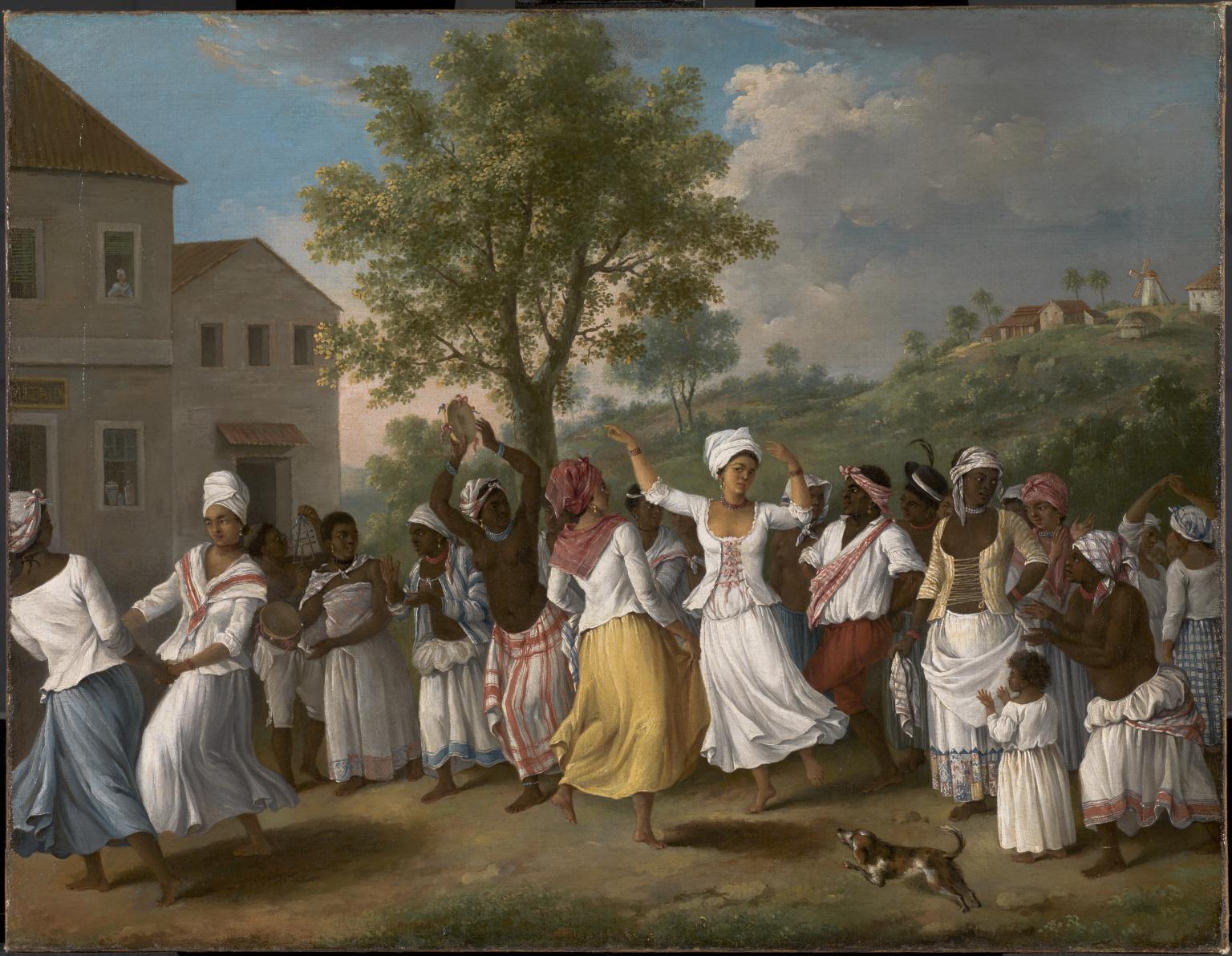
View on the River Roseau, Dominica
Agostino Brunias
1770–1780
- Medium
- Oil on canvas
- Dimensions
- 84.1 × 158 cm (33 1/8 × 62 3/16 in.); Framed: 99.4 × 173.1 × 10.8 cm (39 1/8 × 68 1/8 × 4 1/4 in.)
- Genre
- Oil on canvas
- Museum
- Art Institute of Chicago
Tags
oil paintings (visual works)paintingpaintpovertycanvaslaborSkyoil on canvasslaverymencolonialismoil paint (paint)painting (image making)mountainspainting techniquesItalianafricanfigurescaribbeanlandscapewomencloudschildrenoil paintingtreesvillageeuropean paintingwealth18th Centuryriver
About
In this expansive view of Dominica, people along the riverbank bathe, wash linens, converse, and sell produce. The presence of indigenous Carib, African, Afro-Creole, European, and mixed-race individuals attests to the long history of white-settler colonialism in the West Indies, where valuable crops such as coffee and sugar were cultivated through the labor of enslaved people. The Italian-born artist Agostino Brunias settled on the island, painting scenes of Caribbean life for his planter-class patrons as well as white audiences abroad. Eliding the brutal conditions of slavery, his compositions shaped a reassuring vision of British imperialism for those in power. Yet by centering enslaved and free people of color—and focusing on mixed-race interactions—he also foregrounded the human impact of colonialism.