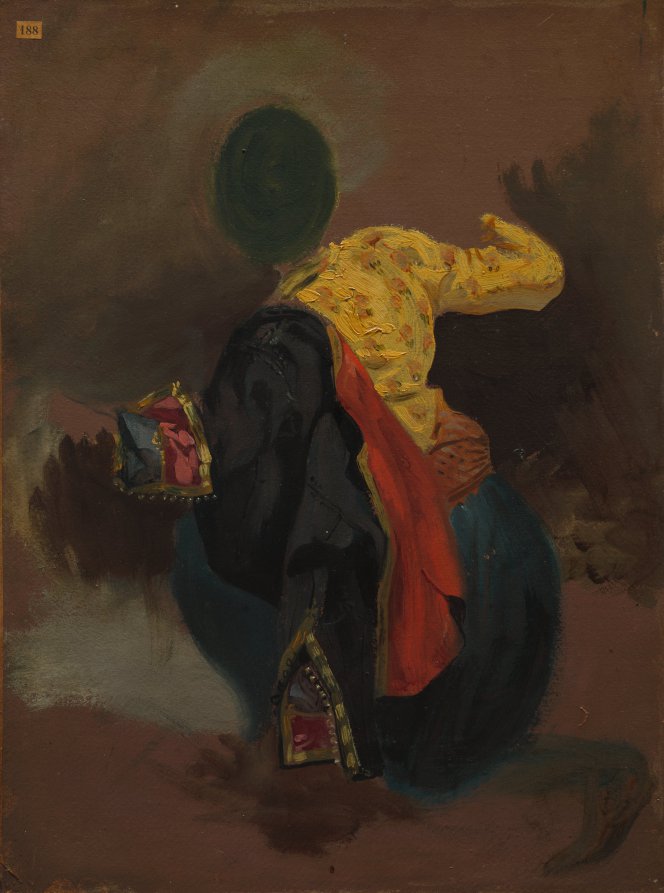
Combat Between the Giaour and the Pasha
Eugène Delacroix
1827
- Medium
- Lithograph in black on ivory wove paper
- Dimensions
- Image: 35.8 × 26 cm (14 1/8 × 10 1/4 in.); Sheet: 47.5 × 33.9 cm (18 3/4 × 13 3/8 in.)
- Genre
- Lithograph
- Museum
- Art Institute of Chicago
Tags
printprints and drawingpaper (fiber product)lithograph
About
Like the poem on which it is based, Lord Byron’s The Giaour (1813), this print exhibits Europeans’ contemporary fascination with the Middle East, a trend known as Orientalism that often depended on stereotypes of violence and sexuality. In the poem, a Venetian giaour (a Turkish term for a non-Muslim) falls in love with Leila, a member of a Turkish harem controlled by the pasha (master), Hassan. When Hassan discovers this affair, he kills Leila. In the scene depicted here, the giaour fights the pasha to avenge his lover.