The Donkey Laden with Food, from Emblematic Figures of Animals
Adriaen van de Venne
1628–1638
- Medium
- Engraving on ivory laid paper
- Dimensions
- Plate: 27.3 × 20.5 cm (10 3/4 × 8 1/8 in.); Sheet: 27.4 × 20.7 cm (10 13/16 × 8 3/16 in.)
- Genre
- Engravings
- Museum
- Art Institute of Chicago
Tags
engravingprintprints and drawingpaper (fiber product)
About
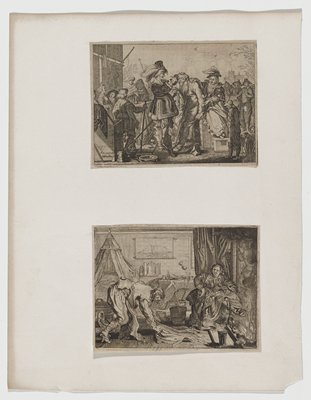
Prints of animals could be accurate and fanciful simultaneously. This finely engraved yet slightly caricatured scene from Aesop’s Fables depicts a donkey laden with fine food and wine who nonetheless happily gnaws at a prickly thistle instead. Moral interpretations of the text have ranged from “One man’s meat is another man’s poison” to a critique of stinginess. Though unsigned, this humorous image of feast and famine set off a chain of copies, ironically ending with a dozen Aesop roundels that decorated the back of trenchers, wooden plates used for the final fruit and nut course in England.