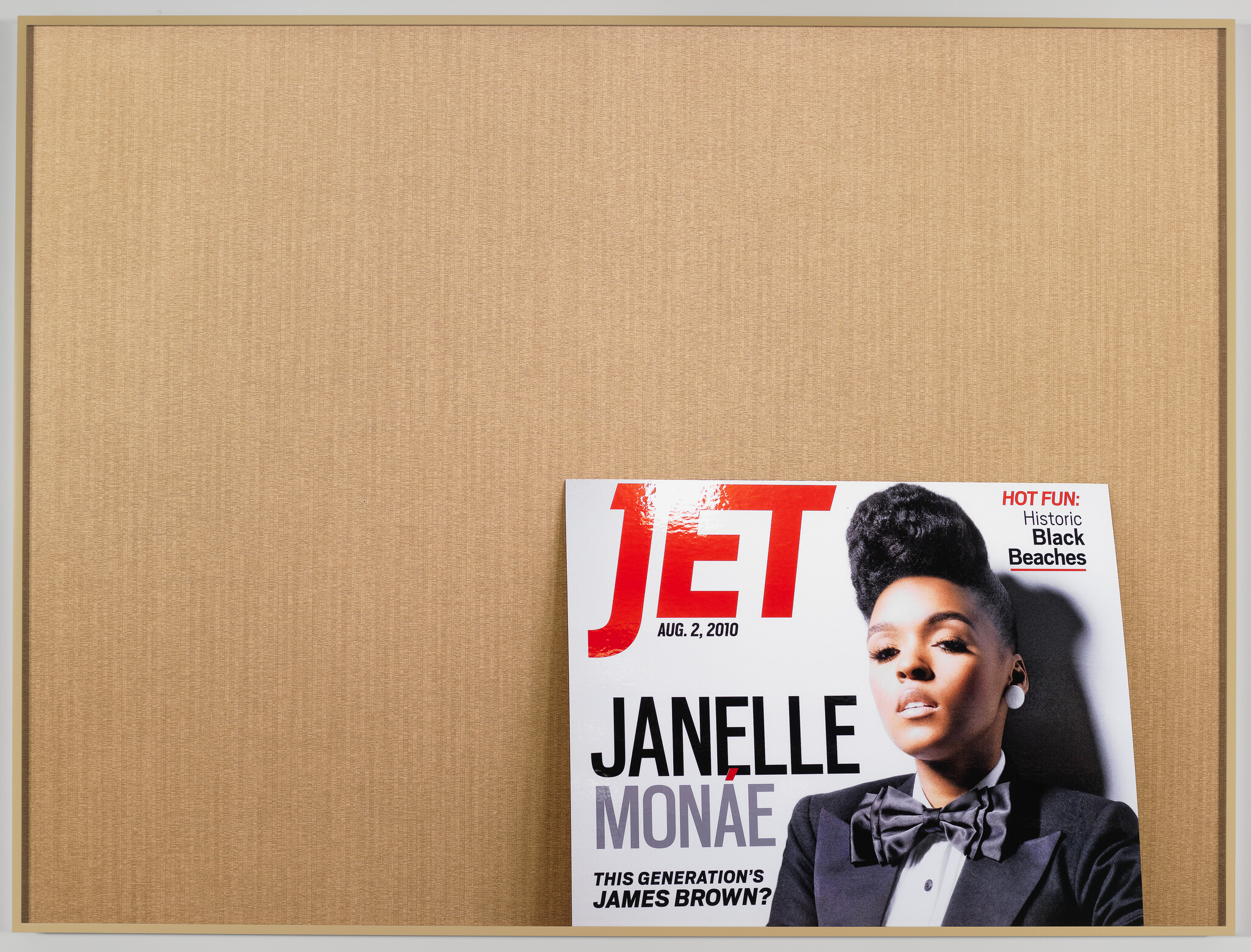
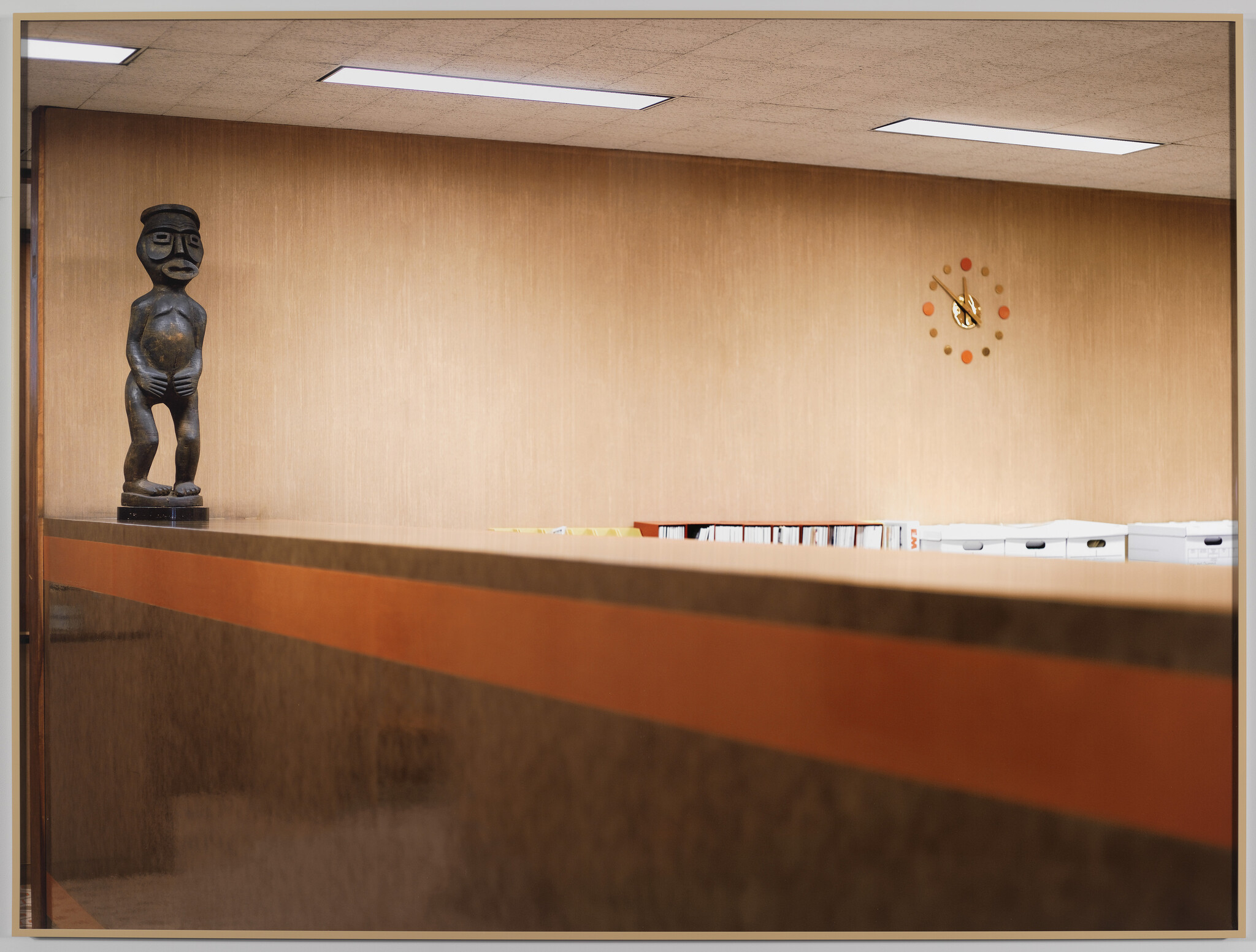
for everyone a garden VI, from the series "for everyone a garden"
David Hartt
2013
- Medium
- Inkjet prints (diptych), artist's proof
- Dimensions
- Each image/paper: 151 × 201 cm (59 1/2 × 79 3/16 in.); frame: 152.5 × 204 × 5.5 cm (60 1/16 × 80 3/8 × 2 3/16 in.)
- Genre
- Photographs
- Museum
- Art Institute of Chicago
Tags
21st Centuryphotographyphotograph
About
Chicago-based artist David Hartt explores how architecture both reveals—and fails to fulfill—the ideals of a given community. Titled after a 1974 book by the architect Moshe Safdie that argues for the social benefits of modular and prefabricated design, these drawings depict the inadequacies of one such project—architect Jean-Louis Chanéac’s 1962 “juxtaposable cellules,” oval pods arranged in organic clusters. On the right, a well-dressed man in a luxurious interior expresses a leftist statement that clashes with his lavish environment. On the left, a diverse group of citizens protests under the banner of Safdie’s slogan; the subtext is that Chanéac’s spaces are only accessible to the wealthy. Hartt enlisted a professional illustrator to draft these images based on a digital collage he designed himself. He then glazed the drawings using color Plexiglas in the palette of 1960s and 1970s psychedelia, arguably another failed utopian project.