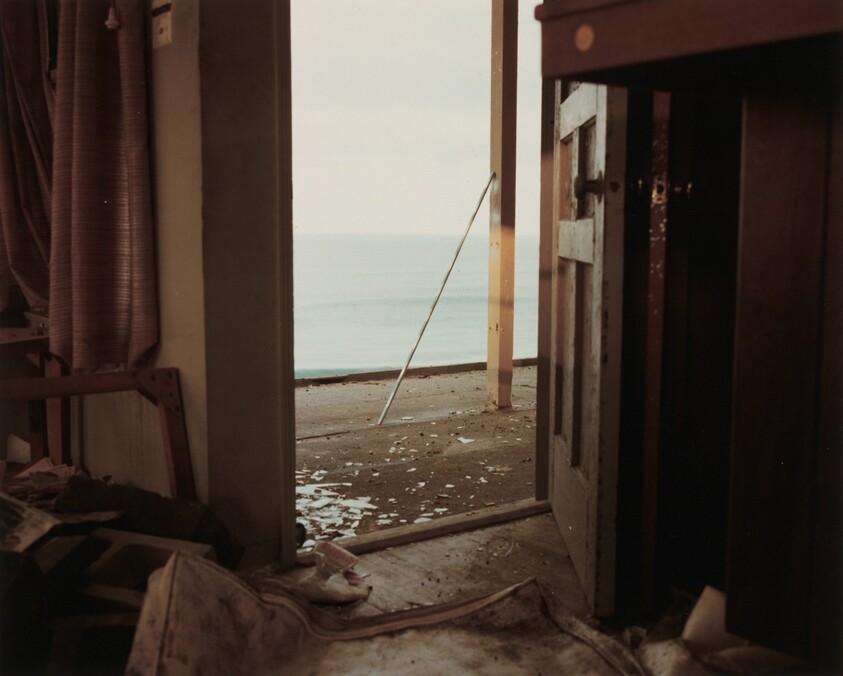
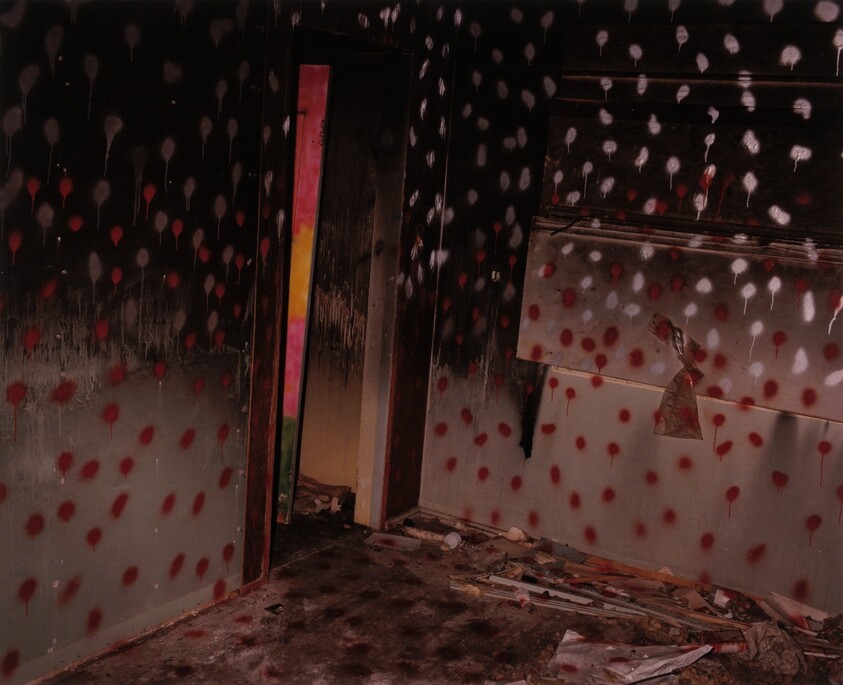
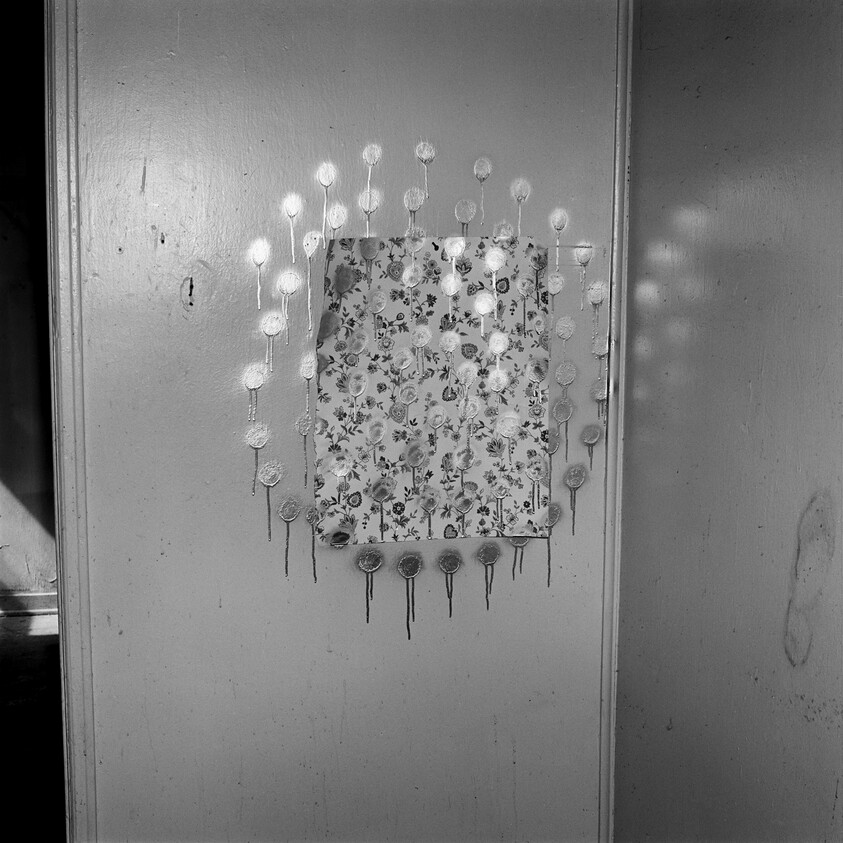
Zuma #25
John Divola
1978
- Medium
- Chromogenic print
- Dimensions
- Image: 24.9 × 30.6 cm (9 13/16 × 12 1/16 in.); Paper: 27.9 × 35.5 cm (11 × 14 in.)
- Genre
- Photographs
- Museum
- Art Institute of Chicago
Tags
chromogenic color printphotographyphotograph
About
John Divola incorporated the happenings and performances common to art in the 1970s into his photographs, straddling the line between witness and participant. Initially, he spray-painted the interiors of abandoned houses—substitutes for a studio he did not have—in silver so that he could photograph the walls in black-and-white. When he came across a vacant Zuma Beach home, he was drawn to the crumbling structure's ocean-view windows. Over repeated visits he began to appreciate the subtle changes wrought by others—empty beer cans or remnants of an indoor campfire—and began altering the site himself, spray-painting various surfaces. The play between this mark-making and the ocean backdrop demanded he switch to color film. For Divola, his intervention and documentation are integrally linked: "My acts, my painting, my photographing, my considering, are part of, not separate from, this process of evolution and change."