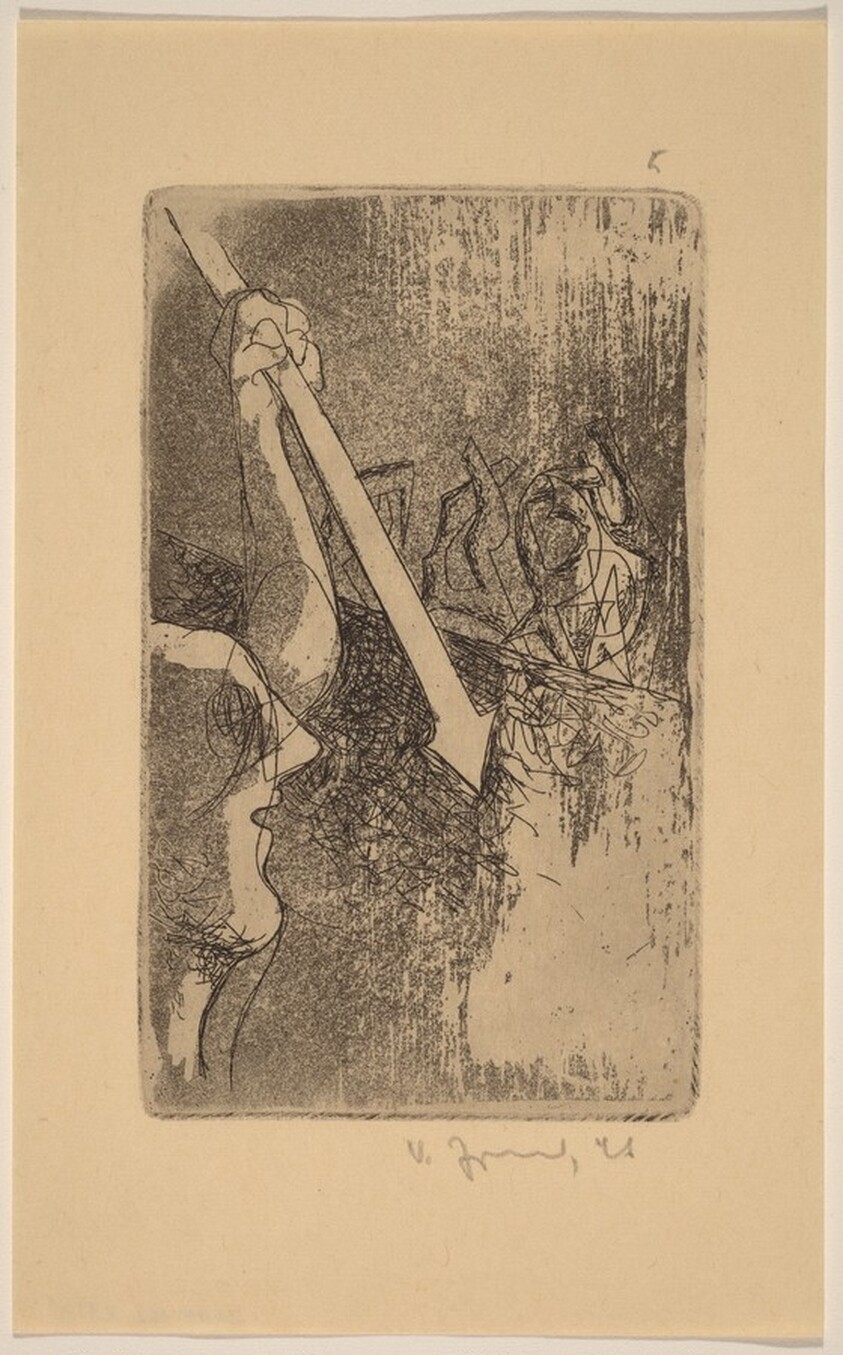
Untitled
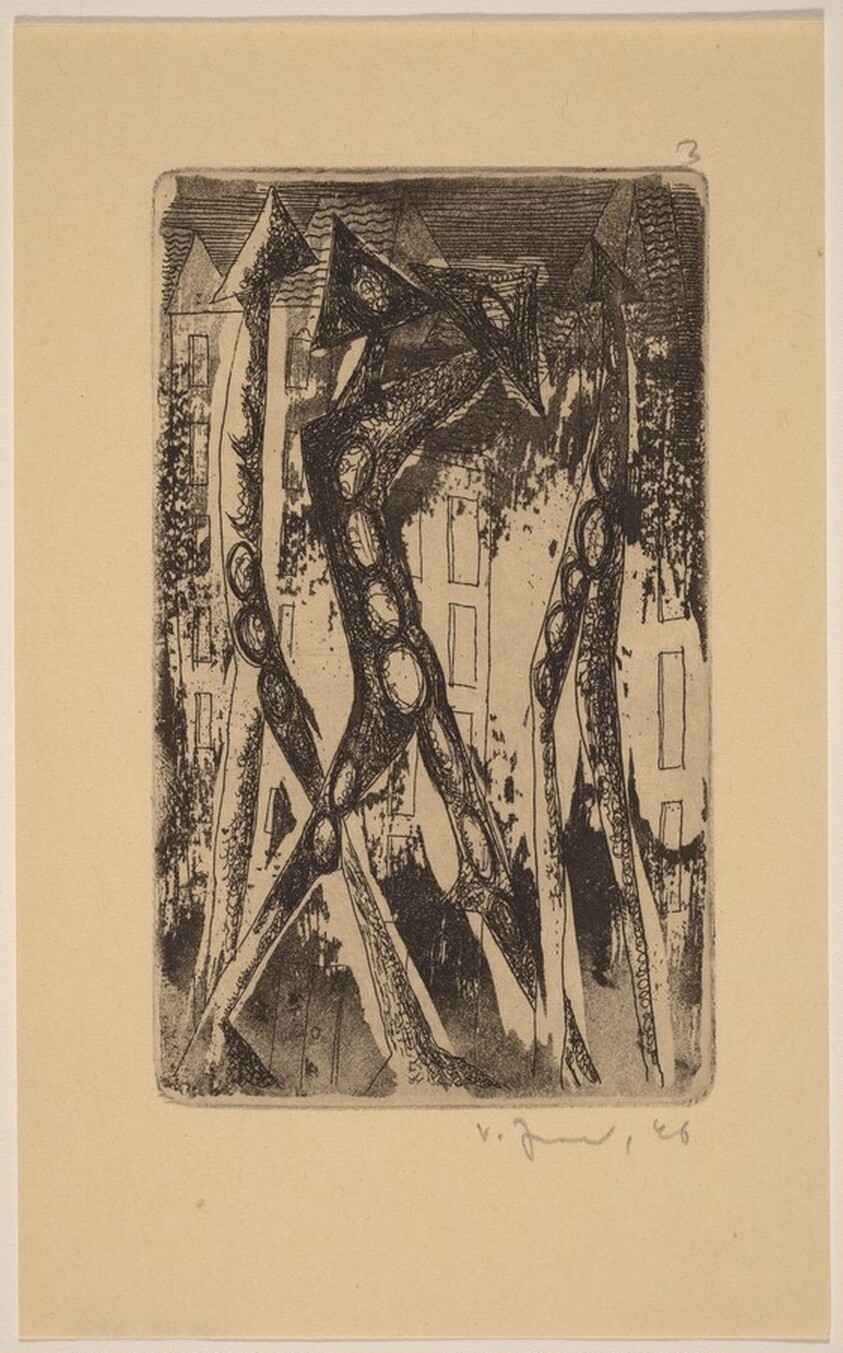
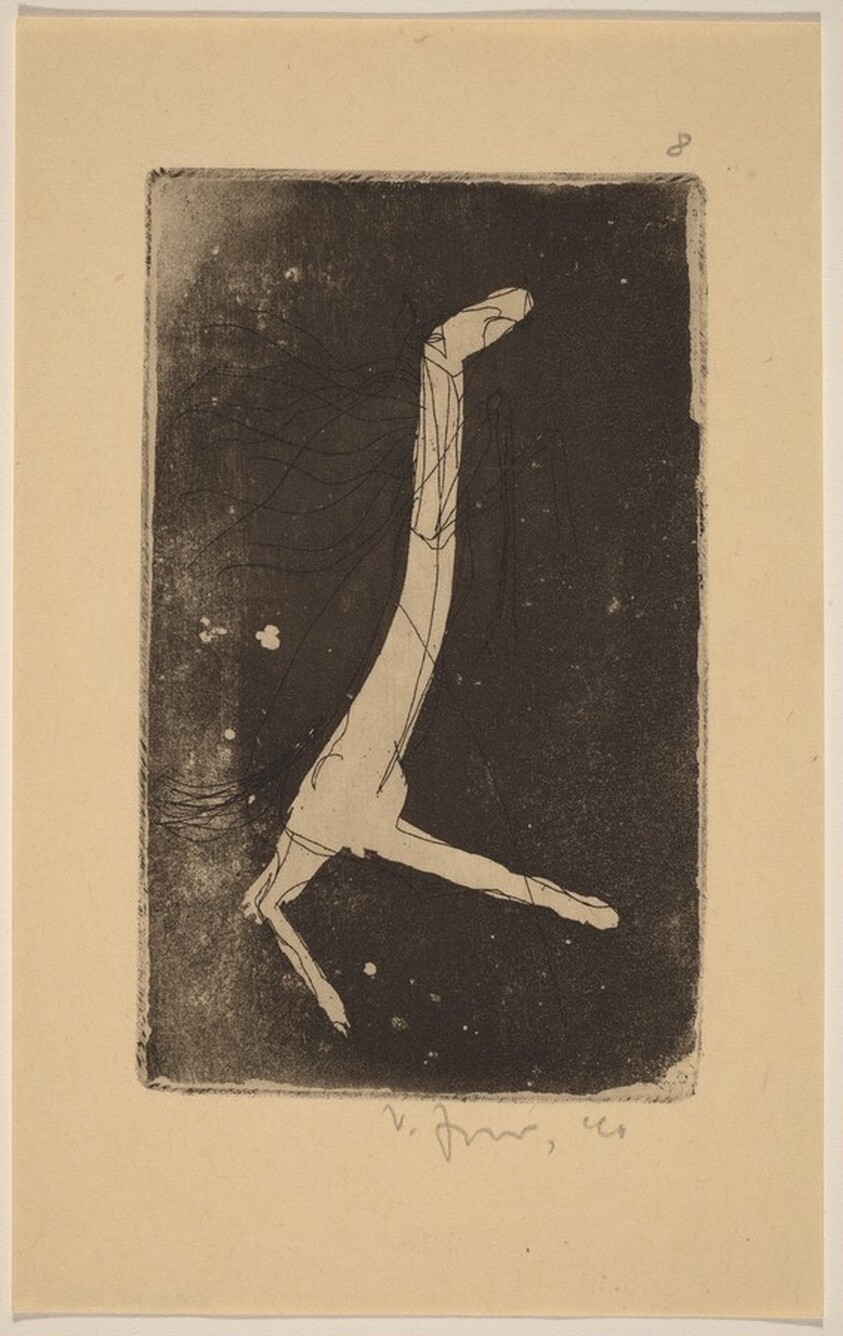
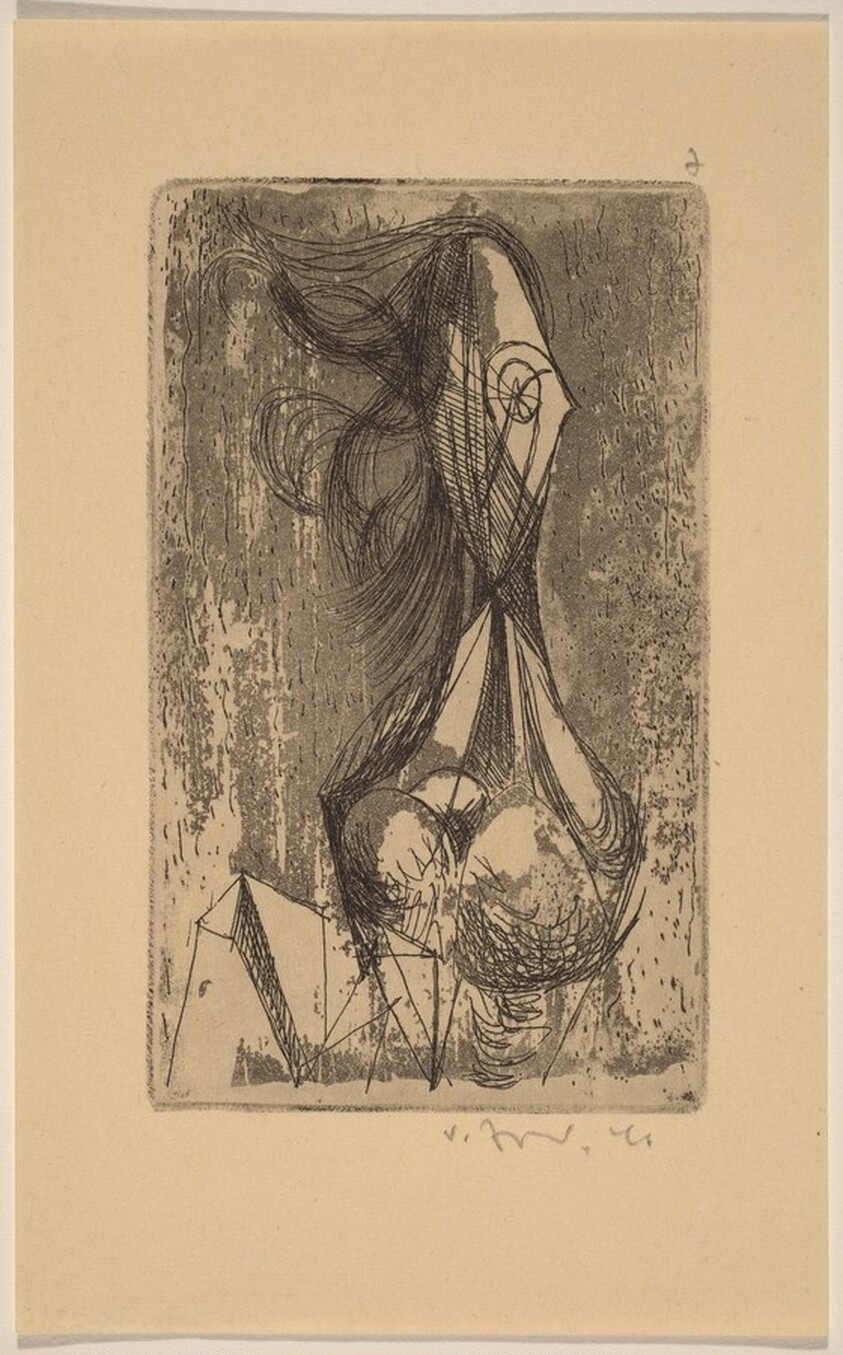
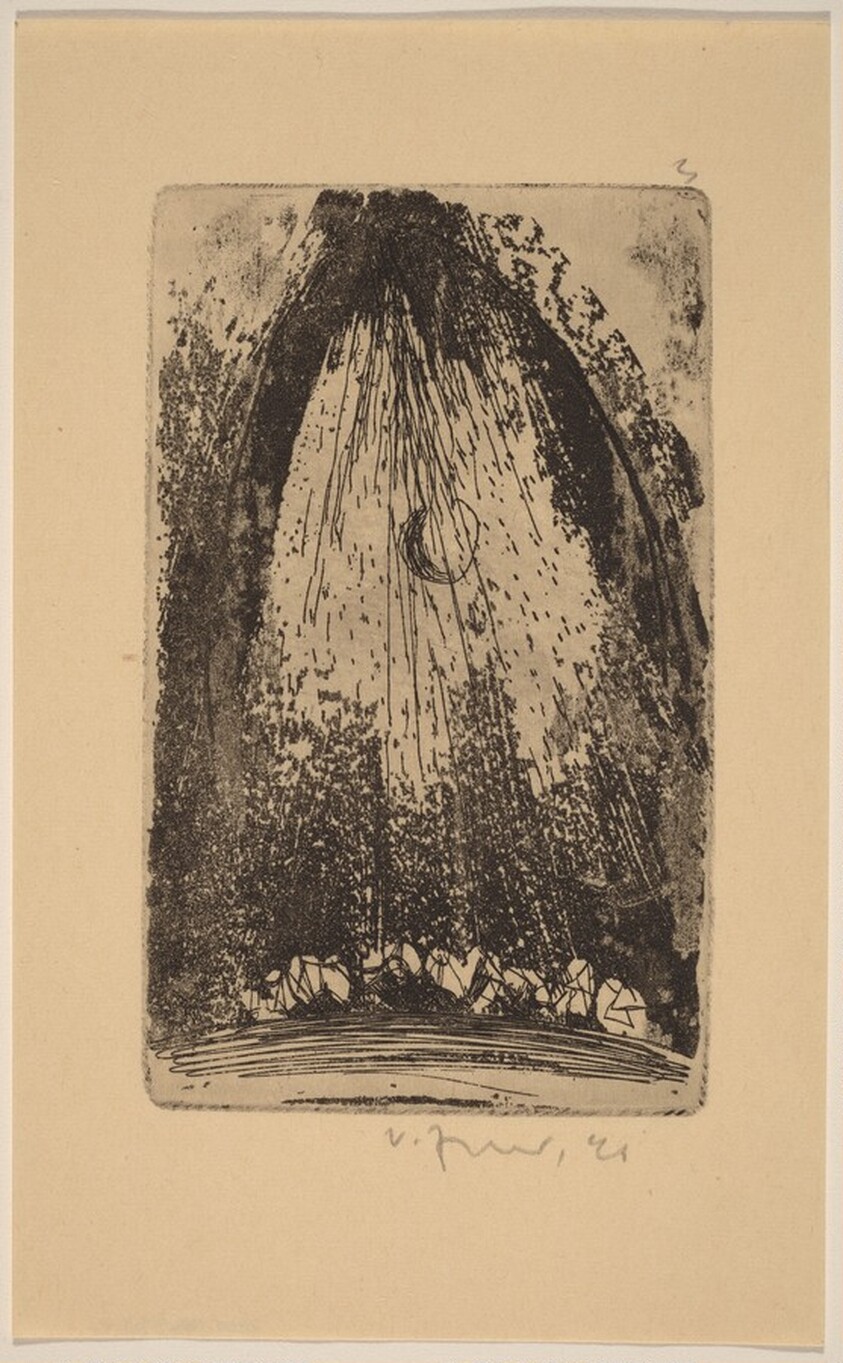
Václav Zykmund
1944
- Medium
- Gelatin silver print
- Dimensions
- Image: 23.9 × 17.5 cm (9 7/16 × 6 15/16 in.); 50.2 × 40 cm (19 3/4 × 15 3/4 in.)
- Genre
- Photographs
- Museum
- Art Institute of Chicago
Tags
photographic techniquesphotographyphotographic processesblack-and-white photographyParisphotographphotographic paper
About
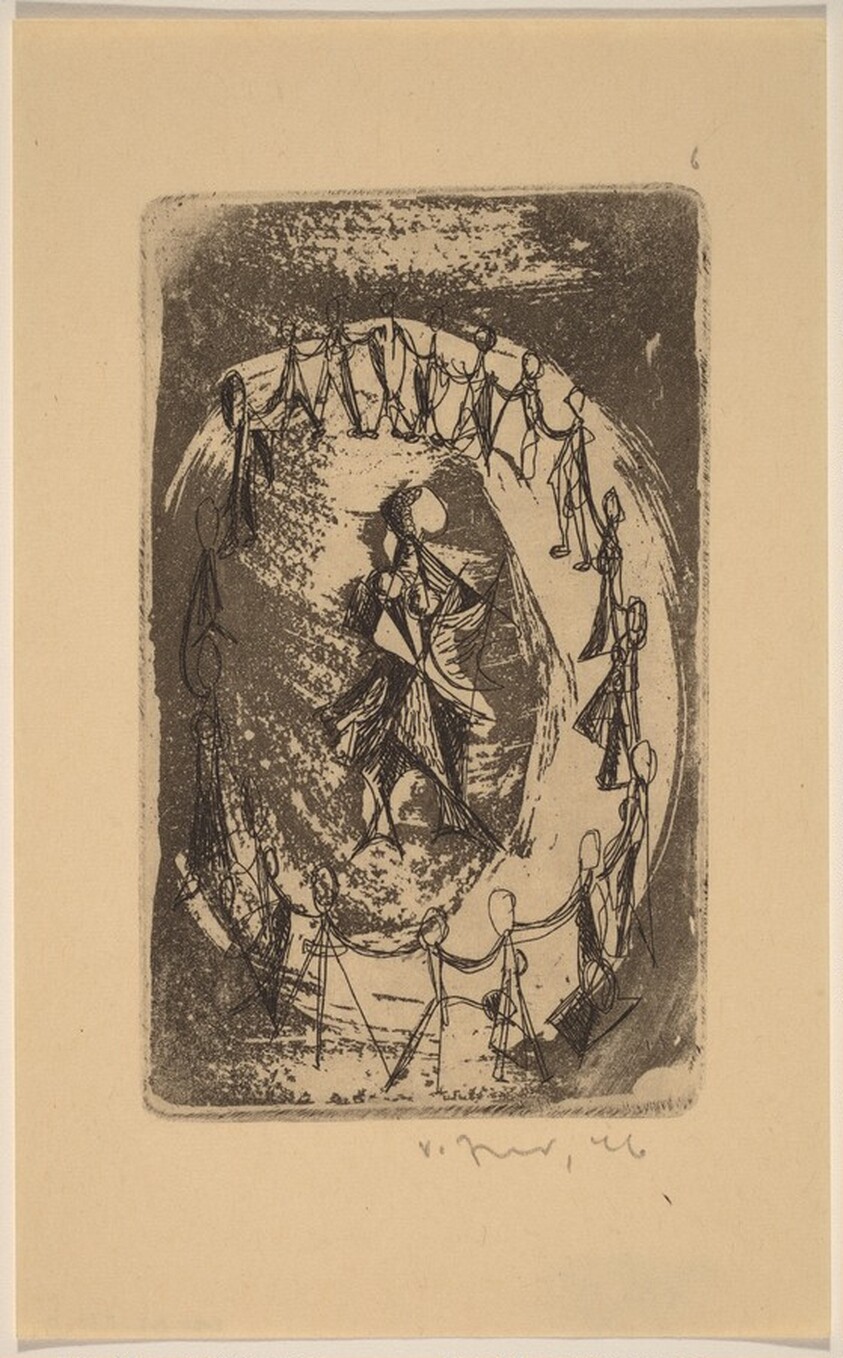
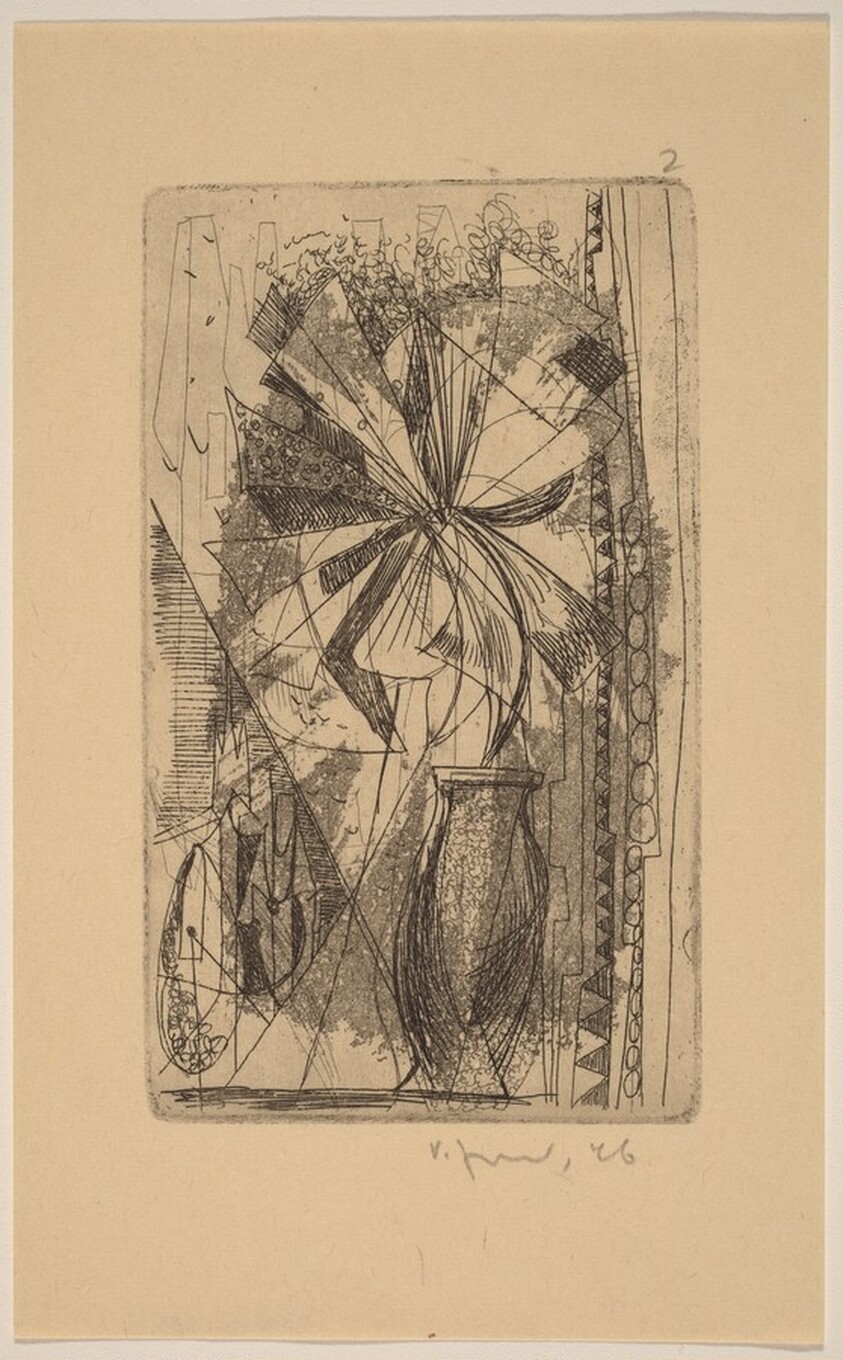
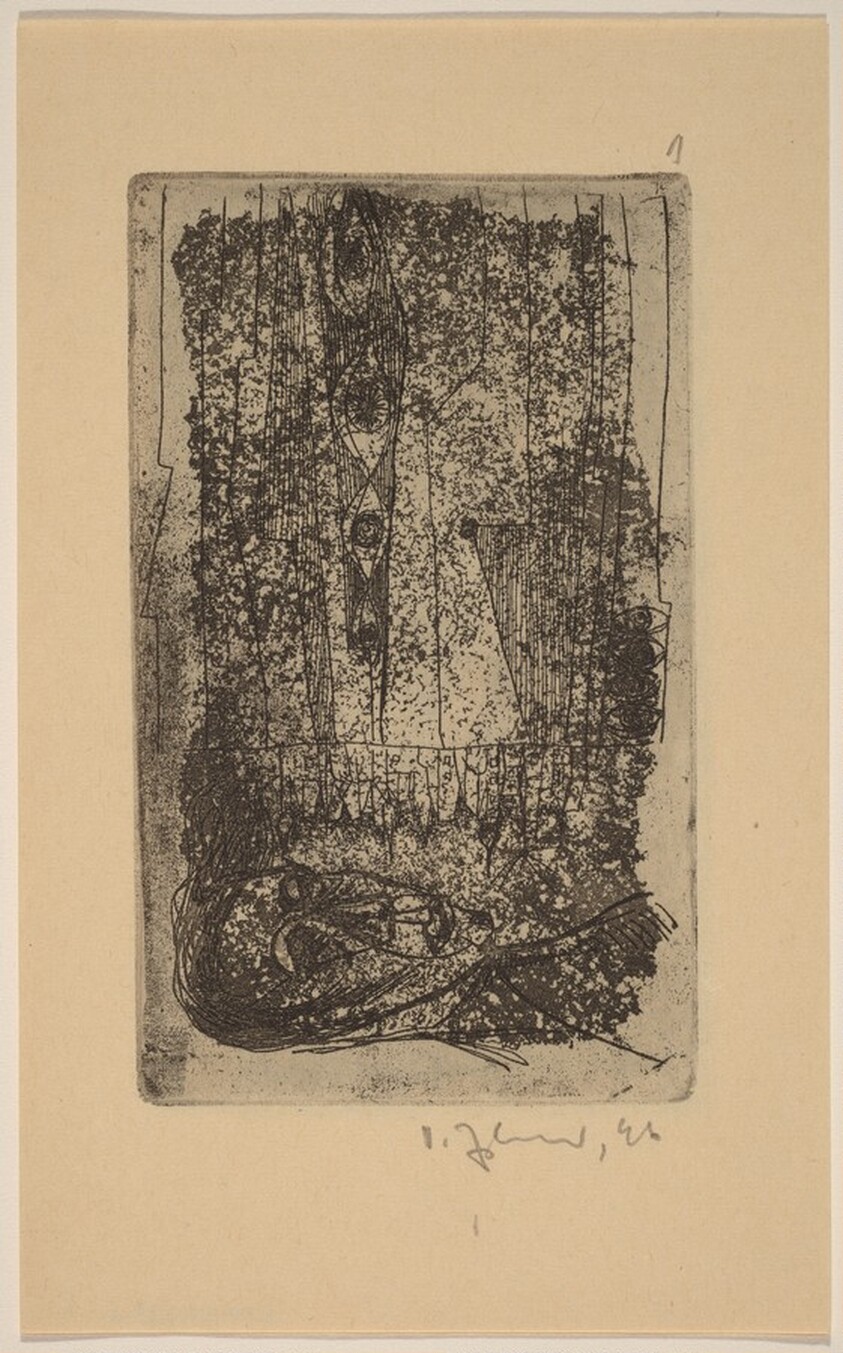
Václav Zykmund participated in the remarkably vibrant Czech Surrealist movement—the second most active center of Surrealism after Paris—which somehow managed to stay alive in Nazi-occupied Czechoslovakia. In 1943–44 Zykmund led a series of Sprees (řádění) in his own and friends’ apartments in Brno, the second major city in the country. Improvising based on loosely drafted scripts, Zykmund and his companions staged cultlike scenes with sundry objects as props, scribbled runic inscriptions on one another’s bodies, or enacted mysterious still lifes. The end product of these photographed performances was to have been collaborative artists’ books, of which only rare maquettes survive.