Cabin in the Cotton
Horace Pippin
1931–1937
- Medium
- Oil on cotton, mounted on Masonite
- Dimensions
- 51 × 85 cm (20 × 33 1/2 in.)
- Genre
- Oil on panel
- Museum
- Art Institute of Chicago
Styles
Tags
paintingrural lifecotton (textile)farm lifeModernismarchitecturemodern and contemporary artoil on panelanimalsMasonite (TM)oil paint (paint)painting (image making)birdscloudslandscapesoil paintingtrees
About
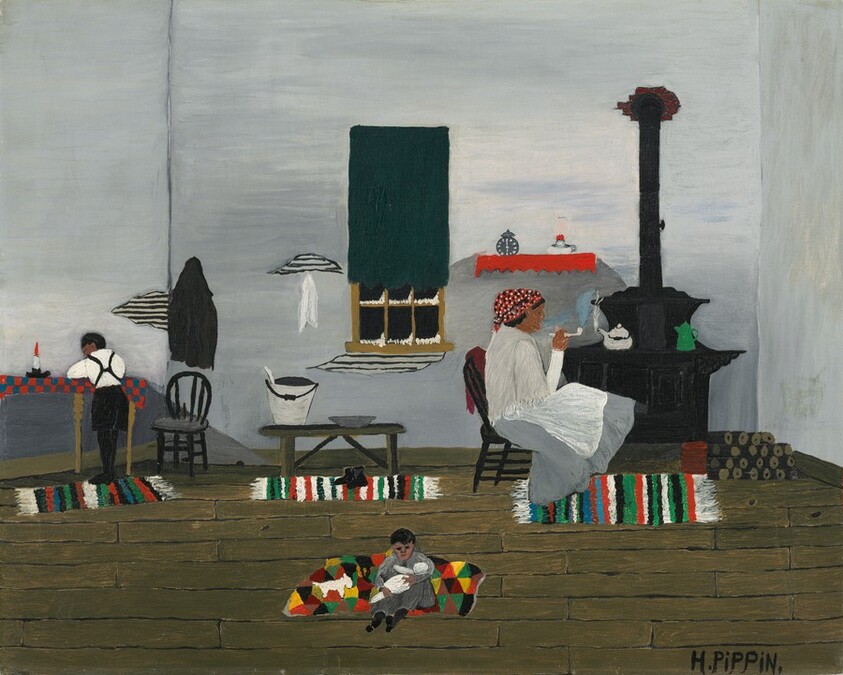
Constructed of dense, thick layers of paint, Cabin in the Cotton exemplifies the tactile and vivid style of selftaught artist Horace Pippin. At a southern homestead, an older woman cares for a young child. Beyond, an expansive field of cotton evokes the hard labor, likely that of family members, required to harvest the crop. Pippin turned to painting as a mode of rehabilitation after injuring his arm while serving in World War I. Born in Pennsylvania, the artist’s interpretation of cotton fields drew upon a visit to South Carolina with his regiment in 1917. Popular culture also may have informed his work: “Cabin in the Cotton” was the title of both a song and a film in the 1930s. On view in a shoe repair shop outside Philadelphia in 1937, the composition caught the attention of artists, critics, and gallerists, winning Pippin wide acclaim and furthering his career.