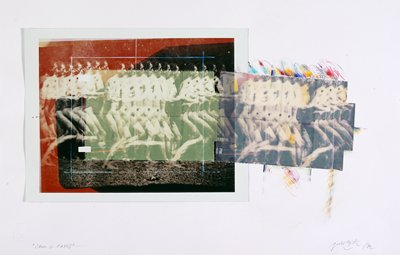
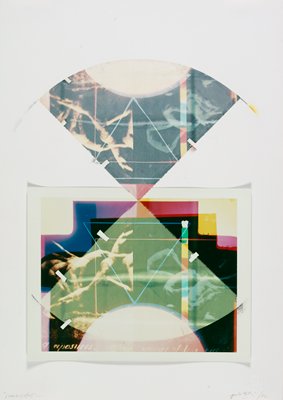
Untitled, from the series "Homage to Niépce"
Paolo Gioli
1982
- Medium
- Dye diffusion print with silk insertion, graphite, and colored pencil on paper
- Dimensions
- Image/paper: 15.2 × 15.7 cm (6 × 6 3/16 in.); Mount: 25 × 35.2 cm (9 7/8 × 13 7/8 in.)
- Genre
- Mixed media/collage
- Museum
- Art Institute of Chicago
Tags
mixed media/collagesilk (fiber)photographyPolaroid (TM) filmphotographpaper (fiber product)internal dye diffusion transfer process
About
To pay homage to photography pioneer Joseph-Nicéphore Niépce, Paolo Gioli made direct Polaroid impressions of an engraved portrait of the cardinal of Amboise that Niépce had used to produce several heliographs, his early photographic invention. Following in Niépce’s experimental footsteps, Gioli tested the constraints of mass-produced instant film, peeling apart the freshly exposed negative while it was still developing and making multiple transfers of the diffusing dyes. He altered the transfers further with masks (strings or fabrics placed between the paper and the negative to block dye transfer), pencils, and tapes. Like specimens from the dawn of photography, the resulting unique artworks defy common conceptions of photography—and also call for cautious handling and exhibition.