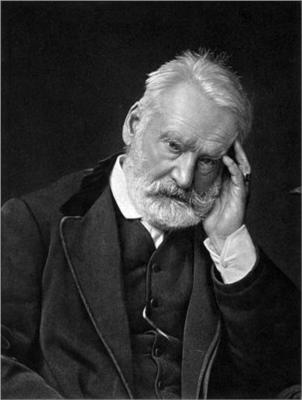
Victor Hugo
b. 1802 — d. 1885
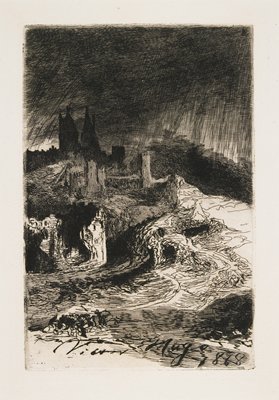
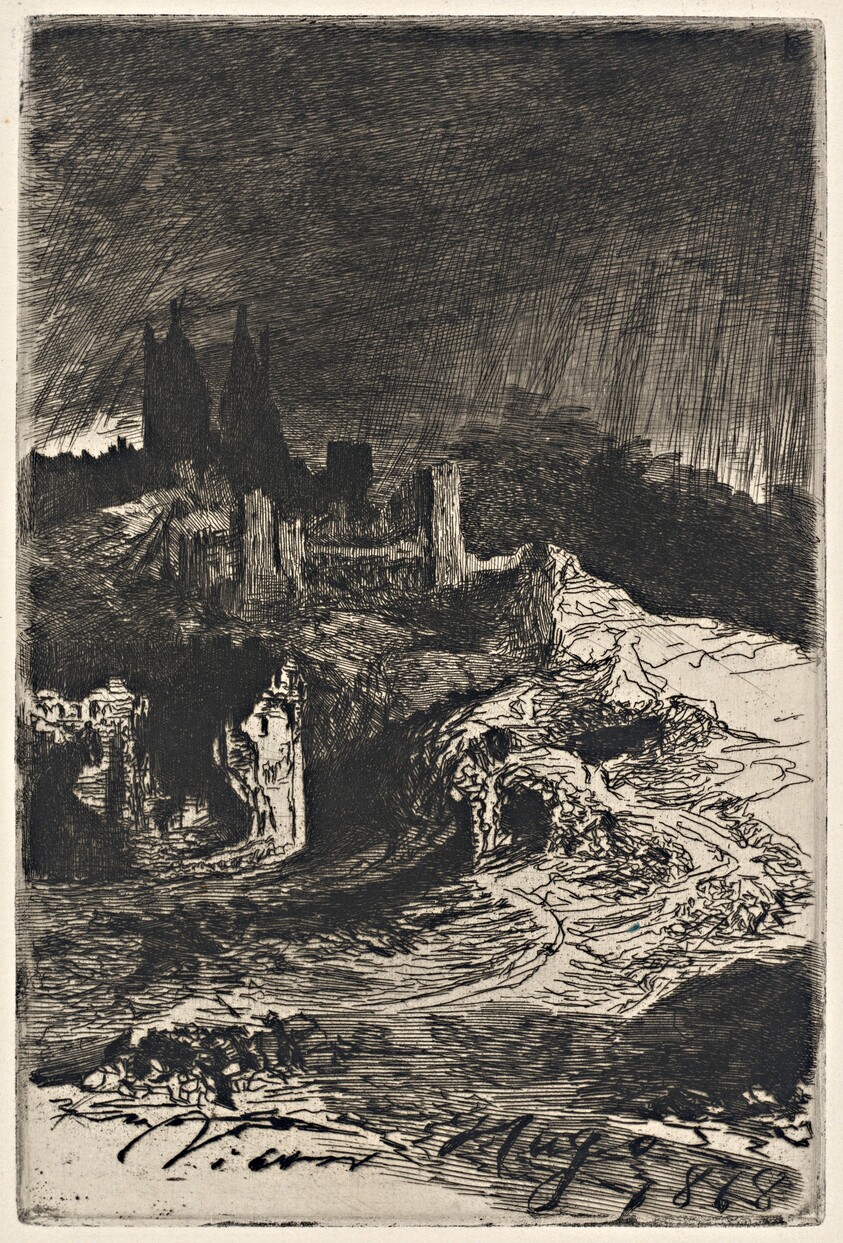
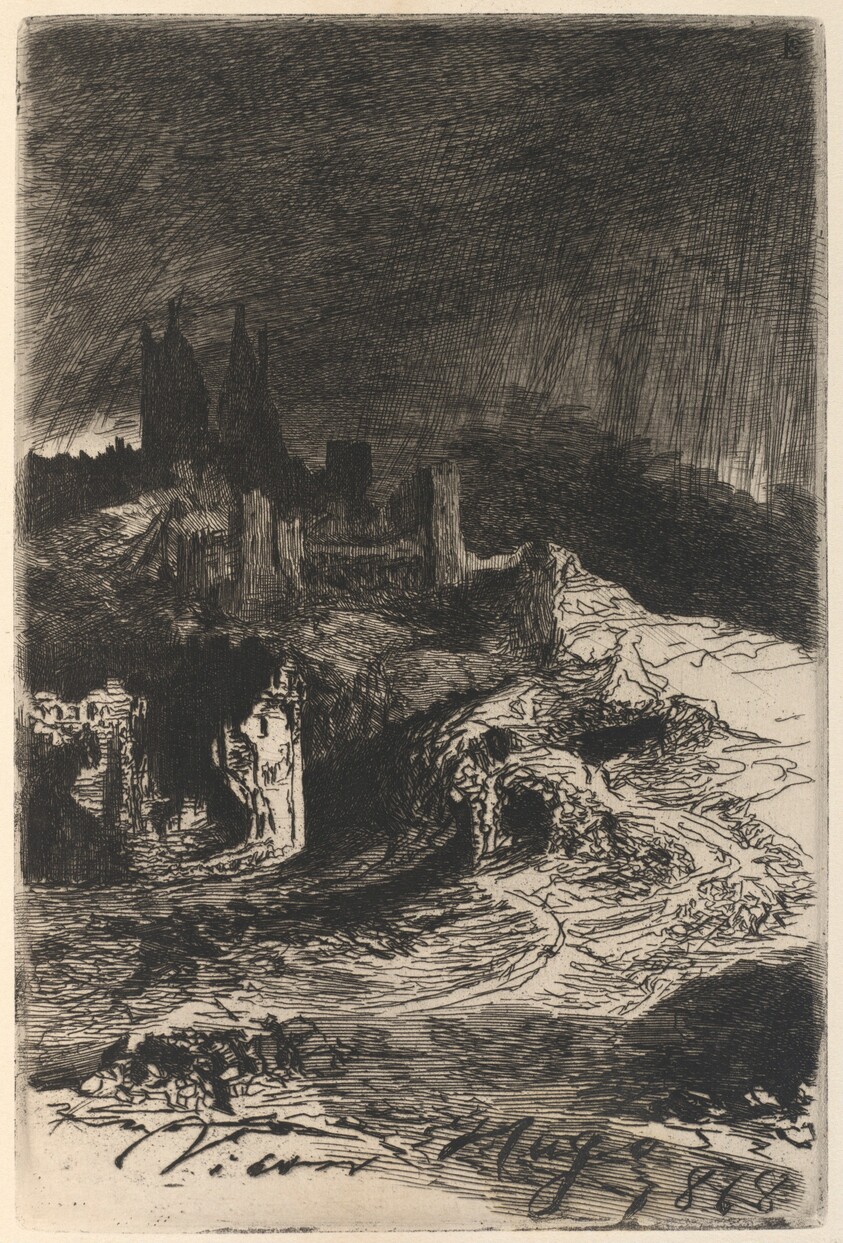
Victor Hugo produced more than 4000 drawings. Originally pursued as a casual hobby, drawing became more important to Hugo shortly before his exile, when he made the decision to stop writing in order to devote himself to politics. Drawing became his exclusive creative outlet during the period 1848–1851. Hugo worked only on paper, and on a small scale; usually in dark brown or black pen-and-ink wash, sometimes with touches of white, and rarely with color. The surviving drawings are surprisingly accomplished and "modern" in their style and execution, foreshadowing the experimental techniques of Surrealism and Abstract Expressionism. He kept his artwork out of the public eye, fearing it would overshadow his literary work. However, he enjoyed sharing his drawings with his family and friends, often in the form of ornately handmade calling cards, many of which were given as gifts to visitors when he was in political exile. Some of his work was shown to, and appreciated by, contemporary artists such as Van Gogh and Delacroix; the latter expressed the opinion that if Hugo had decided to become a painter instead of a writer, he would have outshone the artists of their century.
Timeline
Born 1802 — Died 1885

1850s

1870s


