James Fitzallen Ryder (American, 1826–1904)
b. 1826 — d. 1904
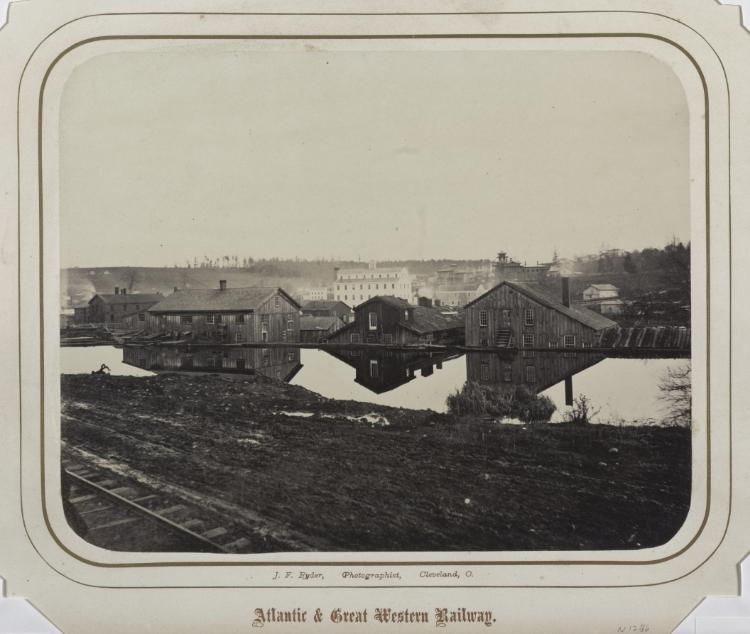
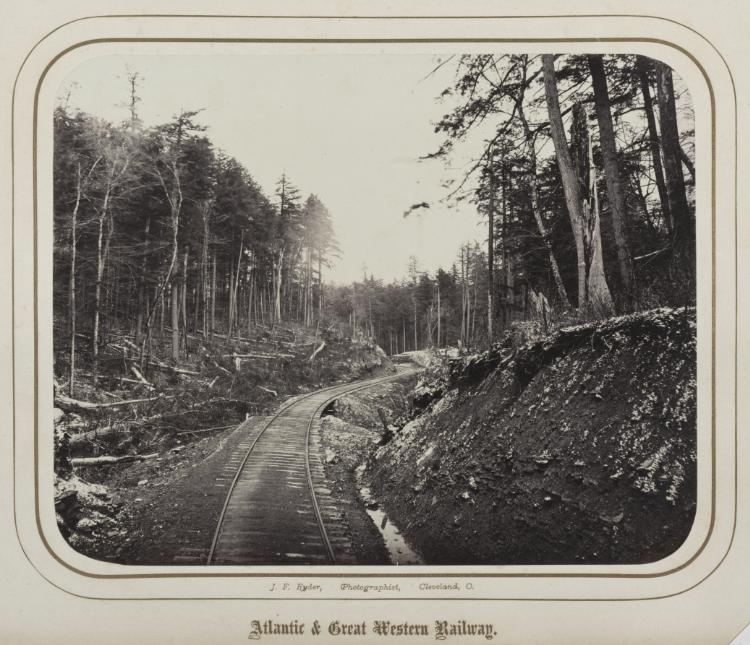
James Fitzallen Ryder American, 1826-1904 A respected commercial photographer, James F. Ryder was also recognized for advancing the photographic profession. Born in Ithaca, New York, he grew up in nearby Tompkins County, spending his early years as a printer's apprentice. In 1847 he learned daguerreotypy with a Professor Brightly and continued his studies three years later in Cleveland with Charles E. Johnson. From there Ryder worked as an itinerant photographer in southwestern New York, Pennsylvania, and Ohio, settling in Elyria, Ohio, in 1851. He eventually moved to Cleveland, taking over Johnson's studio in 1856 and producing mostly portraits. In 1862 Ryder received a major commission from the Atlantic and Great Western Railway to photograph the construction of their new railroad. This work, one of the earliest rail surveys, was intended to satisfy stockholders and inspire future investors in the enterprise by supplying the speculators with a two-volume album of 129 photographs of the landscape, towns, stations and sheds, bridges, cuts, and tracks associated with the venture. Ryder is credited with bringing several photographic innovations to Cleveland, including the ambrotype, stereoview, hallotype, and hand-colored portraits. In 1868 he claimed to introduce negative retouching to the United States when he brought from Germany Karl Leutgib, a retoucher who had trained with Hermann Wilhelm Vogel. Ryder had become Cleveland's leading photographer by the late 1860s and soon developed a national reputation as well. He was active in the National Photographers Association and was a founding member and first president of the Photographers Association of America (1880). A frequent lecturer and contributor to photographic publications, Ryder also wrote an autobiography, Voigtlander and I (1902). K.L.C.