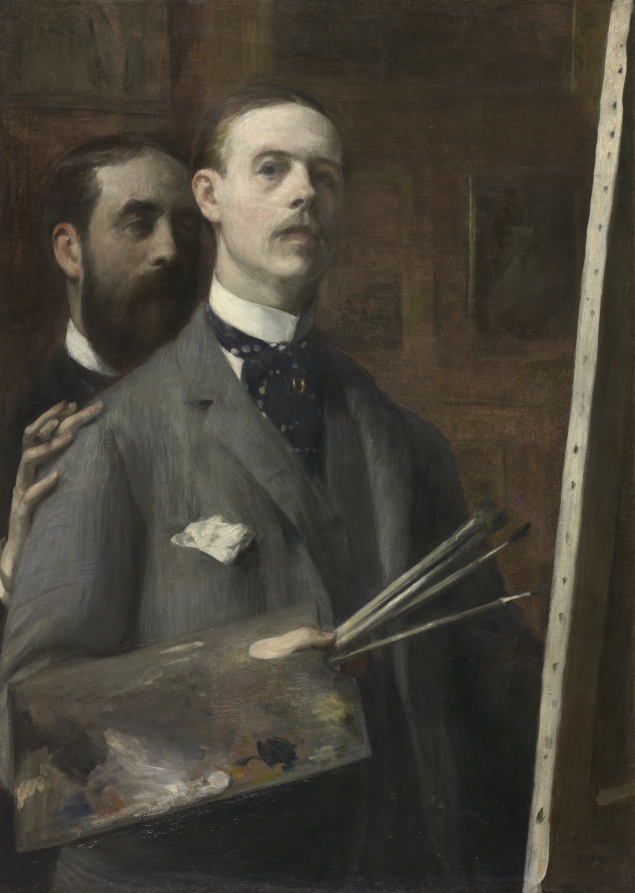
Jacques-Émile Blanche (French, 1861–1942)
b. 1861 — d. 1942
Apart from some artistic instruction from Henri Gervex (1852-1929) and Ferdinand Humbert (1842-1934), Blanche was self-taught. The grandson of Esprit (1796-1852) and son of Émile Blanche (1828-93), both famous nineteenth-century alienists, Jacques-Émile often portrayed his father's patients, generally members of the social or cultural elite, and was influenced by the fashionable portraits by such artists as Tissot (q.v.) and John Singer Sargent (1856-1925). Blanche first visited London as a child during the Franco-Prussian War (1870-71) and then returned in 1884. He continued to travel to England every year and became famous for his portraiture, particularly of artists and writers. He spent his summers at his family's country house in Dieppe, a resort that attracted artists from both France and England. Despite his many trips to London, Blanche ultimately remained a member of the Paris social milieu and exhibited at the Salon from 1882 until 1889 and at the Société Nationale des Beaux-Arts from 1890. His contemporaries regarded Blanche highly as an important critic of art and literature. Not only had he befriended many writers, such as Hardy, Beardsley, Proust, Cocteau, Jacob, Mauriac, and Gide, but he was also closely connected to the Ballets Russes, which resulted, for example, in several portraits of Diaghilev. He donated many of his own paintings and those by others in his collection, as well as a large part of his archives, to the Musée des Beaux-Arts in Rouen.