Frederick McCubbin
b. 1855 — d. 1917
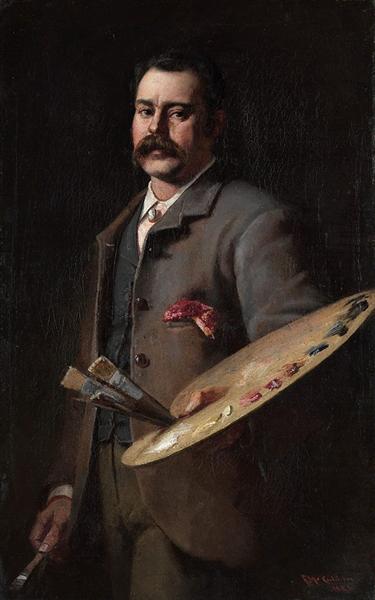
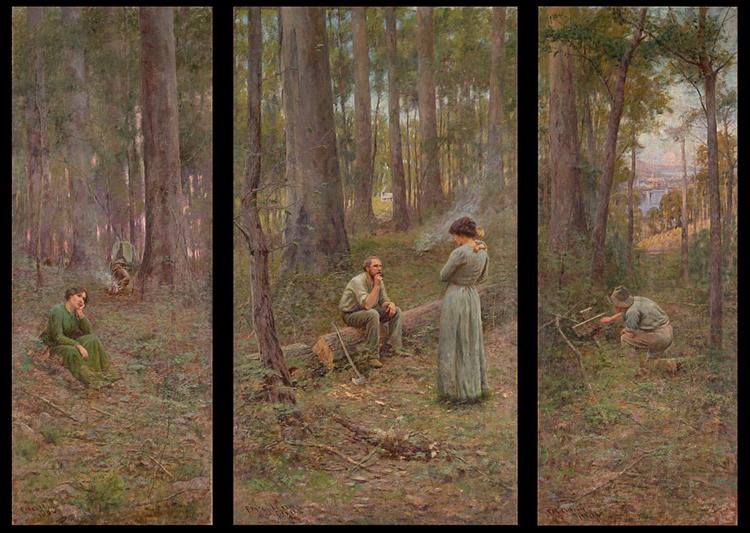
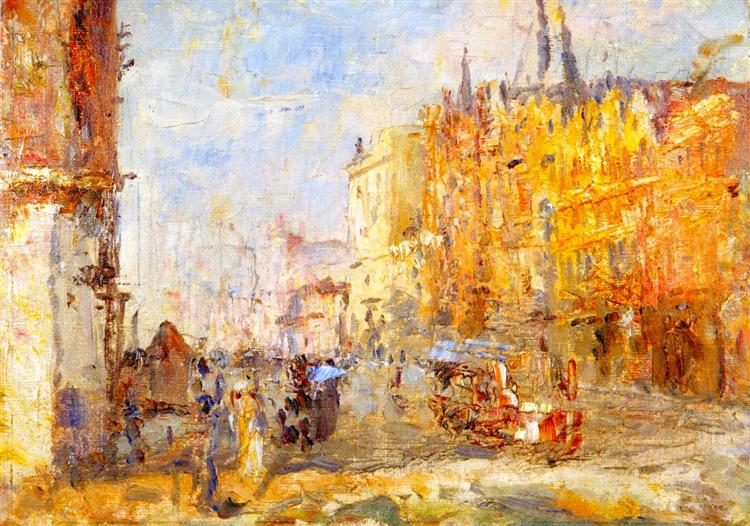
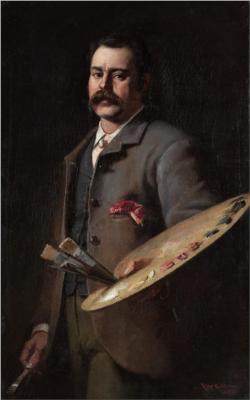
Frederick McCubbin was one of the founding members of the [url href=https://www.wikiart.org/en/artists-by-painting-school/heidelberg-school]Heidelberg School[/url], an art movement related to Australian [url href=https://www.wikiart.org/en/artists-by-art-movement/impressionism]Impressionism[/url]. McCubbin rose to prominence for his depictions of pioneer life that captured the aspirations and the hardships of living in the Australian bush. Paintings such as [url href=https://www.wikiart.org/en/frederick-mccubbin/down-on-his-luck-1889][i]Down on his luck[/i][/url] (1889), [url href=https://www.wikiart.org/en/frederick-mccubbin/on-the-wallaby-track-1896][i]On the Wallaby Track[/i][/url] (1896), and [url href=https://www.wikiart.org/en/frederick-mccubbin/the-pioneer-1904][i]The pioneer[/i][/url] (1904) are considered images of national significance and masterpieces of Australian art. Frederick McCubbin was a son of a baker who immigrated to Australia in 1852. He grew up in working-class Melbourne and witnessed the city’s rapid growth and development. McCubbin trained, worked, and lived in the Melbourne area for the entirety of his life. Therefore, the area played a central role in his art, serving as the setting for many of his paintings. McCubbin began his formal training when he enrolled in evening classes at the Artisan’s School of Design in Carlton. Later, he attended the [url href=https://www.wikiart.org/en/artists-by-art-institution/national-gallery-of-victoria-art-school-melbourne]National Gallery of Victoria Art School[/url], where he studied under [url href=https://www.wikiart.org/en/eugene-von-guerard]Eugene von Guérard[/url] and [url href=https://www.wikiart.org/en/george-folingsby]George Folingsby[/url]. During this period, McCubbin developed essential relationships with artists [url href=https://www.wikiart.org/en/tom-roberts]Tom Roberts[/url], [url href=https://www.wikiart.org/en/arthur-streeton]Arthur Streeton[/url], and [url href=https://www.wikiart.org/en/charles-conder]Charles Conder[/url]. Together, they established artist’s camps at the outskirts of Melbourne, where they painted outdoors in an attempt to capture the natural environment of the bush. The artists were collectively known as the Heidelberg School because they often painted near the rural area of Heidelberg east of Melbourne. In 1886, McCubbin was appointed as a drawing master at the National Gallery School. The same year he presented himself as a painter in [url href=https://www.wikiart.org/en/frederick-mccubbin/self-portrait-1886][i]Self portrait[/i][/url] (1886), which reflected his feelings of pride and professional accomplishment. The appointment was also personally significant since the secure income allowed McCubbin to marry and stay in Australia. He got married in 1889, and over the following 17 years, the pair had seven children. In 1901, McCubbin bought a cottage at Mount Macedon that he named ‘Fountainbleau,’ an homage to the painters of the [url href=https://www.wikiart.org/en/artists-by-painting-school/barbizon-school]Barbizon School[/url] who painted near the forest of Fountainbleau. This area inspired McCubbin to create some of his greatest works, among them [url href=https://www.wikiart.org/en/frederick-mccubbin/bush-sawyers-1910][i]Bush Sawyers[/i][/url] (1910) and [url href=https://www.wikiart.org/en/frederick-mccubbin/violet-and-gold-1911][i]Violet and gold[/i][/url] (1911). In 1907, the artist traveled to Europe, where he saw many paintings that he long admired through reproductions. After his return from Europe, McCubbin developed his mature style that became more akin to Impressionism. His brushwork became looser and more expressive, as evident in paintings like [i]Violet and gold[/i] and [url href=https://www.wikiart.org/en/frederick-mccubbin/collins-street-1915][i]Collins Street[/i][/url] (ca. 1915). In these paintings, his chief concern was depicting varying light effects during different seasons and times of the day. These later paintings were also more intimate than his earlier historical paintings that depicted pioneers in the bush. In May 1916, [i]The art of Frederick McCubbin[/i] was one of the first significant art books published in Australia. It was a sign of his success and the recognition he received during his lifetime. A year later, on December 20th, 1917, McCubbin died of a heart attack.
Timeline
Born 1855 — Died 1917