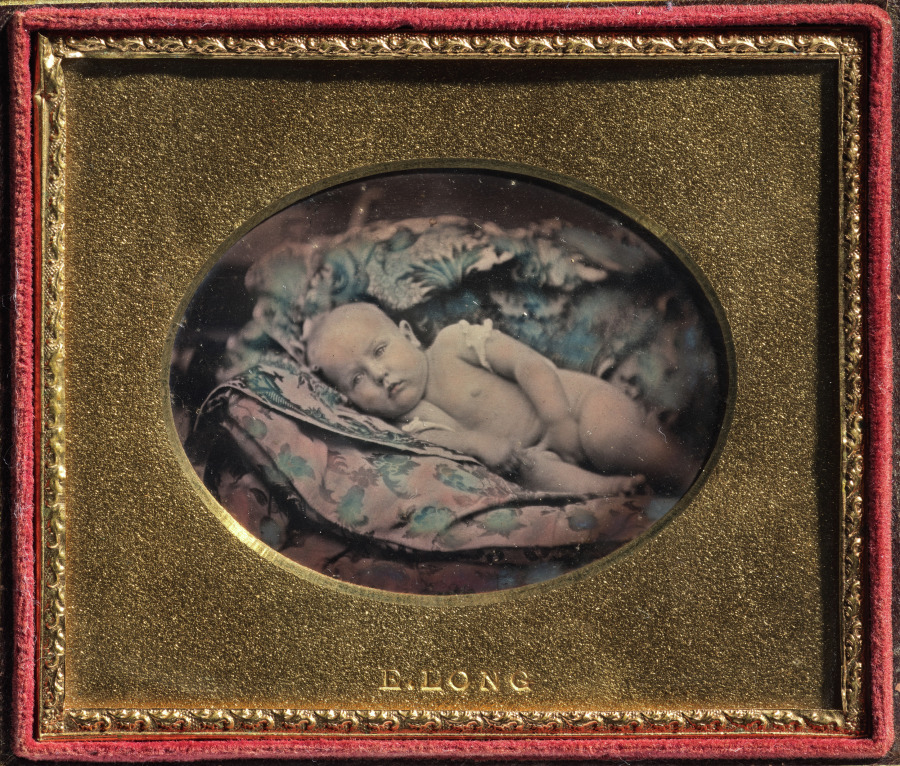
Enoch Long (American, 1823–1898)
b. 1823 — d. 1898
Enoch Long American, 1823-1898 Enoch Long, a prominent St. Louis daguerreian, advertised that his photographs would "bear the strictest criticism, both as a likeness and a work of art." This aesthetic concern set him apart from other photographers in smaller western towns. Praised in both the local and national press, Long was considered one of the most serious and successful photographers in the region. Born in Hopkinton, New Hampshire, Long and his older brother Horatio studied in Philadelphia with the respected pioneer daguerreian Robert Cornelius in July 1842. For the next few years the brothers traveled the South and New England, working as itinerant photographers before jointly opening a studio in St. Louis in 1846. Horatio died in 1851, and Enoch operated the studio until 1860, then moved to Illinois to open galleries in Alton, Quincy, and later Galena. While in Missouri, Long and fellow photographer John Fitzgibbon represented the state in the Exhibition of the Industry of all Nations, held at New York's Crystal Palace in 1853, where Long was awarded a medal of honorable mention. He also showed his work, presumably albumen prints, for several years from 1886-94 in the annual exhibits of the Photographers Association of America. Long was the first photographer in his region to polish daguerreotype plates with a steam engine and is credited with introducing the first solar photographic enlarger to St. Louis, for which he wrote two manuals in 1888. After his death his studio was run by his widow and sons. K.L.C.