Elizabeth Catlett
b. 1915 — d. 2012
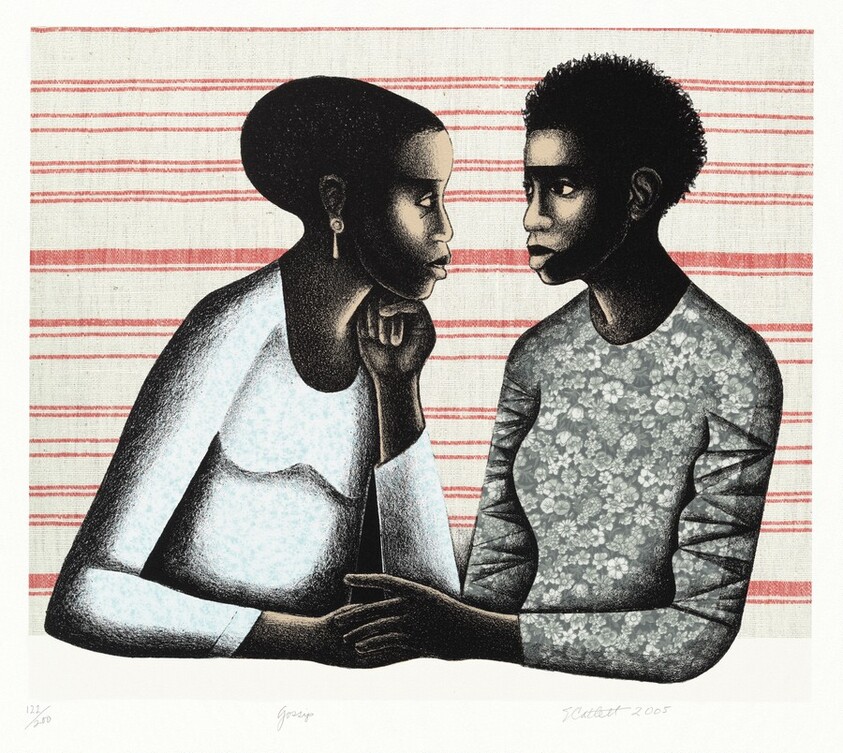
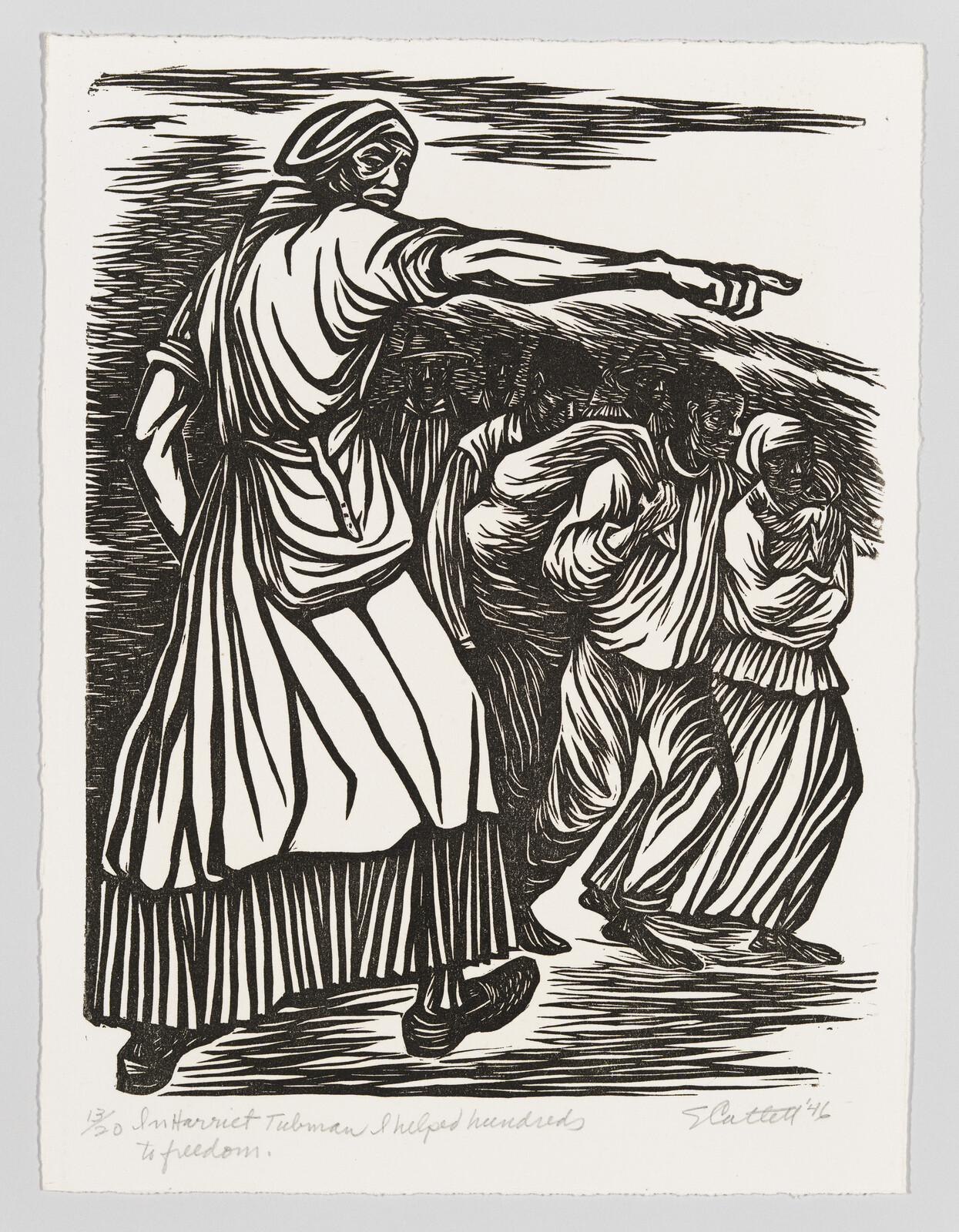
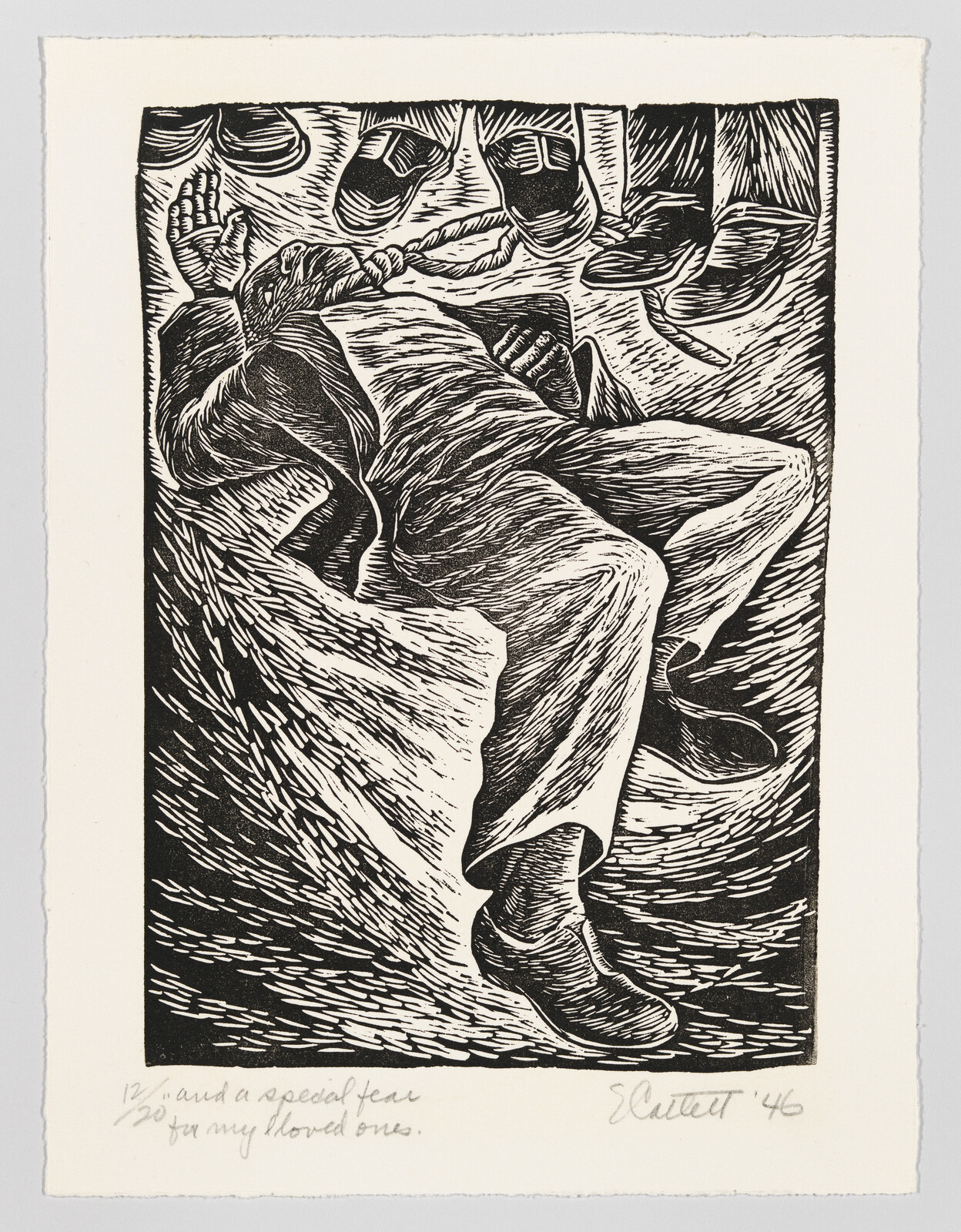
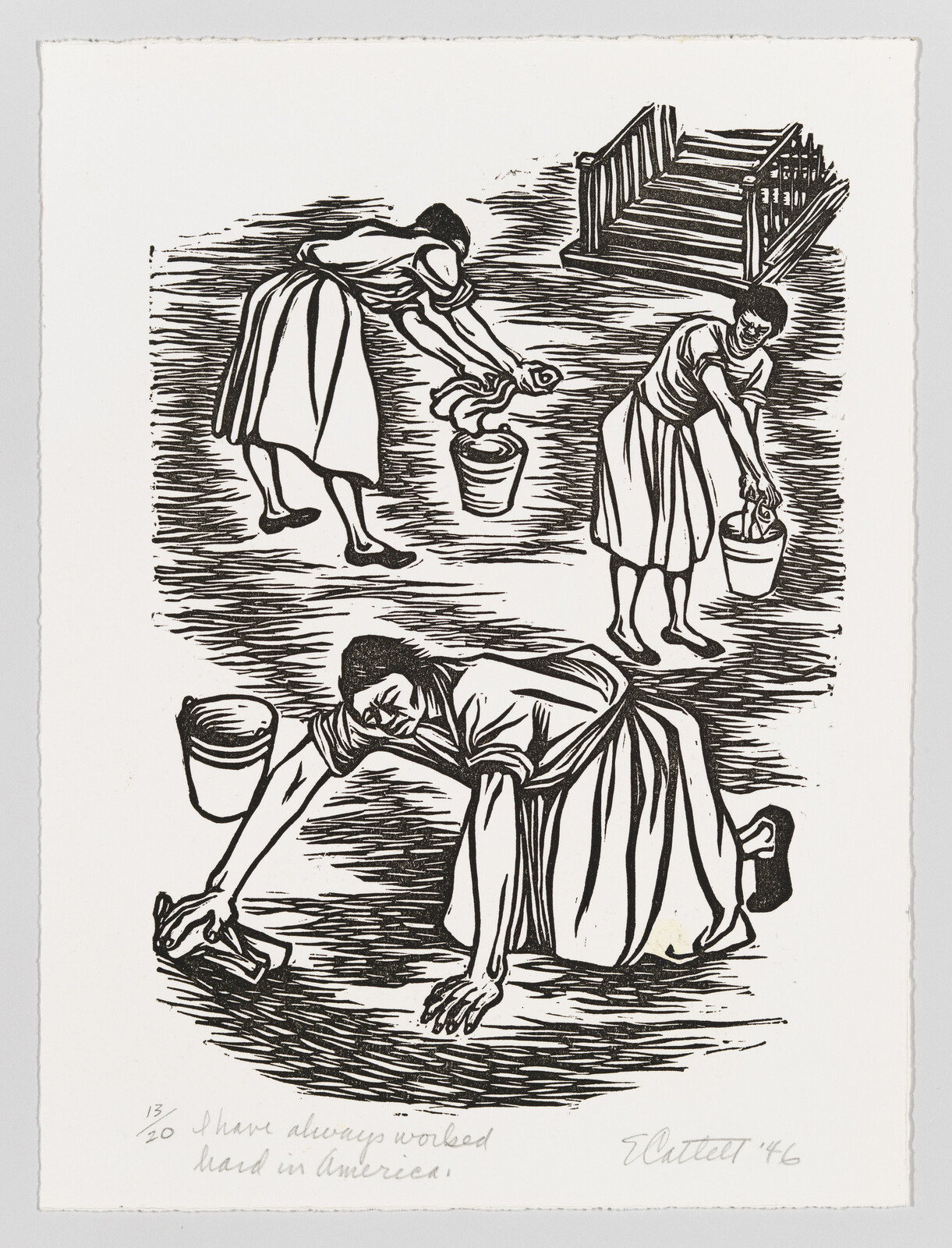
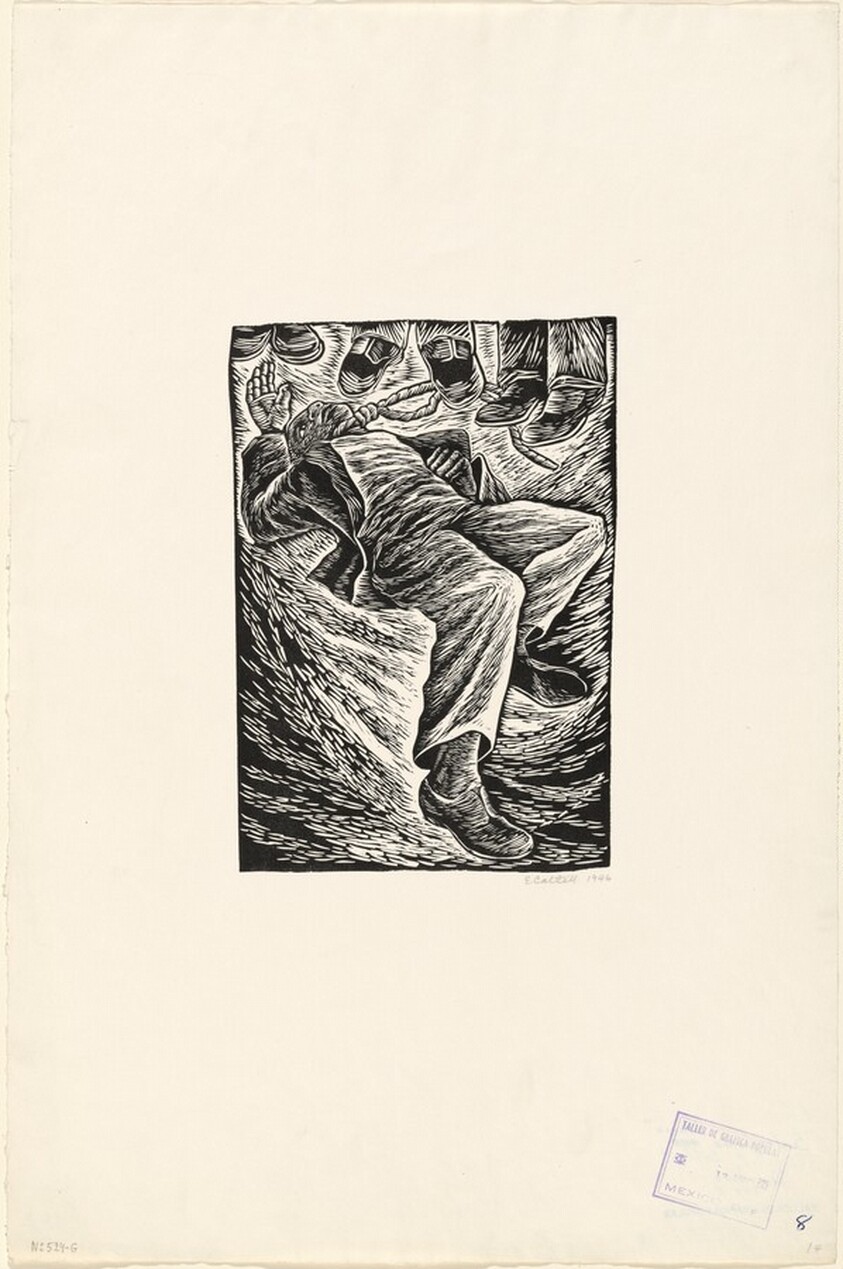
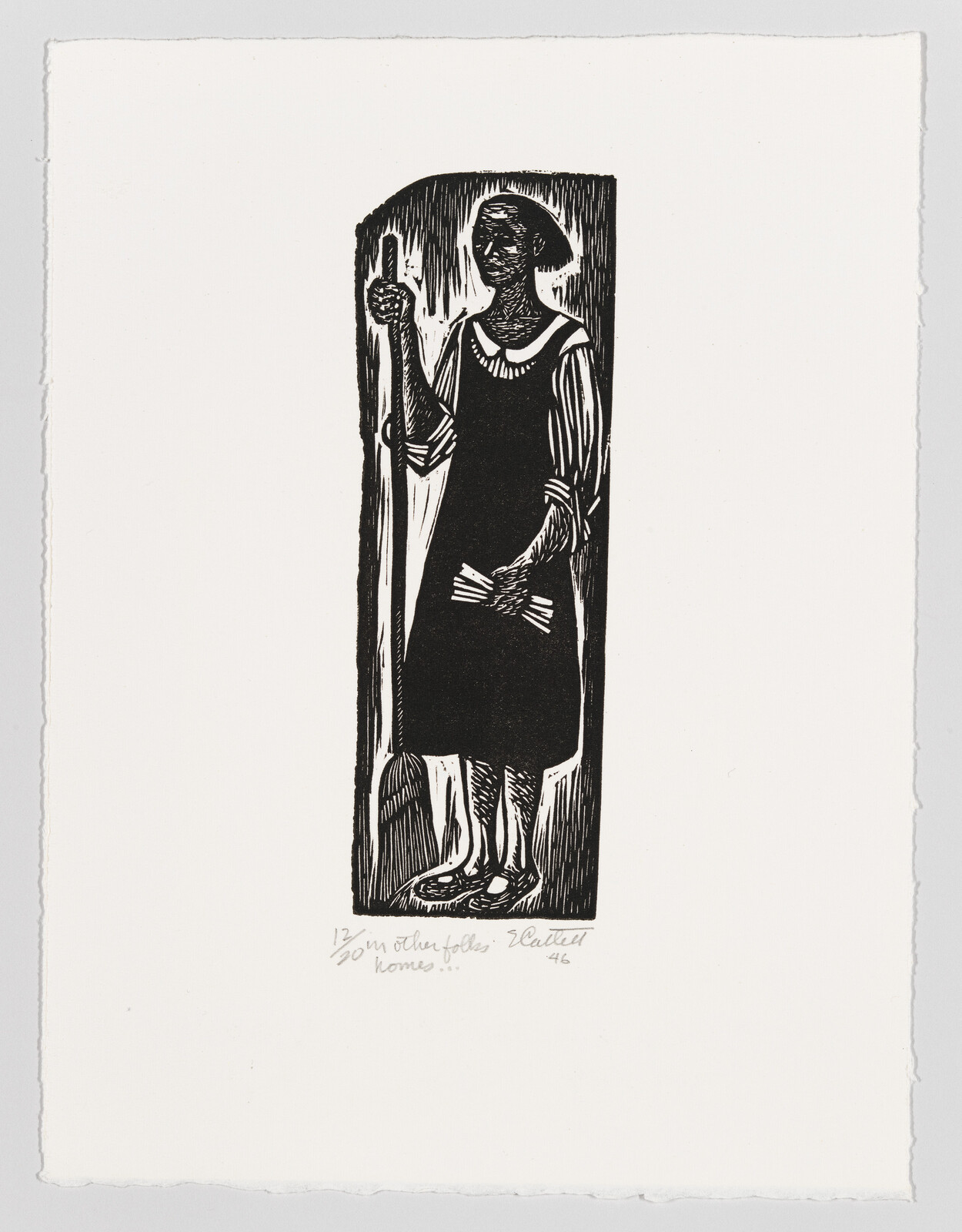
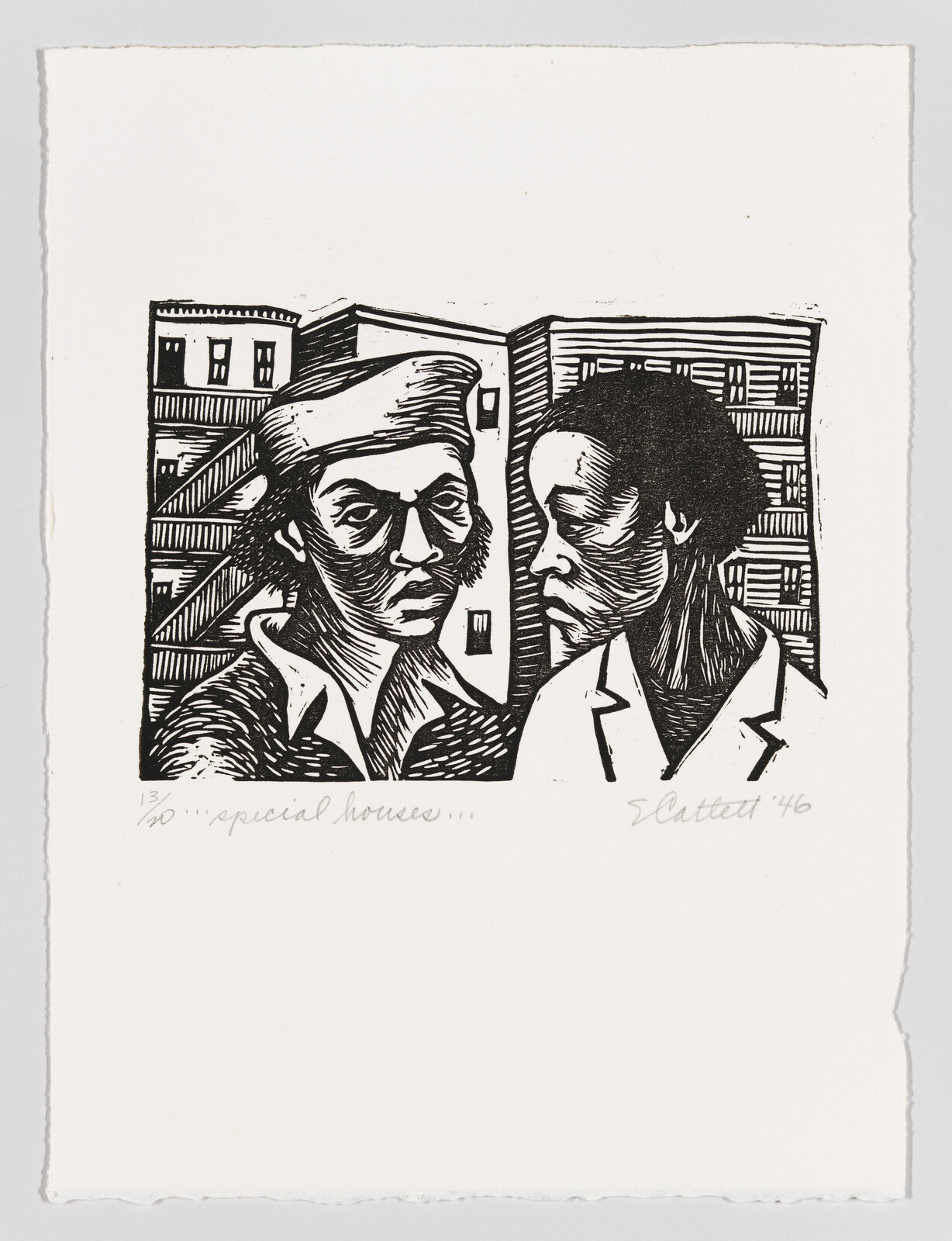
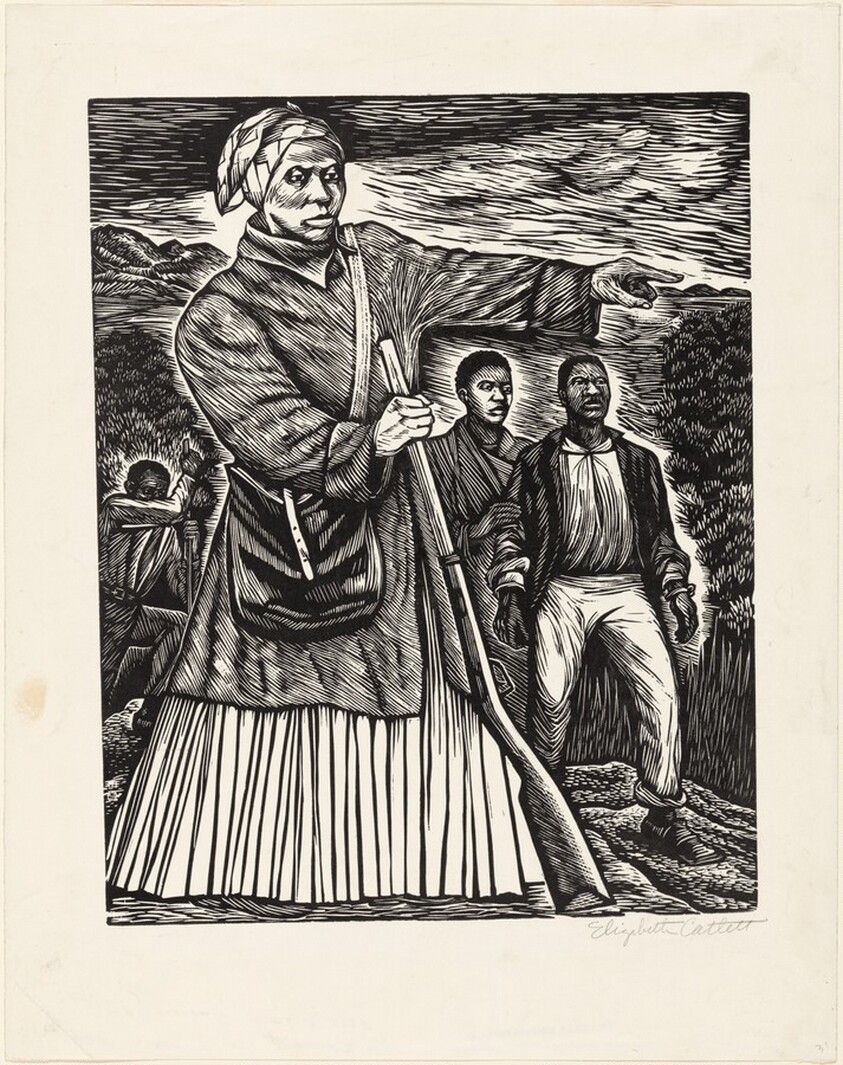
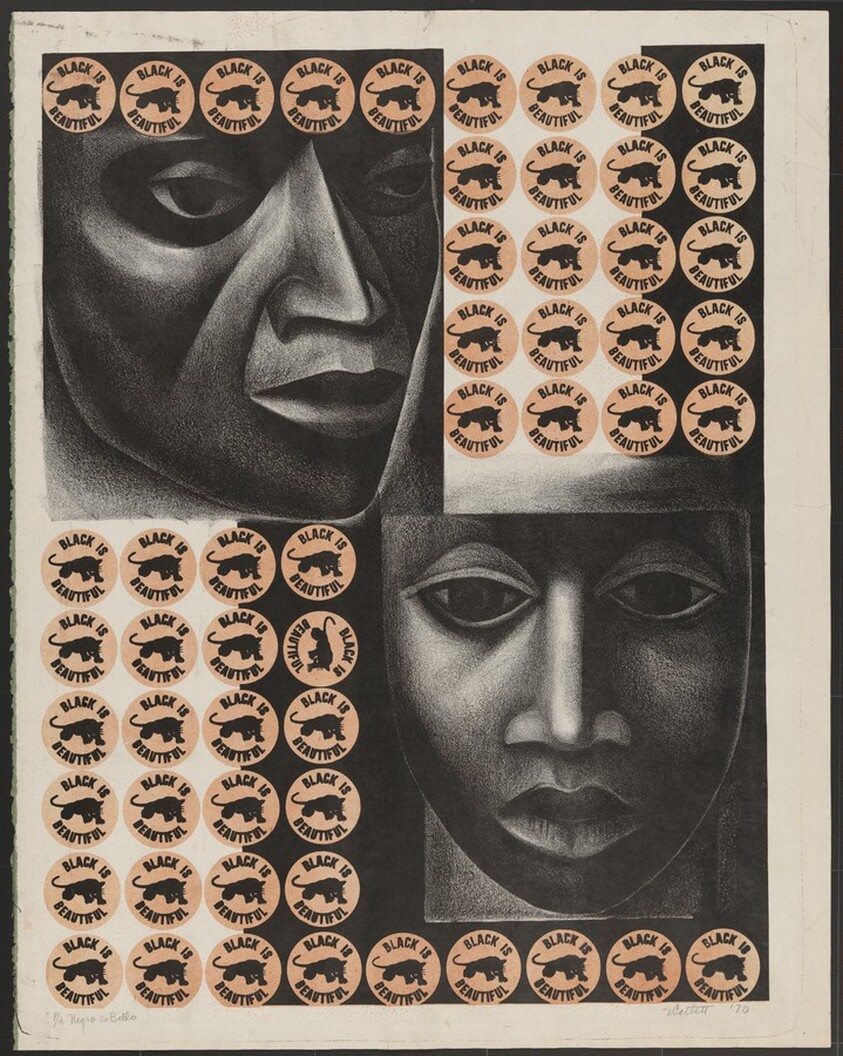
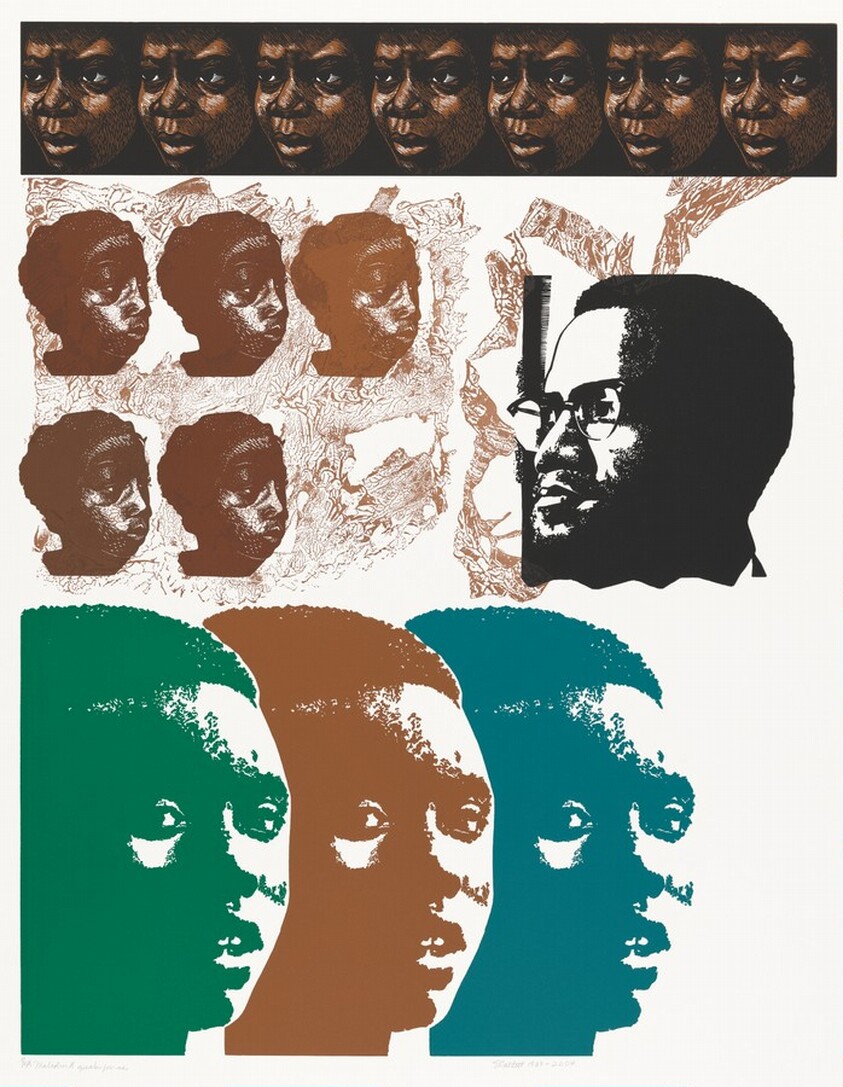
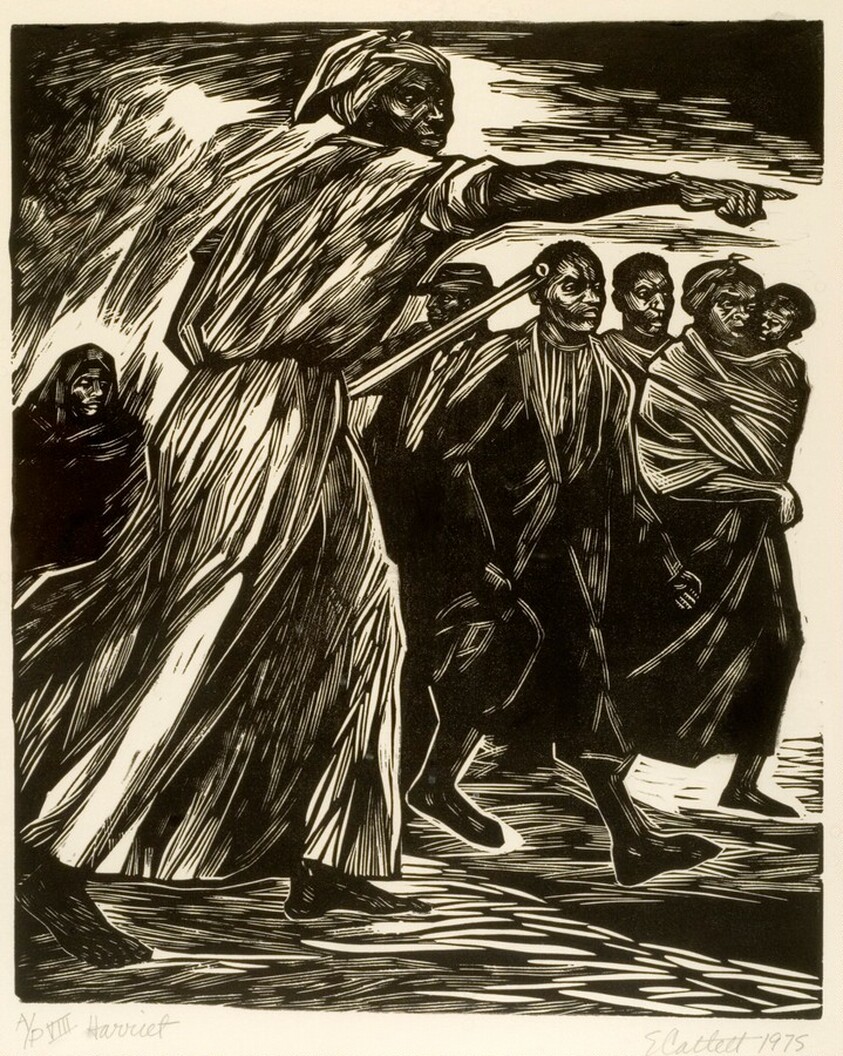
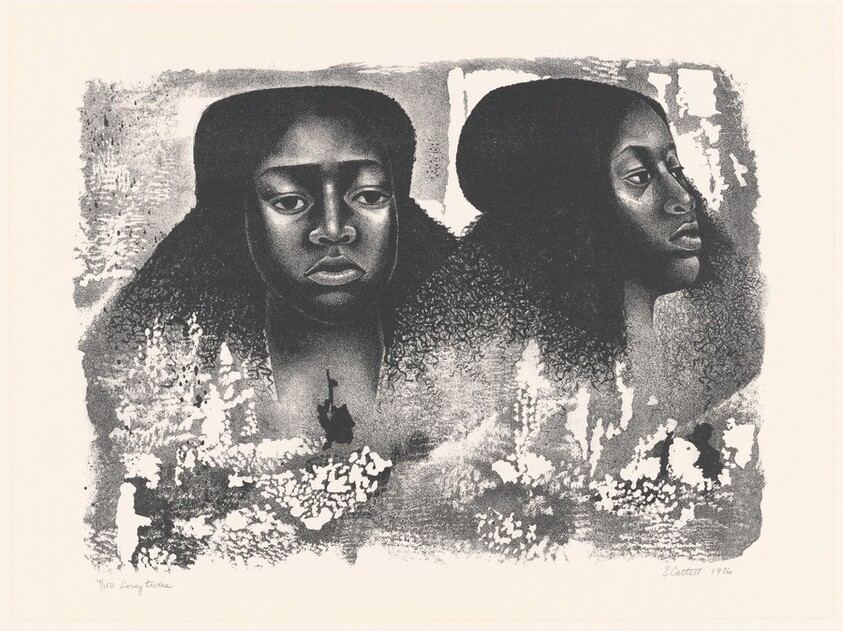
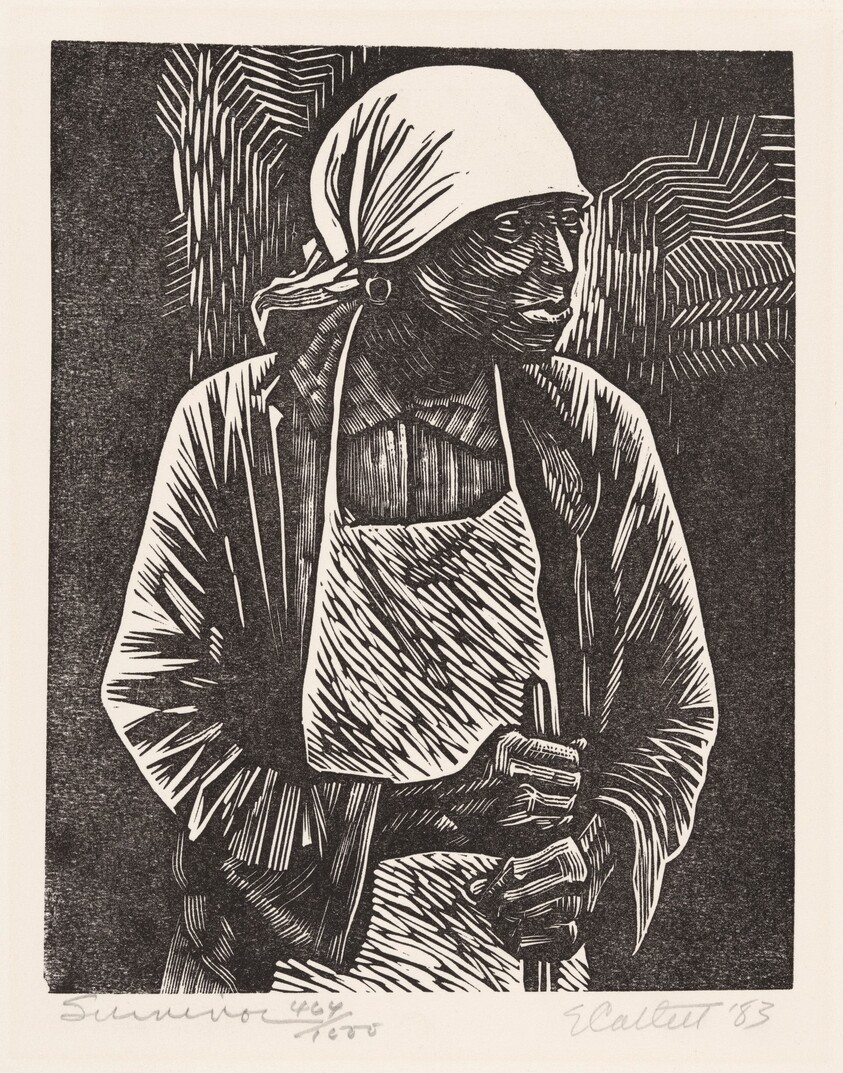
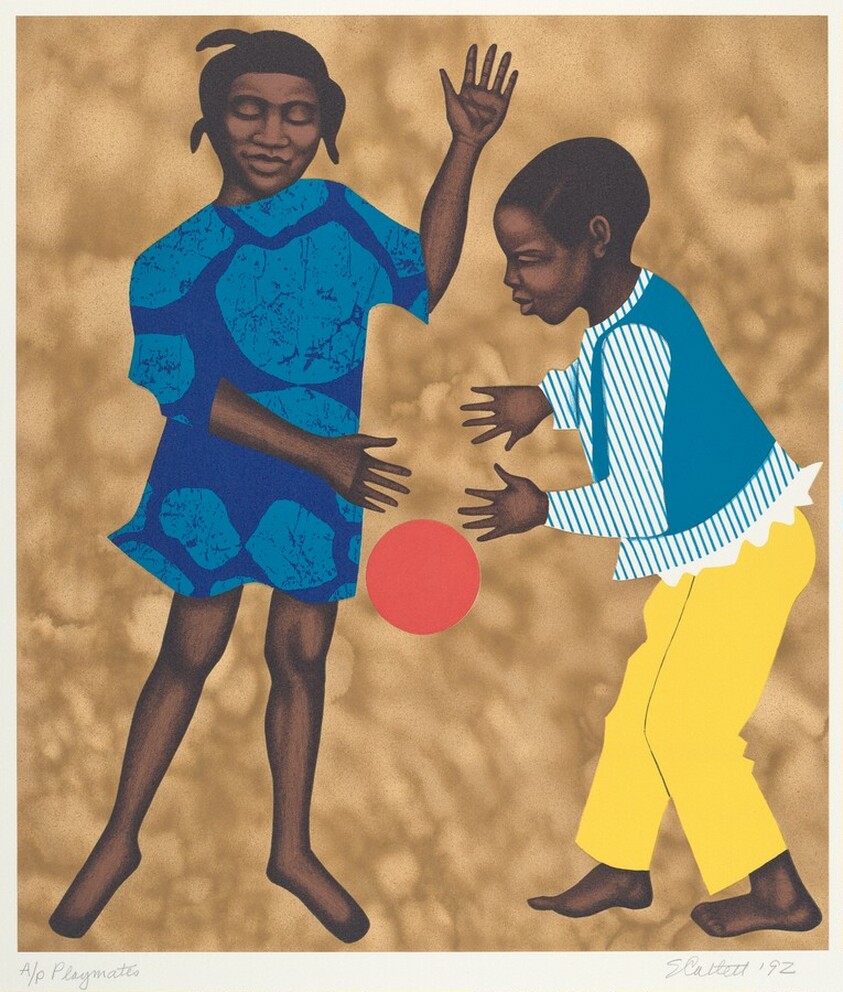
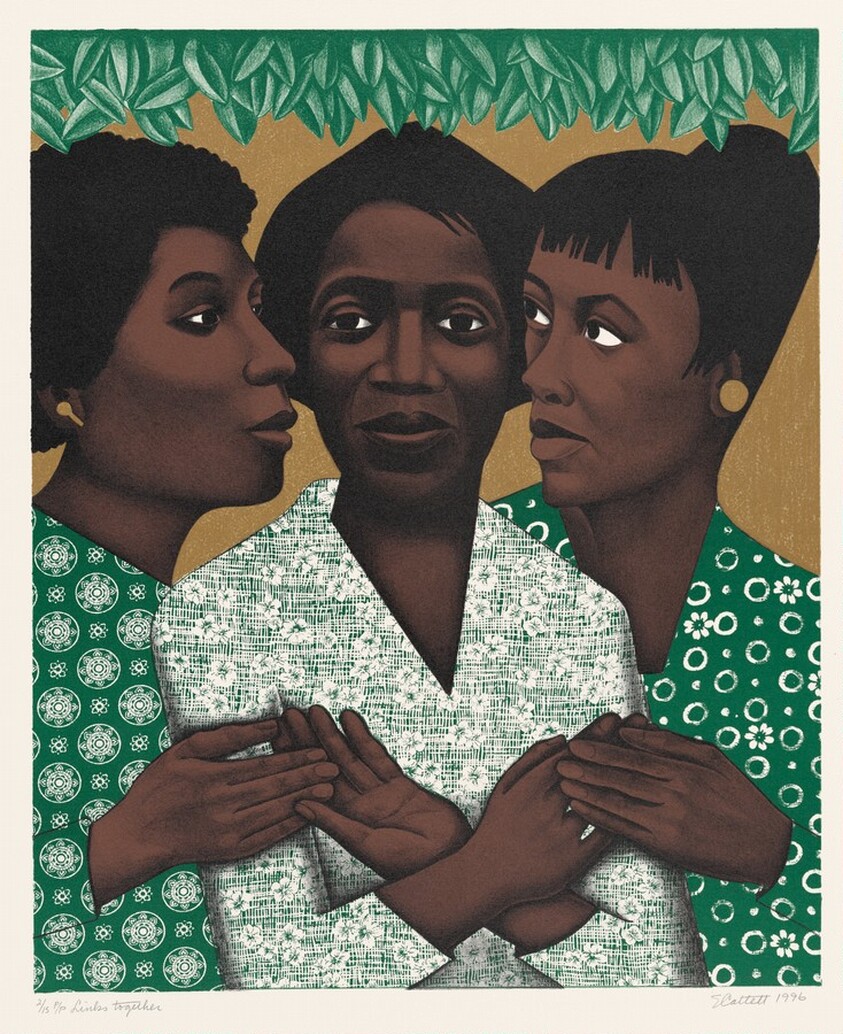
Over the course of nearly a century, Elizabeth Catlett built a life dedicated to artistic excellence and social justice. Through primarily sculpture and prints, she celebrated the beauty and strength of Black women and used her art to educate and promote social change. She incorporated aspects of African and Mesoamerican artistic traditions into her work, resulting in a personal style somewhere between figuration and abstraction. Born in Washington, DC, Catlett attended Howard University and then the University of Iowa, where she studied painting with Grant Wood [https://www.artic.edu/artists/37343/grant-wood] and became the first Black woman to receive a master’s in fine arts from the university. Catlett briefly resided in Chicago, where she met and married the artist Charles White [https://www.artic.edu/artists/42434/charles-white] (whom Catlett divorced in 1946), before moving to Harlem and joining the Black art scene that was flourishing there. In the mid-1940s, a fellowship led Catlett to Mexico City, where she joined the Taller de Gráfica Popular [https://www.artic.edu/artists/72887/taller-de-grafica-popular-mexico-city-mexico], a printmaking collective dedicated to promoting social causes through prints. Catlett saw connections between the struggles of Indigenous and working-class Mexicans and the civil rights and labor movements in the United States. She came to refer to Black Americans and Mexicans as her “two peoples.” In 1947, Catlett married the Mexican artist Francisco Mora [https://www.artic.edu/artists/17637/francisco-mora], with whom she had three sons. They remained creative collaborators and romantic partners until his death in 2002. Though she became a Mexican citizen in the 1960s, she remained dedicated to activism in the United States and even expanded her scope to include global solidarity. The Art Institute acquired its first work by Catlett—the iconic print Sharecropper [https://www.artic.edu/artworks/117319/sharecropper]—in 1992 and many more in 2005 when the museum’s Leadership Advisory Committee awarded Catlett the inaugural Legends and Legacy Award [https://www.artic.edu/exhibitions/2843/legends-and-legacy-award-elizabeth-catlett], an honor that acknowledges the importance of an artist’s work and impact on future generations. The elegant sculpture Head (Head of a Man) [https://www.artic.edu/artworks/262127/head-head-of-a-man] joined the collection in 2021, and the museum hosted the major retrospective Elizabeth Catlett: “A Black Revolutionary Artist and All That It Implies” [https://www.artic.edu/exhibitions/10220/elizabeth-catlett-a-black-revolutionary-artist-and-all-that-it-implies] in 2025.
Timeline
Born 1915 — Died 2012
1940s




1960s



2000s