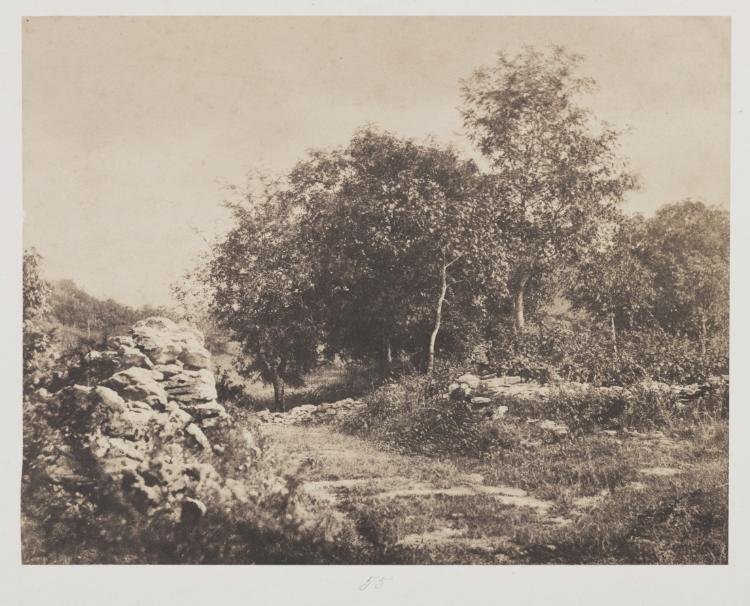
André Giroux (French, 1801–1879)
b. 1801 — d. 1879
André Giroux French, 1801-1879 André Giroux was the son of Alphonse Giroux, cameramaker to Louis-Jacques-Mandé Daguerre and a painter of some note. A painter himself, André was equally adept at the calotype and the wet collodion on glass techniques, ultimately concentrating on glass negatives for his photography. His landscapes, which often include architectural and rural subjects, were known for their harmonious appearance, often achieved through substantial manipulation of the negatives. More than any other early French photographer, Giroux was interested in painterly effects. He relied on heavy retouching of his negatives, sometimes using India ink to produce a soft atmospheric quality. His landscapes recall etchings by artists of the Barbizon School, such as Charles-François Daubigny, Théodore Rousseau, or Camille Corot. A resident of the Académie français in Rome, Giroux was also named a chevalier in the Légion d'honneur in 1870. The prints he produced were unusually rich and complex in a way that was uncommon before the time of Robert Demachy. T.W.F.